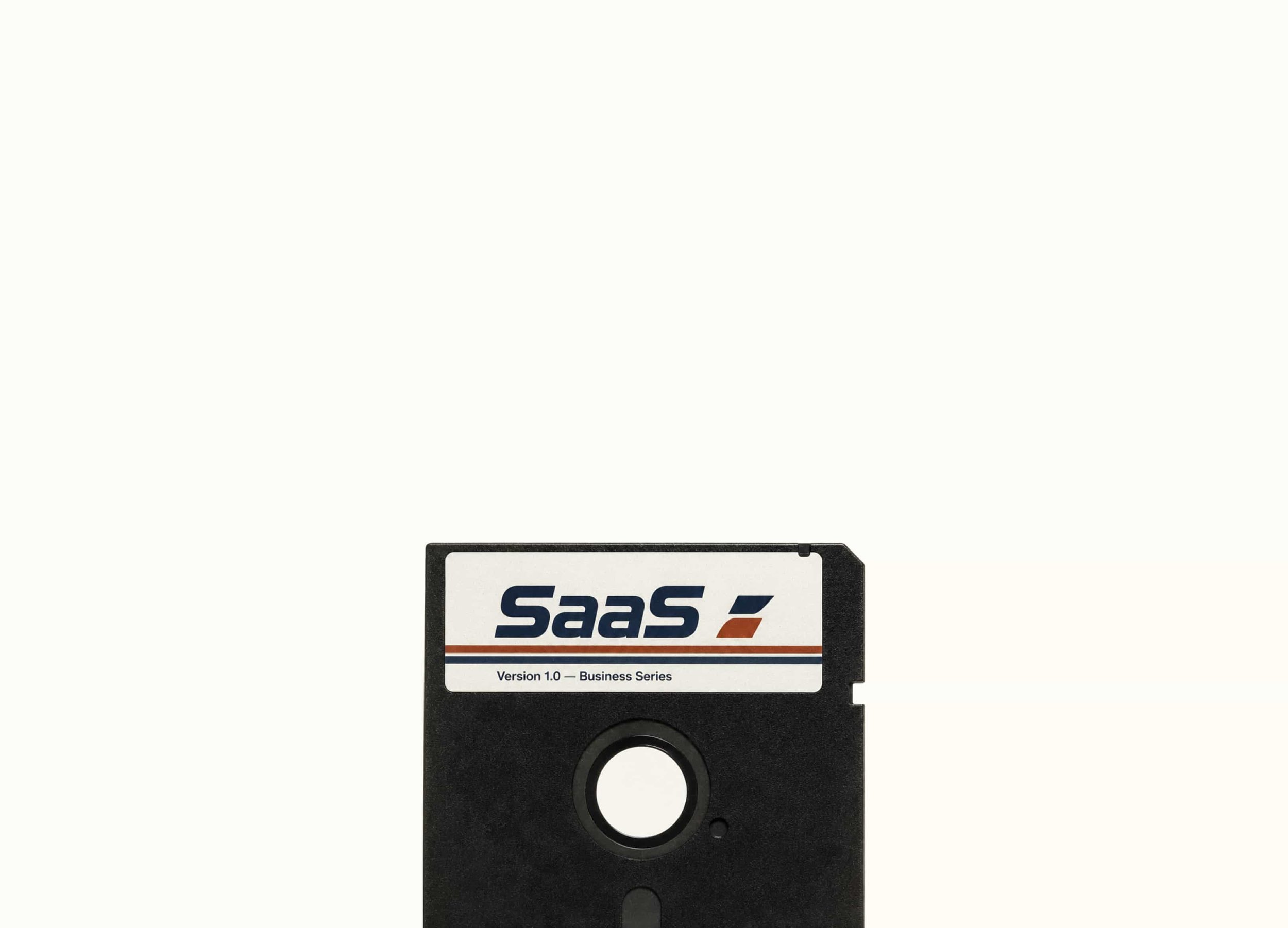
Floppy stored the created product,
but flopped creating revenue.

TOCOBAGA FOR SAAS COMPANIES - SOLVINGHOW.COM - PAGE 2 OF 8
Why did CAC get away from you?
Daggers resolved in the fine print on page 8.
Tocobaga is a flat-fee, ROI-focused marketing agency for SaaS companies. No percentage of ad spend. No auto-renewing contracts. Every asset stays yours. Average reported client ROI: 9.7x gross, 7.8x after fees.*
Why did CAC get away from you?
Here is a thing that happens, politely, every quarter.
A SaaS company builds a product people genuinely want. Then it goes to buy customers.
The median SaaS company now spends $2.00 to acquire $1.00 of new ARR - up 14 percent in a year (SaaS Capital 2025).
Median CAC payback stretched to roughly 20 months (KeyBanc 2025, n=104).
The board asks about the Rule of 40. Only 11 to 30 percent of companies clear it - and top-quartile performers trade at nearly three times the EV/Revenue multiple of the bottom quartile (Benchmarkit 2025).
So efficiency is not a preference. It is the valuation.
Meanwhile pipeline coverage medians sit at 3.2x quota, and anything under 2.5x is a distress signal one to two quarters out (Digital Applied 2026).
The floppy shipped software once. Demand has to ship every single month.
Somebody has to do the Tuesday: the landing page that converts, the lifecycle email that expands, the comparison page that wins the search your prospect actually runs.
We do the Tuesday, and we report it in CAC, payback, and pipeline - the same units your board uses.
What does the usual agency actually sell?
So the company hires an agency, and the agency does what agencies do.
It bills a percentage of ad spend, then bids your own brand name back to you at auction.
It runs an MQL factory: volume up, quality down, and the SDR team quietly builds a spam filter for your own marketing.
It reports forty metrics on a dashboard and none of them is CAC payback.
It signs a twelve-month retainer that renews itself in the middle of a pipeline-coverage crisis.
It writes content for an ICP it never interviewed, optimized for keywords your buyers never search.
The attribution model is the agency's, hosted in the agency's accounts, and it grades the agency generously.
And the website sits on a theme license you rent, shipping the agency's badge to every prospect who scrolls far enough.
This is not a scandal. It is simply the standard arrangement.
We would like a word about the standard arrangement.
What changes on a flat fee?
Tocobaga charges a flat fee. That is nearly the whole trick.
When the incentive to inflate your ad spend disappears, nobody bids your brand back to you at a markup.
The contract doesn't auto-renew, so March has to be earned in February.
The site, the content, the list, the data, the analytics accounts - every asset is titled to you from day one.
If we ever stop being useful, you keep everything and walk.
We report in your board's units: pipeline, CAC, payback, coverage, won ARR - MQLs appear nowhere, on principle.
The monthly letter is one page. If a chart needs a legend, we rewrite the chart.
Lifecycle and expansion get equal billing with acquisition, because NRR is the metric multiples are made of.
If that sounds ordinary, ask your current agency for the same sentence.
The next six pages explain how the work is done for SaaS companies, what it costs, and what it returned. Read on; it is your magazine.
*Resolved in the fine print on page 8. The advertisement continues on page 3.
TOCOBAGA FOR SAAS COMPANIES - SOLVINGHOW.COM - PAGE 3 OF 8
First the macro. Then the micro. Then Tuesday.
Every engagement starts the same way, with a question so old-fashioned it feels avant-garde: where does the money actually come from?
We call the method macro-to-micro.
Macro is the market: who buys, what they pay, which three moves change enterprise value.
Micro is the Tuesday work: the page, the offer, the follow-up email, the review reply.
Most agencies sell the Tuesday work without ever asking the first question. We decline to, on principle and on invoice.
First, the macro.
We audit your operation the way a buyer audits a target - traffic, rankings, list, funnel, reputation - and we price every gap in dollars.
The audit is free, it is specific, and it is occasionally embarrassing.
It ends with three levers, not thirty.
That is the whole macro. It fits on one page. The plan is signed by a person whose name you know. Then the calendar starts.
Then we pick the three levers you actually need, and we ignore the rest.
No brand safari. No six-week runway of workshops. No deck about your "why."
The audit lands as a numbered list, and the numbers are dollars.
Lever one is usually the website, because the website is usually rented, slow, and invisible.
Lever two is usually lifecycle and expansion, because your installed base is the cheapest ARR you will ever buy - and NRR is the metric multiples are made of.
Lever three depends on your plan, which is the point of having one.

Strategy is what we are judged on at the quarter. Execution is what we do before lunch.
Pages get rebuilt. Emails get written. Rankings get taken city by city, like a polite land war.
Reviews get answered the day they arrive, by a person, in English.
None of this is glamorous, which is why it compounds.
Glamour is a cost center.
Then, the micro.
Each month you receive a one-page letter in plain English: what moved, what it cost, what it returned.
For SaaS, the letter reads in pipeline created, CAC, payback, and won ARR - board units, no MQLs.
No dashboard tour is required to understand it. If a chart needs a legend, we rewrite the chart.
Month by month, the levers get pulled and the letter gets shorter.

Figure 2. Tuesday at the company. The work, done by a person whose name you know.
Figure 1. The audit meeting. Thirty minutes, no deck, one handshake.
Three levers, priced, sequenced, owned. It is not a philosophy. It is a work order.
TOCOBAGA FOR SAAS COMPANIES - SOLVINGHOW.COM - PAGE 4 OF 8
 Phosphor green, 1984. Trials to paid, climbing. CAC payback, dated. No vibe, a number.
 Figure 3. The only chart we report: trials to paid, climbing.
It gets better when you read the fine print.
TOCOBAGA FOR SAAS COMPANIES - SOLVINGHOW.COM - PAGE 5 OF 8
| Tocobaga | The Usual Agency | |
|---|---|---|
| Pricing | A flat fee. | A percentage of your ad spend. |
| Contracts | No auto-renew. | Twelve months; renews itself. |
| Ownership | You own every asset. | You rent your own website. |
| Footer badge | Never. | A "Site by" credit, in perpetuity. |
| Language | Plain English. | A jargon moat. |
| Exit | We refer you out. | A hostage negotiation. |
The table is unfair. It is also accurate.
TOCOBAGA FOR SAAS COMPANIES - SOLVINGHOW.COM - PAGE 6 OF 8
Test drive Tocobaga.
[Illustrative composite - verified engagement results to come.]
A Series A B2B SaaS company came to us with a good product, a founder-led sales motion that had stopped scaling, and a website that described the software instead of the buyer.
Payback on new customers had drifted past twenty months. Nobody could say which motion was responsible.
We rebuilt the site around the two segments that actually converted, instrumented the funnel end to end, and separated self-serve from sales-assisted so the CAC math stopped blending.
[Illustrative composite - verified engagement results to come.]
By month nine, pipeline coverage was being reported by motion rather than in aggregate, and CAC payback on the self-serve motion had moved back inside the company plan.
Logo churn and revenue churn were reported separately, which changed which retention problem the team actually worked on.
Total fees for the year: flat, known in advance. The audit that started it took eleven days and cost nothing.
“We were not short on demand. We were short on knowing which demand paid us back.”
[Illustrative composite - verified engagement results to come.]
Watch the founder
with a Tocobaga.


TOCOBAGA FOR SAAS COMPANIES - SOLVINGHOW.COM - PAGE 7 OF 8
How we work.
Every engagement begins with the free SaaS Growth Audit: ten to fifteen days, no meeting longer than thirty minutes, no deck about your "why."
We audit your operation the way a buyer audits a target, and we price every gap in dollars.
You receive the findings whether or not you hire us. They are yours. That is the theme.
Then the plan: the three levers you actually need, sequenced, with a flat number attached.
Then the work, in monthly cycles, each closed by a one-page letter in plain English.
We would rather be re-hired than renewed.
We aren't for everyone, and we will say so early. If what you need is a RevOps rebuild more than a campaign, or a pricing consultant more than a marketer, we will tell you and hand you the number of someone we trust. The referral is free. So is the audit.
Headquartered in Ybor City, Tampa, Florida. Clients across the USA.
Some straight answers about SaaS marketing.
Can you actually lower our CAC?
We can lower blended CAC by rebalancing what you buy. With the median company paying $2.00 per $1.00 of new ARR (SaaS Capital 2025), the wins come from organic capture, conversion-rate work, and expansion revenue - not from bidding harder on the same keywords.
What is a healthy CAC payback right now?
Medians range wildly by motion - one large panel shows 6.8 months (Proven-SaaS, n=14,500+), while KeyBanc's survey of $26M-ARR companies shows ~20. We benchmark you against your motion and price the gap in dollars, not adjectives.
Do you report MQLs?
No. We report pipeline, CAC, payback, and won revenue. MQL-to-SQL medians run about 13 percent and SQL-to-won about 22 (Digital Applied 2026), so we optimize the two conversions that pay, and we name them in the monthly letter.
Why a flat fee?
Because a percentage pays us to spend your money, and we would rather be paid to multiply it. The fee is quoted once, in writing, and it stays put for the year.
Who owns the work?
You do - website, copy, data, list, rankings. If we part ways, everything stays exactly where it always was: with you.
PLG or sales-led - does your playbook change?
Yes. 55 percent of SaaS now identifies as product-led (OpenView), where activation and free-to-paid are the levers; sales-led lives on pipeline coverage and win rate. Same flat fee, different Tuesday list.
Churn is eating our growth. Can marketing help?
Specify the churn first - logo versus revenue changes the answer. Average B2B gross churn runs ~3.5 percent (Vitally 2025); lifecycle programs, onboarding content, and expansion plays defend it. Usage-based pricers see 10 percent higher NRR and 22 percent lower churn (Metronome) - we market to that motion when you run it.
What does the board see from your work?
One page, monthly: what moved, what it cost, what it returned - in ARR, CAC, payback, coverage. If a chart needs a legend, we rewrite the chart.
Where does the 9.7x figure come from?
Client-reported gross return across engagements, unaudited and rounded down when in doubt. After fees it is 7.8x. The daggers are resolved in the fine print on page 8.
What does it cost?
A flat number, quoted after the free audit and good for twelve months. Call (813) 534-1261 and we will say it out loud, slowly, in English.
TOCOBAGA FOR SAAS COMPANIES - SOLVINGHOW.COM - PAGE 8 OF 8
YES - send me the free SaaS Growth Audit.
Or mail to: Tocobaga, 1327 E. 7th Ave, Suite 2, Ybor City, Tampa, FL 33605.

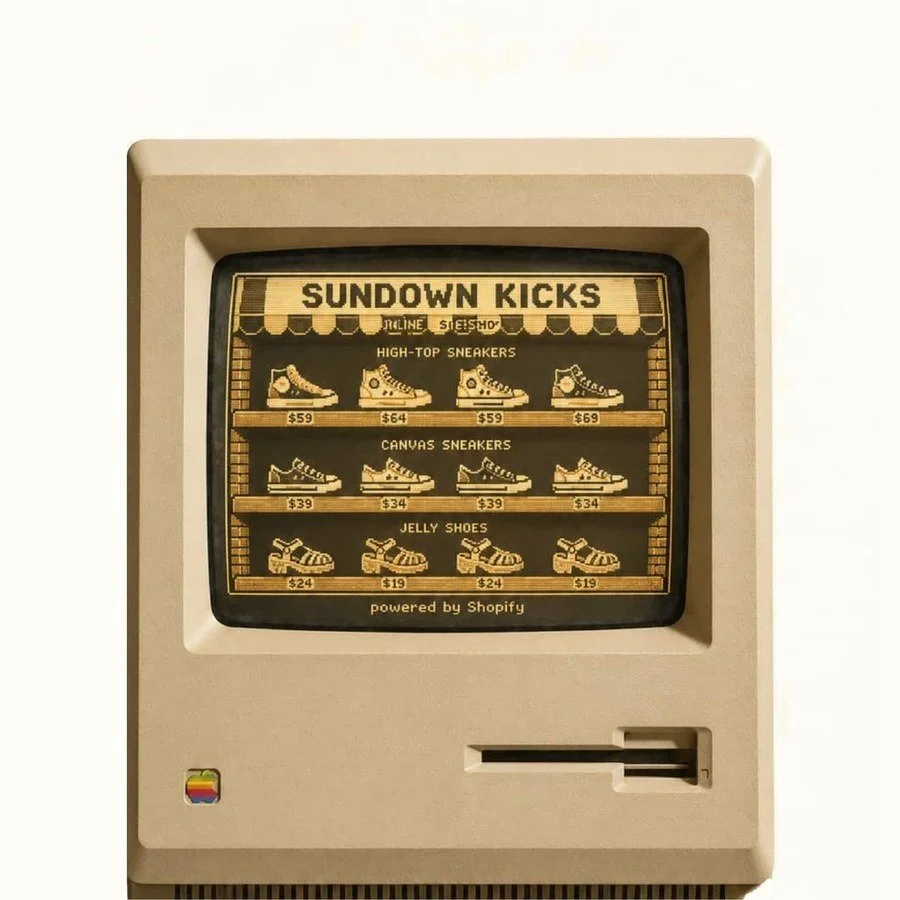




Soon there'll be just two kinds of SaaS companies. Those that grow, and those that renew.