

Law Smith
Founder & President, Tocobaga
Law Smith is the Founder and President of Tocobaga, a Tampa-based ROI-focused marketing agency and SMB advisory. He has managed integrated marketing programs for e-commerce brands spanning paid search, paid social, email, and SEO, with every program anchored to ROAS, CPA, and LTV rather than impressions and clicks. With 1,000,000+ emails deployed and 600+ campaigns executed, he brings the full-funnel discipline that separates stores that scale from stores that stall. Tocobaga is a Google Partner and Squarespace Gold Partner headquartered in Ybor City.
In 1886, the depot at North Redwood, Minnesota, sat on the Minneapolis and St. Louis Railway just outside Redwood Falls, and its station agent was a 22-year-old named Richard Warren Sears.*,† He had gone to work for the railroad at 17, after his father died, to support his mother and sisters.* The job paid little and left long gaps between trains, so Sears sold lumber and coal to the locals on the side.† The country he served had 38 states, about 58 million people, and roughly 65 percent of them lived rural.†
Then a crate arrived that nobody wanted. A Chicago jewelry company had shipped a consignment of gold-filled watches to a jeweler in Redwood Falls, and the jeweler refused it; one account says the freight charges had never been paid.†,‡ Sears did something station agents were not paid to do. He bought the watches himself.
He did not sell them on Main Street. He sold them down the line. Sears wrote to the other station agents on the railroad, men exactly like him with idle afternoons and a steady parade of farmers walking past the window, and offered the watches at $14 each.‡,§ The agents resold them to their own customers at a profit. Sears ordered more. He cleared about $5,000.*
That year he quit the railroad and opened the R.W. Sears Watch Company in Minneapolis, in an office that rented for $10 a month, with no employees.*,‡ Within a year he moved to Chicago and hired a watch repairman named Alvah C. Roebuck to fix the returns.*,‡ The first catalog listed 25 watches. By 1892 it ran 140 pages and sales neared $280,000; two years later it ran 507 pages, and by 1900 about 853,000 copies were circulating.‡ From 1908 to 1940, Sears even sold houses by mail, an estimated 70,000 to 75,000 of them, starting around $450, with the materials for one home filling two boxcars.§
Look at what Sears owned and what he rented. He never owned a mile of track. The railroad owned the line, the depots, the schedule and the freight rates, and it billed him on every shipment. What Sears owned was the catalog and, inside it, the list: the names and addresses of farm families who had ordered once and would order again. The railroad was the platform. The catalog was the owned channel. One sent a bill every time. The other compounded.
That split is the whole game for brands selling online in 2026. Law Smith, founder and president of Tocobaga (SolvingHow.com), the ROI-focused lead generation agency and SMB advisory based in Ybor City in Tampa, hears the same question from e-commerce founders, manufacturers testing direct sales and PE-backed consumer platforms. Owners phrase it almost the same way every time: for those selling on Amazon, TikTok Shop or Shopify, what has been the real difference-maker for growth versus just more noise and fees? The answer, built from 2026 fee schedules, earnings releases and the arithmetic on one $40 product, fits on a depot sign. Amazon and TikTok Shop are railroads. Shopify is the catalog. The brands that grow rent the railroad on purpose and never mistake it for the business.
Amazon vs TikTok Shop vs Shopify: which one actually grows a brand in 2026?
Amazon grows a brand fastest when shoppers already search for the product, TikTok Shop grows it fastest when the product has to be seen to be wanted, and Shopify grows profit when customers come back. None of the three is a growth strategy on its own; each is a different trade between reach, margin and ownership of the customer.
The scale of each railroad explains why owners feel pulled in three directions at once. Amazon reported $201.9 billion in net sales in the third quarter of 2026, and third-party sellers accounted for 61 percent of paid units.‖ Its third-party seller services, the commissions, fulfillment and shipping fees that sellers pay, brought in $172 billion in 2025, about 24 percent of Amazon's net sales, and its advertising business passed $68 billion.¶ TikTok Shop sold an estimated $15.1 billion in the United States in 2025, up 68 percent from about $9 billion in 2024, according to Momentum Works and Tabcut.** EMARKETER forecasts $23.41 billion for 2026, which would make TikTok Shop's U.S. e-commerce business larger than those of Target, Costco, Best Buy or Kroger.†† Shopify merchants processed $119.1 billion in gross merchandise volume in the third quarter of 2026 alone, up 29 percent.‡‡
Set those numbers side by side and a pattern appears. Shopify's merchants moved more than five times as much merchandise in one quarter, worldwide, as EMARKETER expects TikTok Shop to sell in the United States all year. Amazon collected more than 11 times TikTok Shop's entire 2025 U.S. sales just in seller fees. Every one of these platforms is enormous. The question for a $3 million brand is not which one is biggest. It is which one leaves money and a customer behind after the sale.
The difference-maker, in every channel, is the same short list: fewer and better products, a review base that earns trust before the click, creators who can demonstrate the product, and a retention system that brings the buyer back without paying for that buyer twice. The channel decides how much of that work the brand still owns afterward. On Amazon, the reviews and the ranking live on Amazon's shelf. On TikTok Shop, the videos and the affiliate relationships live inside TikTok's app. On Shopify, the customer list lives in the brand's own accounts, the way Richard Sears's mailing list lived in Chicago and not in a depot in North Redwood.
| Factor | Amazon FBA | TikTok Shop (affiliate) | Shopify (paid social) |
|---|---|---|---|
| Platform cut | 15% referral plus fulfillment fees and a 3.5% fuel surcharge (Amazon, 2026) | 6% published, 8% reported from August 2026 (FastMoss; beBOLD) | 2.5% to 2.9% plus 30 cents in card fees (Shopify plans) |
| Main growth cost | Sponsored ads; Amazon ad revenue up 11% in Q3 2026 | Creator commissions, commonly 5% to 20%, plus free samples | Meta ads, median $38.99 per purchase (Triple Whale, 2026) |
| Who brings the buyer | Shopper search intent | Creator videos, the Shop tab and live streams | The brand, through paid and organic traffic |
| Who owns the customer | Amazon | TikTok | The brand |
| First-order contribution, $40 kit | $10.70 | $12.56 | Negative $5.36 at a $25 acquisition cost |
| Repeat-order contribution | $13.50, if the buyer searches again | Similar to the first order when another creator drives it | $19.14 through email or SMS |
| Biggest 2026 risk | Fee and ad cost creep | Platform, policy and fee volatility | Rising acquisition cost without retention |
| Best fit | Searchable, one-time or commodity products | Visual, demonstrable, impulse-priced products | Replenishable products with real repeat demand |
How much does Amazon really take from sellers in 2026?
Amazon's all-in take, meaning the referral fee, fulfillment fees and the advertising most sellers need to stay visible, consumes roughly half of a typical seller's revenue in 2026.¶ That share is called the marketplace take rate, and Marketplace Pulse first measured it above 50 percent in 2023, up from about 40 percent five years earlier.§§
The pieces break down predictably. The referral fee is usually 15 percent, as low as 8 percent in some categories, and it has held steady for more than a decade.§§ Fulfillment by Amazon, including storage, typically runs 20 to 35 percent of revenue, and advertising and promotions can add up to 15 percent more, with private-label sellers commonly spending over 10 percent of sales on ads.§§ Marketplace Pulse found a few sellers paying 60 and even 70 percent of revenue to Amazon, and noted that many only realize how little profit is left at the end of the tax year.§§
Modern Retail put a face on the number in April 2026. One seller with a top product priced around $150 said about $80 of each sale goes to Amazon in commissions, fulfillment, storage and advertising, leaving roughly $70 for everything else.¶ That is 53 percent gone before the seller pays the factory, the freight forwarder, the customs broker, the warehouse team and the accountant who has to explain it at tax time.
The fastest-growing line is not on the rate card. Amazon's advertising revenue rose 11 percent in the third quarter of 2026, to $19.6 billion, while third-party seller services grew 9 percent, to $46.5 billion.‖ The second quarter ran hotter, up 26 percent, but Amazon blamed Prime Day timing for the slowdown, so the steadier read is that ads still outgrow seller services.‖ Freight rates are posted on the depot wall. The ad auction is the toll for a good spot on the platform, and the toll keeps climbing.
Concentration is the other half of the story. Marketplace Pulse estimates that fewer than 8,000 sellers now generate roughly half of Amazon's U.S. third-party sales, down from about 15,000 a few years ago, and that active sellers on Amazon.com fell from 584,000 in January 2025 to 500,000 in March 2026; Amazon disputes those figures.¶ For a brand doing $3 million a year, the implication is blunt. The marketplace still works, but it works best for sellers who treat it as a high-cost freight line with posted rates and build every price around it.
Did Amazon raise seller fees in 2026?
Yes. Amazon raised Fulfillment by Amazon fees by an average of $0.08 per unit on January 15, 2026, then added a 3.5 percent fuel and logistics surcharge on fulfillment fees starting April 17, 2026.‖‖,¶¶ Amazon seller fees in 2026 still start with a referral fee that Amazon says is 15 percent or less in most categories, but the cost of a unit shipped through Amazon went up twice in four months.¶
Amazon announced the January change on October 15, 2025, describing it as an average increase of $0.08 per unit sold, less than 0.5 percent of an average item's price, and promising "no new FBA fee types in 2026."‖‖ Technically, the April charge was not a new fee type. It was a surcharge. Amazon set it at 3.5 percent of fulfillment fees, about $0.17 per unit on average for U.S. FBA, covering FBA in the U.S. and Canada, with Buy with Prime and Multi-Channel Fulfillment following on May 2, and said it would stay in place "until further notice."¶¶ The trigger was fuel. Digital Commerce 360 reported crude at $112 a barrel on April 3, up from about $60 on February 3, after the U.S. and Israel's war with Iran disrupted transit through the Strait of Hormuz.¶¶ One seller summed up the mood in Amazon's own forum: "'Temporary' surcharges have a way of becoming permanent."¶¶
The arithmetic is small per unit and large per year. A brand moving 200,000 units a year through FBA pays about $16,000 more from the January change and about $34,000 more from the surcharge. That is roughly $50,000 a year in new freight, before a single additional ad dollar, and it arrives without a meeting or a negotiation.
Sellers noticed. In Marketplace Pulse's 2026 survey of 181 merchants, nearly half named marketplace fees as their biggest margin concern, and 46 percent pointed to advertising costs.¶ On April 15, hundreds of merchants joined a one-day ad boycott organized through the Million Dollar Sellers group, and Amazon delayed an advertising payment change to August 1.¶ Every railroad eventually raises freight. The station agent in North Redwood did not set the rate, and neither does a seller in 2026. The merchants who survive treat every fee notice as a pricing meeting.
Is TikTok Shop worth it for a small business in 2026?
TikTok Shop is worth it for a small business when the product demonstrates well on camera, carries enough gross margin to pay a creator 10 to 20 percent, and ships within days. For a product that needs a spec sheet to sell, or one with thin margins, TikTok Shop for small business is mostly noise and fees.
The headline growth is real, and so is the long tail of empty stores. Momentum Works and Tabcut counted 803,500 U.S. TikTok Shop stores in 2025, and more than half recorded no sales at all.** More than 2,000 stores cleared $1 million. Video drove 50 percent of sales, the Shop tab 36 percent and live streams 14 percent, up from 10 percent, and the report counted 15.4 million influencers.** Translated: the median TikTok Shop is a storefront with the lights on and nobody in the aisle, and the winners are the brands that put product in the hands of people who already have an audience.
That is Richard Sears's station-agent network rebuilt for the phone. Sears never stood on a corner selling watches. He supplied people who already had foot traffic, let them keep a margin and restocked whoever sold. TikTok's affiliate program works the same way. A brand sets a commission, ships samples, and creators whose videos sell get paid a cut of every order.
The fees look lighter than Amazon's on paper. TikTok's published table lists a 6 percent referral fee for most U.S. categories, with payment processing included, and new sellers can qualify for a promotional 3 percent rate for their first 30 days.*** Several seller guides reported an increase to 8 percent for most non-food categories effective August 4, 2026, although TikTok's public category table, revised in May 2026, still showed 6 percent, so the current rate belongs on every seller's verification list.††† Creator commissions are where the real cost sits. Most sellers set them between 5 and 20 percent, and FastMoss reports medians of 15 percent in beauty, 20 percent in health and 10 percent in womenswear.*** Fulfilled by TikTok runs about $2.86 to $4.28 per unit.*** FastMoss's own example shows a $50 order with a 15 percent creator commission paying about $10.50, or 21 percent, in platform and creator costs before product, shipping and returns.***
The line item that never appears on a fee table is samples. Creators want the product in hand before they film, and most samples never become a video. A brand that sends 40 kits to find the handful of creators who actually sell is running a small, honest test of product-market fit with a postage bill attached. When a video hits, the inventory has to be there within days, or the moment passes and the feed moves on. TikTok Shop rewards a brand that can ship. It punishes a brand that has to reorder from overseas and wait on a container.
What changed for TikTok Shop sellers after the U.S. joint venture?
Less than the headlines suggested. The TikTok USDS Joint Venture deal was finalized on January 22, 2026, with Oracle, Silver Lake and MGX together holding about 45 percent of U.S. operations and ByteDance keeping just under 20 percent, but commercial activities, including e-commerce, advertising and marketing, stayed with ByteDance.‡‡‡
The joint venture controls U.S. data security, the algorithm and software assurance, and content moderation.‡‡‡ Forrester's Kelsey Chickering expected buying and managing commerce activity to continue largely as before, while warning that media performance in the U.S. could shift and that advertisers and creators would likely diversify into other channels in the short term to guard against dips.‡‡‡ For a seller, the track got new safety inspectors while the freight office kept the same management, the same fee table and the same incentive to raise it.
The deeper lesson from 2024 through early 2026 is about dependency, not ownership charts. Any brand that built most of its revenue on TikTok Shop spent that stretch reading headlines about whether its storefront would exist next quarter. A railroad can change owners overnight. Richard Sears never had to worry that a new owner of the Minneapolis and St. Louis Railway would walk off with his customers, because his customers were never on the railroad. They were in his catalog's mailing list.
The practical posture for 2026 is to run TikTok Shop as an acquisition channel with a defined monthly budget for samples and commissions, measure the cost to acquire each buyer the same way a paid social campaign would be measured, and move every buyer possible toward a relationship the brand controls. Marketplace rules generally limit how sellers can market to platform buyers outside the platform, which is exactly why the owned list deserves the effort. If a creator video sells 3,000 units in a weekend and the brand has no path to its own list, those 3,000 buyers belong to the feed.
How much does it cost to sell on Shopify?
In the United States, Shopify's plans cost $39, $105 or $399 a month, and Shopify Payments charges 2.9, 2.7 or 2.5 percent plus 30 cents per online card transaction depending on the plan.§§§ The expensive part of selling on Shopify is not Shopify; it is buying the traffic that a marketplace would have delivered for its cut.
Merchants who use a third-party payment processor pay an extra 2.0, 1.0 or 0.6 percent per transaction on top of that processor's own fees.§§§ Add apps for reviews, subscriptions, email, SMS and shipping, and a typical store spends a few hundred dollars a month on its stack. Even so, the platform's cut is small. Shopify's third-quarter 2026 revenue of $3.74 billion equaled about 3.1 percent of the $119.1 billion its merchants processed, and that revenue includes payment processing.‡‡ An Amazon seller, by comparison, hands over roughly half.¶
The bill arrives through the ad account instead. Triple Whale's 2026 benchmarks, compiled by Coupler.io, put the median e-commerce CPM on Meta at $15.06, up 13.24 percent year over year, the median cost per purchase at $38.99 and the e-commerce conversion rate at 1.53 percent.‖‖‖ At 1.53 percent, a store needs about 65 visitors to sell one unit. At $38.99 per purchase, a $40 product spends nearly 98 percent of its price to win a first order. Nobody survives that on a single sale.
Shopify is not a cheaper Amazon. It is a different business model. Amazon charges rent on every sale forever and brings the shoppers. Shopify charges almost nothing and brings nobody. The brand pays to find each customer once, and the economics then depend on whether that customer buys again. That is what made the Sears catalog work. Printing and mailing 853,000 catalogs was not cheap, and the payoff came from the farm family that ordered a watch one year and something else the next.‡ Fittingly, Richard Sears resigned as president in 1909 after a disagreement over the advertising budget, which tells owners how long the argument over paid acquisition has been running.*
What does the same $40 product earn on Amazon, TikTok Shop and Shopify?
On a $40 product with a $12 landed cost, a realistic 2026 setup earns about $10.70 per unit on Amazon FBA, about $12.56 on TikTok Shop through an affiliate, and loses about $5.36 on the first Shopify order bought with paid social. The ranking flips by the fourth order, when the Shopify customer becomes the most profitable of the three.
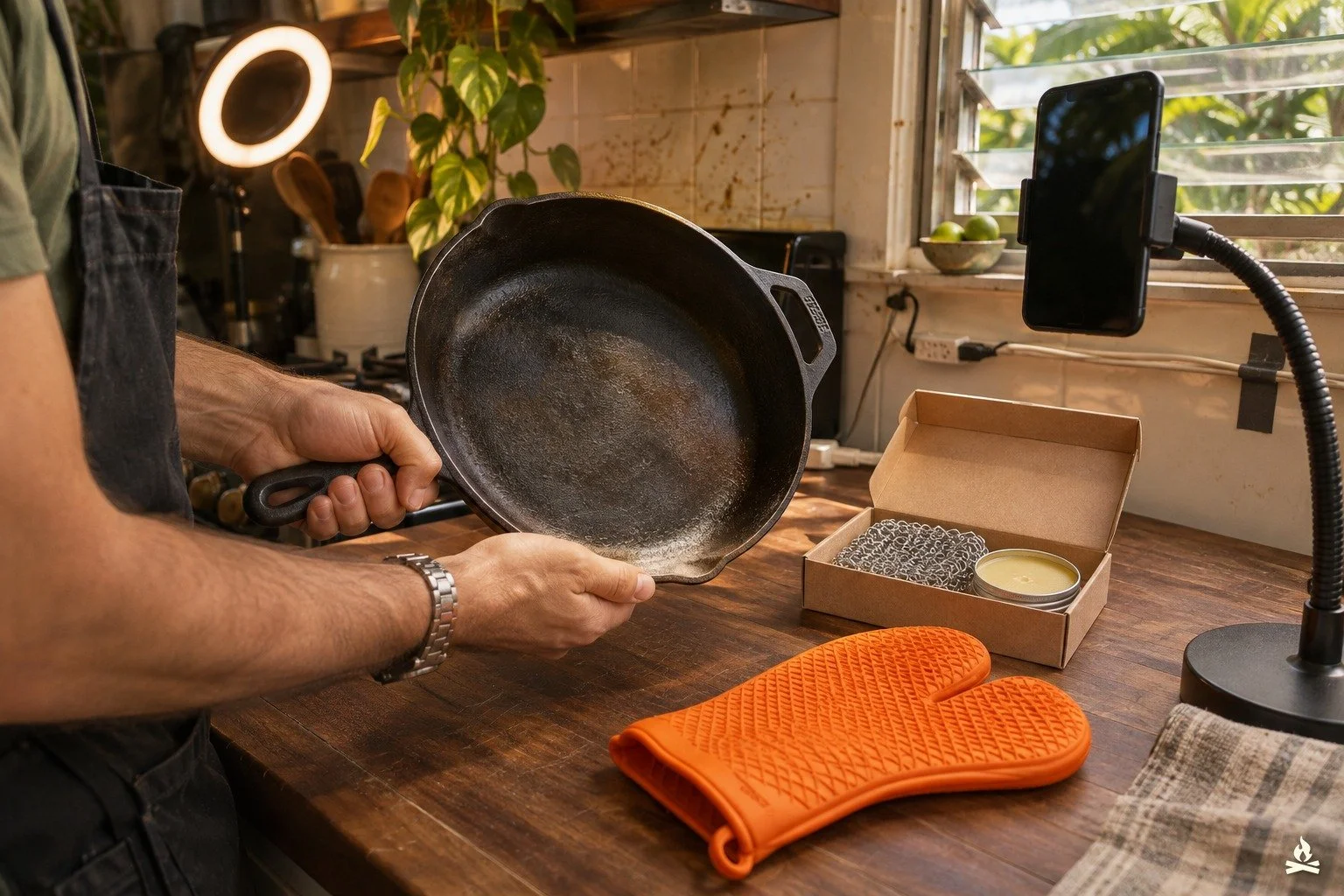
The hypothetical business is a cast-iron care company in Spokane, Washington, that sells a $40 seasoning-and-scrubber kit made in Vietnam. The factory charges $9.50. The 12.5 percent Section 301 tariff that has applied to most Vietnamese goods since July 24, 2026, adds $1.19, and ocean freight and drayage add $1.31, for a landed cost of $12.00 per kit, assuming the kit carries no other duty.¶¶¶ Every figure below that carries no citation is a labeled assumption, and each one leans conservative.
Amazon FBA, per kit:
Referral fee at 15 percent: $6.00
FBA fulfillment for a boxed one-pound kit, assumed: $5.50
Fuel and logistics surcharge at 3.5 percent of that fee: $0.19
Storage, inbound placement and returns, assumed: $0.81
Sponsored Products at 12 percent of sales, assumed: $4.80
Amazon keeps $17.30, or 43 percent of the sale, just under Marketplace Pulse's half-of-revenue benchmark.§§ After the $12.00 landed cost, contribution is $10.70 per kit.
TikTok Shop through an affiliate, per kit:
Referral fee at the reported 8 percent: $3.20
Creator commission at 15 percent: $6.00
Fulfilled by TikTok, assumed mid-range: $3.60
Samples, 40 kits at $16 landed and shipped to recruit creators who sell 1,000 units: $0.64
Seller-funded discount and returns allowance at 5 percent, assumed: $2.00
Fees and costs total $15.44, or 39 percent. Contribution is $12.56 per kit, the best first-order margin of the three, for as long as the videos keep selling.
Shopify with paid social, first order:
Shopify Payments on the Basic plan, 2.9 percent plus 30 cents: $1.46
Plan and apps, $400 a month spread across 1,000 orders, assumed: $0.40
Third-party logistics pick, pack and postage with free shipping, assumed: $6.50
Meta acquisition cost, assumed at $25, well under the $38.99 median: $25.00
The first Shopify order loses $5.36. At the $38.99 median cost per purchase, it loses $19.35.‖‖‖
The second order is where the channels separate. On Shopify, a replenishment email or text triggers the next purchase at about $0.50 in messaging cost, so a repeat order costs $8.86 in payment fees, apps, fulfillment and messaging and contributes $19.14. On Amazon, the brand cannot email the buyer; it has to hope the buyer searches again and defend its own name with branded ads, assumed at 5 percent of sales. That repeat order costs $14.50 in Amazon fees and ads and contributes $13.50. On TikTok Shop, a repeat purchase that comes through another creator's video pays another commission, so the repeat economics look like the first order.
Lifetime contribution per customer, Amazon versus Shopify:
One order: Amazon $10.70, Shopify negative $5.36
Two orders: Amazon $24.20, Shopify $13.78
Three orders: Amazon $37.70, Shopify $32.92
Four orders: Amazon $51.20, Shopify $52.06
Six orders: Amazon $78.20, Shopify $90.34
Multiply by 10,000 customers who each order six times, and the gap is $121,400 in contribution margin. The Amazon column also assumes every repeat buyer finds the brand again instead of clicking a competitor's sponsored listing on the way. The Shopify column assumes the brand actually built the flows. Neither assumption is free.
The lesson is narrower and more useful than "own the channel." The owned channel is a bet on retention. A skillet-care kit that runs out every few months reaches the fourth order. A tent, a mattress or a once-a-decade purchase may never get there, and for those products renting the railroad is not a compromise; it is the strategy. Shopify vs Amazon profit is not a platform question. It is a repeat-rate question.
What happened to de minimis, and why does it matter for online sellers?
De minimis, the rule that let shipments valued at $800 or less enter the United States duty-free, was suspended for every country on August 29, 2025, under Executive Order 14324.**** Since July 24, 2026, postal shipments also pay standard duties, the postal duty-prepaid threshold has risen from $800 to $2,500, and those shipments must be entered by the owner, the purchaser or a licensed customs broker.¶¶¶
For most of the last decade, de minimis let overseas sellers ship individual parcels straight to American doorsteps without paying the duty that a domestic brand paid on every container. Now covered products valued at $800 or less have to be entered through CBP's Automated Commercial Environment by a qualified party, and non-postal shipments pay applicable duties, taxes and fees.**** When the temporary 10 percent Section 122 surcharge expired on July 24, 2026, standard duties, including Section 232 and Section 301 tariffs, began applying to postal shipments for the first time, and a new Section 301 tariff took effect the same day.¶¶¶
The de minimis ending matters in three practical ways for a U.S. brand. First, cross-border sellers on Amazon and TikTok Shop who shipped single parcels from overseas warehouses lost a cost advantage, which narrows the price gap a domestic brand has been fighting for years. Second, any brand that drop-shipped from an overseas supplier now carries duty, brokerage and paperwork it never budgeted. Third, marketplace prices are resetting, and the brand that already knows its landed cost per unit can reprice in an afternoon while competitors are still reading the notice.
There is a railroad lesson inside the customs code. The cross-border parcel sellers who rode de minimis were renting a rate, not owning an advantage, and a rate can be repealed by executive order. A Tampa 3PL that stores domestic inventory for a dozen e-commerce clients spent 2025 and 2026 watching the opposite effect: brands holding stock on U.S. shelves suddenly looked faster and cheaper than competitors shipping from abroad. The merchants who owned their inventory and knew their numbers adapted. The ones who only rented the route are still recalculating.
How do tariffs affect Amazon sellers in 2026?
Tariffs raise landed cost, and on marketplaces they hit twice: once at the port and again when a percentage-based fee is charged on a price raised to cover the duty. The U.S. effective tariff rate was 7.1 percent in August 2026, according to the Penn Wharton Budget Model, and China's effective rate was 24.3 percent.††††
The sequence matters for anyone holding imported inventory. The Supreme Court struck down the IEEPA tariffs on February 20, 2026, and a 10 percent Section 122 tariff replaced them until it expired on July 24, 2026.†††† Section 301 tariffs of 10 or 12.5 percent on imports from 60 economies took its place, with exemptions for certain products.†††† Zonos reports the 10 percent rate for 17 economies, including Canada, Mexico, India and the United Kingdom, and 12.5 percent for most others, including China and Vietnam, with Section 232 goods excluded.¶¶¶ About $166 billion collected under IEEPA is subject to refund, and CBP had certified roughly $126 billion in refunds through October 2, 2026.††††
Back to the Spokane skillet brand. Suppose it raises the Amazon price from $40 to $42 to cover the tariff. Amazon's 15 percent referral fee takes $0.30 of the extra $2, and a 12 percent ad budget takes $0.24 more, so the brand keeps $1.46 of the increase, which still covers the $1.19 tariff with $0.27 to spare. Raise the Shopify price by the same $2 and the brand keeps about $1.94 after the 2.9 percent payment fee. The owned channel passes a price increase through with almost nothing skimmed off the top. Across 100,000 units, that is the difference between $146,000 and $194,000 of recovered margin.
Two cautions belong here. Brands that bought goods delivered duty paid through a supplier or courier are often not the importer of record and may have to pursue any IEEPA refund through that party. And none of this is customs advice: importers should work with a licensed customs broker or trade attorney before filing anything. The tariff math itself is not optional. A manufacturer selling direct for the first time, or a PE-backed consumer platform rolling up three brands with three different suppliers, cannot price a marketplace listing without knowing landed cost per SKU, per channel, after duty.
What is the strongest case for just selling on Amazon?
The strongest case for just being on Amazon is that Amazon already has the buyers, the logistics and the trust, and a brand that tries to rebuild all three on its own often spends more than Amazon charges. For many products, especially one-time purchases with clear search demand, Amazon-only is the most profitable choice a small brand can make.
The steelman deserves its full weight. Third-party sellers account for 61 percent of Amazon's paid units, and the marketplace drives about two-thirds of the company's sales, so the traffic is anything but hypothetical.‖,¶ Shoppers arrive already intending to buy, which is why, in the $40 skillet-kit example, Amazon wins the first three orders. Fulfillment is solved at a scale no small brand can match. Amazon's spokesperson, responding to the Marketplace Pulse survey, put it bluntly: "Even with its flaws, this survey notes that Amazon is the most profitable store for sellers."¶ And with new seller registrations down to 165,000 in 2025, the lowest since tracking began in 2015 and 44 percent below 2024, an established brand faces fewer new entrants than at any point in a decade.¶
There is also a staffing argument. A $2 million brand running Amazon alone needs a marketplace manager and an ad specialist. The same brand running Amazon, TikTok Shop and Shopify needs a creator manager, an email and SMS operator, a paid social buyer, a 3PL relationship and someone who reconciles three sets of payouts every month. If the product is bought once a decade, that overhead never pays back. Even Richard Sears started by renting someone else's railroad and selling to someone else's customers.
Where the steelman breaks is concentration. A single landlord changed the cost of a shipped unit twice between January and April 2026.‖‖,¶¶ Its advertising line, the auction sellers compete in, grew 11 percent in the third quarter against 9 percent for seller services.‖ And a brand that sells only on Amazon owns no customer list, which matters most at exit. A PE-backed consumer platform evaluating its second add-on will value a brand with 80,000 reachable customers differently from a brand with a seller account and a ranking that could slip on one algorithm change. The railroad would carry anyone's watches. The list was the only thing that made Sears's watches different.
Why do fewer SKUs grow faster than a bigger catalog?
Fewer SKUs grow faster because reviews, sales history, ad data, creator content and inventory all concentrate on the products that already win, instead of spreading thin across products that never earn enough velocity to rank. Every platform rewards velocity, and velocity divided by 60 products is a rounding error.
The marketplace data shows how lopsided the rewards are. On TikTok Shop in 2025, more than half of 803,500 U.S. stores sold nothing while more than 2,000 cleared $1 million.** On Amazon, Marketplace Pulse estimates that fewer than 8,000 sellers generate about half of U.S. third-party sales.¶ Those winners are not the stores with the biggest catalogs. They are the stores with a few products that earned a flywheel of reviews, rank and repeat orders.
Picture a Shopify brand doing $4 million across 60 SKUs, with eight of them producing most of the contribution margin. The other 52 tie up cash in inventory, dilute ad budgets, split review counts and give creators too many things to talk about. Cutting to the eight winners, plus one or two tested launches a year, usually lifts conversion rate, review velocity and inventory turns at the same time. It also makes the multichannel problem manageable: eight products can be priced, listed and defended on three platforms; 60 cannot.
Richard Sears did not launch with a general store. The first catalog listed 25 watches.‡ He sold one category until the list was big enough and loyal enough to buy the next thing, and only then did the catalog grow to 507 pages and, eventually, to houses.*,§ The sequence is the strategy: win one product, earn the list, then expand to the people who already trust the brand.
Do email and SMS really drive repeat sales for e-commerce brands?
Yes, and automated flows do most of the work. Klaviyo's benchmarks, drawn from more than 183,000 customers, show flows generating nearly 41 percent of email revenue from just 5.3 percent of sends, with placed-order rates 13 times higher than campaigns and revenue per recipient nearly 18 times higher.‡‡‡‡
Flows are the messages that fire on behavior rather than on a calendar: a welcome series after signup, a post-purchase sequence, a replenishment reminder timed to when the product runs out, a browse or cart abandonment nudge, and a winback for lapsed buyers. Klaviyo puts a good flow click rate at 5.58 percent against 1.69 percent for campaigns.‡‡‡‡ Campaigns are the catalog's seasonal edition. Flows are the order form that shows up the week the farmhouse runs out of something.
Return to the $40 skillet kit. The Shopify customer becomes more profitable than the Amazon customer on the fourth order. A replenishment flow that lands when the seasoning oil runs low is how a brand earns that fourth order on purpose instead of by luck. At about $0.50 in messaging cost per repeat order, the email and SMS program is the cheapest freight the brand will ever buy. Tocobaga's earlier piece on retention math, Norm's Stool Pays the Rent, makes the broader case that the regular at the end of the bar funds the business; for an e-commerce brand, the regular is a subscriber who opens.
The list also survives everything else. If Amazon raises fees, the list still works. If TikTok Shop changes owners, the list still works. If Meta's CPM climbs another 13 percent, the list still works. That durability is what Sears had in his mailing list, and it is what a modern brand has in its own email and SMS platform, provided the brand, not a vendor or an agency, holds the login.

How should a brand split effort across Amazon, TikTok Shop and Shopify?
A brand should split effort by job, not by platform: Amazon to capture existing search demand, TikTok Shop to create demand through demonstration, and Shopify to keep the customer and earn the repeat order. The order of operations below is the one Tocobaga uses with e-commerce brands, manufacturers selling direct and PE-backed consumer platforms.
Build one contribution-margin sheet per SKU per channel, starting from the same landed cost, including tariffs, freight and brokerage.
Cut the catalog to the products that produce most of the contribution margin, and pause new launches until those products are defended on every channel.
Set a price floor for each marketplace so that contribution after referral, fulfillment and advertising never falls below a target dollar figure per unit.
Use Amazon for intent: list the winners, protect branded search, and cap total advertising cost as a share of sales.
Use TikTok Shop for demonstration: seed 20 to 40 creators with samples, set commissions between 10 and 20 percent, and plan inventory around the few videos that sell.
Make Shopify the home: capture email and SMS on the first visit and build the five core flows before buying more traffic.
Track first-order acquisition cost and the order number at which a Shopify customer turns profitable, and report both monthly.
Confirm importer-of-record status and any IEEPA refund eligibility with a licensed customs broker.
Treat every platform fee notice as a pricing meeting within 30 days.
Report one blended number to ownership every month: contribution margin after all channel fees, ads and returns.
The list looks operational because it is. Growth across three channels usually stalls in the spreadsheet before it stalls in the ad account. Tocobaga's earlier guide to budget allocation, The Planes That Didn't Come Back, explains why money should follow evidence of return rather than the loudest channel. The same rule applies here, and the contribution sheet is the evidence.
Does an e-commerce brand need an agency to manage Amazon, TikTok Shop and Shopify?
Not always. A brand with a few hero products on one marketplace and a clean contribution sheet can often run it in-house, while a brand juggling three channels, imported inventory and paid acquisition usually benefits from someone whose whole job is the math connecting them.
The pattern shows up across industries. A consumer brand gets stuck when TikTok Shop sells out the hero SKU and its Amazon ranking slides while it waits on a container. A PE-backed consumer platform in its second add-on finds that each acquired brand reports channel profit differently, so nobody can say which brand actually makes money. A Midwest cookware manufacturer selling direct for the first time learns that the wholesale price list and the Amazon price cannot be the same number. Each one is a railroad problem being solved without a catalog.
Tocobaga builds that connective tissue for brands that want growth measured in contribution margin rather than clicks. An intro call at (813) 534-1261, or a note to hello@solvinghow.com through SolvingHow.com, is the place to start. The model is simple: flat fees, never a percentage of ad spend, no auto-renewing contracts, and the client owns every account, list and asset, from the Shopify store to the email platform login. Tocobaga is not for everyone, and when it is not the right fit, the team will say so and point to someone who is. Owners comparing firms may want to read Tocobaga's guide to choosing one, You Have Died of Tactics, before calling anyone, Tocobaga included.
What is the difference between a sales channel and an owned channel?
A sales channel is any platform that delivers buyers in exchange for a commission, a fee or an auction bid, and the platform can change that price whenever it likes. An owned channel is a direct line to customers that the brand controls, such as its email list, its SMS list, its website and its name, and its cost falls the longer the brand keeps it.
Richard Sears understood the difference before anyone had words for it. He used the railroad because it was the fastest way to reach farm families in a country of 38 states and 58 million people.† He paid the freight. He did not confuse the freight line with the company. He built the catalog, and the catalog built the list.
The ending of the story is the most useful part. In January 1993, Sears discontinued its catalog after 97 years, closing 113 stores and cutting about 50,000 jobs.§§§§ Eighteen months later, on July 5, 1994, Jeff Bezos started an online bookstore called Cadabra in a garage in Bellevue, Washington.‖‖‖‖ It became Amazon. The catalog did not die. It changed owners, and the new owner built the railroad too.
Every brand selling online now pays freight to that railroad, and most should. Amazon brings intent. TikTok Shop brings attention. Both are worth renting whenever the math says so. But the brands still growing in 2030 will be the ones that treated every marketplace sale as a chance to earn a name on their own list. Rent the railroad. Own the catalog. And never let anyone else hold the list.
What percentage does Amazon take from each sale?
Amazon's referral fee is 15 percent in most categories, but the full marketplace take rate is much higher once fulfillment, storage and advertising are counted. Marketplace Pulse estimated that a typical seller pays Amazon more than half of revenue, with fulfillment at 20 to 35 percent and advertising up to 15 percent. In 2026, Amazon also raised FBA fees by an average of $0.08 per unit and added a 3.5 percent fuel and logistics surcharge on fulfillment fees.
How much does TikTok Shop charge sellers in 2026?
TikTok's published U.S. fee table lists a 6 percent referral fee for most categories, with payment processing included, and seller guides reported an increase to 8 percent for most non-food categories in August 2026. The larger cost is usually creator commissions, which most sellers set between 5 and 20 percent, plus free samples for creators and fulfillment that runs about $2.86 to $4.28 per unit through Fulfilled by TikTok. Sellers should confirm current rates in Seller Center.
Is Shopify cheaper than Amazon for a small brand?
On platform fees, yes, by a wide margin. Shopify plans run $39 to $399 a month in the United States, and card processing costs 2.5 to 2.9 percent plus 30 cents per transaction, while Amazon sellers commonly hand over about half of revenue in fees and ads. The catch is traffic. A Shopify store must buy or earn every visitor, and the median Meta cost per purchase reached $38.99 in 2026 benchmarks, so first orders often lose money until customers return.
Does de minimis still apply to e-commerce imports?
No. Duty-free de minimis treatment for shipments of $800 or less was suspended for all countries on August 29, 2025, under Executive Order 14324. Since July 24, 2026, postal shipments also pay standard duties, the postal duty-prepaid threshold has risen to $2,500, and those shipments must be entered by the owner, the purchaser or a licensed customs broker. Brands that import inventory should confirm duties and paperwork with a licensed customs broker before repricing.
Can a brand sell on Amazon, TikTok Shop and Shopify at the same time?
Yes, and many do, but each channel needs its own price floor because the fees differ sharply. A $40 product might earn about $10 to $13 per unit on Amazon or TikTok Shop, lose money on a first Shopify order bought with ads, and then earn more on Shopify repeat orders driven by email and SMS. Inventory planning matters most, because a TikTok video that sells out a hero product can also knock its Amazon listing out of stock.
What is a marketplace take rate?
A marketplace take rate is the share of a seller's revenue that a platform keeps through all of its charges combined, including commissions, fulfillment, storage, advertising and surcharges. It differs from the headline referral fee. On Amazon, the referral fee is usually 15 percent, but Marketplace Pulse estimated total take above 50 percent for a typical seller. Tracking take rate per SKU shows which products actually make money on each platform and which ones only add volume.
How many orders does it take for a Shopify customer to beat an Amazon customer?
It depends on acquisition cost, fees and product margin. In a worked example with a $40 product and a $12 landed cost, a Shopify customer acquired for $25 through Meta ads overtook the Amazon customer on the fourth order. The difference came from repeat orders: about $19 in contribution per order through email or SMS on Shopify, versus about $13.50 on Amazon, where the brand cannot contact the buyer directly and pays referral, fulfillment and ad costs again.
Sources
- *
- Encyclopaedia Britannica. "Richard W. Sears." Britannica Money, accessed October 26, 2026. States that Sears was born December 7, 1863, in Stewartville, Minnesota, took a job with the Minneapolis and St. Louis Railway at 17 after his father's death to support his mother and sisters, sold a shipment of watches refused by a local jeweler by letter to other station agents, made a $5,000 profit, founded the R.W. Sears Watch Company in Minneapolis in 1886, hired Alvah C. Roebuck as a watch repairman and moved to Chicago within a year, saw the catalog reach 507 pages by 1894, and resigned as president in 1909 after a disagreement over the advertising budget. https://www.britannica.com/money/Richard-W-Sears
- †
- Tosto, Paul. "Born in Minnesota, Is the End Finally Near for Sears?" MPR News, March 22, 2017. Reports that Sears was the Minneapolis and St. Louis station agent at North Redwood, sold lumber and coal on the side, bought gold-filled watches that a Chicago jewelry company had shipped and a Redwood Falls jeweler did not want, resold them to other station agents in 1886, and that the 1880s United States had 38 states, about 58 million people and roughly 65 percent rural residents. https://newscut.mprnews.org/2017/03/conceived-in-minnesota-is-the-end-finally-near-for-sears/index.html
- ‡
- Encyclopedia.com. "Sears, Richard." Accessed October 26, 2026. States that the jeweler refused a shipment on which freight charges had not been paid, that Sears offered the watches to other station agents for $14 each and rented a Minneapolis office for $10 a month with no employees, that the first catalog listed 25 watches, that the catalog reached 140 pages with sales near $280,000 by 1892 and 507 pages two years later, and that circulation reached 853,000 by 1900. https://www.encyclopedia.com/arts/educational-magazines/sears-richard
- §
- HISTORY.com Editors. "Sears." HISTORY, August 23, 2017, updated May 28, 2025. Reports that Sears sold watches a local jeweler refused to other station agents, that early watches sold for $14, and that Sears sold an estimated 70,000 to 75,000 mail-order kit homes from 1908 to 1940, starting around $450, with materials that filled two boxcars. https://www.history.com/articles/history-of-sears
- ‖
- Rijo, Luis. "Amazon Ad Revenue Growth Drops to 11% After Prime Day Moves to June." PPC Land, October 29, 2026. Reports third-quarter 2026 net sales of $201.94 billion, advertising revenue of $19.64 billion (up 10.9 percent), third-party seller services of $46.492 billion (up 9 percent), third-party sellers at 61 percent of paid units, unchanged from the second quarter, and Amazon's attribution of the ad slowdown to Prime Day timing. https://ppc.land/amazon-ad-revenue-growth-drops-to-11-after-prime-day-moves-to-june/
- ¶
- Smith, Allison. "Marketplace Briefing: Amazon's Seller Count Falls as Revenue Concentrates Among Top Sellers." Modern Retail, April 23, 2026. Reports active sellers falling from 584,000 to 500,000, 165,000 new registrations in 2025 (lowest since 2015, down 44 percent), fewer than 8,000 sellers generating about half of U.S. third-party GMV (disputed by Amazon), $172 billion in 2025 third-party seller services (about 24 percent of net sales), advertising above $68 billion, fees consuming about half of a seller's revenue, a roughly $150 product with about $80 going to Amazon, a 181-merchant survey in which nearly half cited fees and 46 percent cited ad costs, the April 15 ad boycott, the ad payment change delayed to August 1, the marketplace driving about two-thirds of sales, Amazon's statement that selling fees are 15 percent or less in most categories, and its statement that it is "the most profitable store for sellers." https://www.modernretail.co/operations/marketplace-briefing-amazons-seller-count-falls-as-revenue-concentrates-among-top-sellers/
- **
- Momentum Works and Tabcut. "New Report: TikTok Shop U.S. GMV Grew 68% to Reach US$15.1B in 2025." The Low Down by Momentum Works, accessed October 26, 2026. Reports U.S. GMV of $15.1 billion in 2025 versus $9 billion in 2024, 803,500 stores with more than half recording no sales, more than 2,000 stores above $1 million, 15.4 million influencers, and a sales split of 50 percent video, 36 percent Shop tab and 14 percent live, up from 10 percent. https://thelowdown.momentum.asia/new-report-tiktok-shop-u-s-gmv-grew-68-to-reach-us15-1b-in-2025/
- ††
- EMARKETER. "TikTok Shop Is Becoming a Major US Ecommerce Player." EMARKETER, accessed October 26, 2026. Forecasts TikTok Shop U.S. e-commerce sales of $23.41 billion in 2026, up 48 percent, which would exceed the U.S. e-commerce businesses of Target, Costco, Best Buy and Kroger. https://www.emarketer.com/content/tiktok-shop-becoming-major-us-ecommerce-player
- ‡‡
- Shopify. "Shopify Sustains Rapid Growth with Revenue Up 32% and Free Cash Flow Margin of 22%." GlobeNewswire, November 3, 2026. Reports third-quarter 2026 GMV of $119.145 billion (up 29 percent), revenue of $3.742 billion (up 32 percent) and a 22 percent free cash flow margin. https://finviz.com/news/414087/shopify-sustains-rapid-growth-with-revenue-up-32-and-free-cash-flow-margin-of-22
- §§
- Kaziukenas, Juozas. "Amazon Takes a 50% Cut of Sellers' Revenue." Marketplace Pulse, February 13, 2023. Reports total Amazon fees above 50 percent of a typical seller's revenue, up from 40 percent five years earlier, with a 15 percent referral fee (as low as 8 percent) unchanged for over a decade, FBA fees of 20 to 35 percent, advertising up to 15 percent, private-label sellers often spending over 10 percent on ads, and some sellers paying 60 to 70 percent. https://www.marketplacepulse.com/articles/amazon-takes-a-50-cut-of-sellers-revenue
- ‖‖
- Amazon. "Update to U.S. Referral and Fulfillment by Amazon Fees for 2026." Amazon Selling Partners, October 15, 2025. Announces an average FBA fee increase of $0.08 per unit sold, under 0.5 percent of an average item's selling price, effective January 15, 2026, and states that "There will be no new FBA fee types in 2026." https://sellingpartners.aboutamazon.com/update-to-u-s-referral-and-fulfillment-by-amazon-fees-for-2026
- ¶¶
- Haleem, Abbas. "Amazon to Add Fuel and Logistics Surcharges." Digital Commerce 360, April 3, 2026. Reports a 3.5 percent surcharge on fulfillment fees starting April 17, 2026, for FBA in the U.S. and Canada and May 2 for Buy with Prime and Multi-Channel Fulfillment, averaging $0.17 per U.S. FBA unit and in place "until further notice," crude at $112 a barrel on April 3 versus about $60 on February 3, and a seller's comment that "'Temporary' surcharges have a way of becoming permanent." https://www.digitalcommerce360.com/2026/04/03/amazon-to-add-fuel-and-logistics-surcharges/amp/
- ***
- FastMoss Analytics Team. "TikTok Shop Seller Costs in the US (2026): Fees, Creator Commissions, Fulfillment, Returns and Real Profit." FastMoss, June 12, 2026. Lists a 6 percent referral fee for most U.S. categories with payment processing included, a promotional 3 percent rate for 30 days for new sellers, creator commissions mostly between 5 and 20 percent with medians of 15 percent in beauty, 20 percent in health and 10 percent in womenswear, Fulfilled by TikTok costs of about $2.86 to $4.28 per unit, and a $50 order example with about $10.50 in fees at a 15 percent commission. https://www.fastmoss.com/blog/tiktok-shop-seller-costs-in-the-us-2026-fees-creator-commissions-fulfillment-returns-real-profit/
- †††
- Smolinski, Denny. "TikTok Shop's Reported 8% Referral Fee Puts New Pressure on Seller Margins." beBOLD Digital, September 8, 2026, updated September 14, 2026. Reports seller guides describing a move from a 6 percent to an 8 percent referral fee for most non-food categories effective August 4, 2026, while noting that TikTok's public category table, revised in May 2026, still listed 6 percent. https://www.bebolddigital.com/news/tiktok-shop-8-percent-referral-fee
- ‡‡‡
- Chickering, Kelsey. "TikTok Seals the Deal with New US Joint Venture." Forrester, January 23, 2026. Reports the deal finalized January 22, 2026, with MGX, Oracle and Silver Lake holding about 45 percent and ByteDance just under 20 percent, the joint venture controlling U.S. data security, the algorithm and content moderation, commercial activities including e-commerce, advertising and marketing remaining with ByteDance, and an expectation that advertisers and creators diversify in the short term. https://www.forrester.com/blogs/tiktok-seals-the-deal-with-new-us-joint-venture/
- §§§
- Shopify. "Shopify Pricing." Shopify, accessed November 11, 2026. Lists U.S. plans at $39 (Basic), $105 (Grow) and $399 (Advanced) a month billed monthly, Shopify Payments online card rates of 2.9, 2.7 and 2.5 percent plus 30 cents, and third-party payment provider fees of 2.0, 1.0 and 0.6 percent. https://www.shopify.com/pricing
- ‖‖‖
- Burban, Ivan. "Facebook Ads Statistics 2026: Benchmarks by Objective, Industry and Format." Coupler.io, September 25, 2026. Cites Triple Whale 2026 benchmarks showing a median e-commerce Meta CPM of $15.06 (up 13.24 percent), a median e-commerce cost per purchase of $38.99 (up 3.14 percent) and an e-commerce conversion rate of 1.53 percent. https://blog.coupler.io/facebook-ads-statistics/
- ¶¶¶
- Zonos. "US Tariff Updates." Zonos, updated October 14, 2026. Reports that the 10 percent Section 122 surcharge expired July 24, 2026, that standard duties including Section 232 and Section 301 began applying to postal shipments, that de minimis remains suspended, that the postal duty-prepaid threshold rose from $800 to $2,500 with entry by the owner, purchaser or a licensed broker, and that Section 301 forced-labor tariffs of 10 percent (17 economies including Canada, Mexico, India and the UK) and 12.5 percent (most others including China and Vietnam) took effect July 24, 2026, excluding Section 232 goods. https://zonos.com/us-tariff-updates
- ****
- KPMG. "U.S. CBP Implements EO Suspending Duty-Free De Minimis Treatment." KPMG TaxNewsFlash, August 28, 2025. Reports that Executive Order 14324 suspended duty-free de minimis treatment for all countries effective August 29, 2025, that covered products valued at $800 or less must be entered through ACE by a qualified party, and that non-postal shipments are subject to applicable duties, taxes and fees. https://kpmg.com/us/en/taxnewsflash/news/2025/08/us-cbp-implements-eo-suspending-duty-free-de-minimis-treatment.html
- ††††
- Penn Wharton Budget Model. "Effective Tariff Rates and Revenues: Updated October 14, 2026." University of Pennsylvania, October 14, 2026. Reports an effective U.S. tariff rate of 7.1 percent in August 2026, China's effective rate of 24.3 percent, the February 20, 2026, Supreme Court ruling on IEEPA tariffs, the 10 percent Section 122 tariff that expired July 24, 2026, replacement Section 301 tariffs of 10 or 12.5 percent on 60 economies, and about $166 billion subject to refund with about $126 billion certified through October 2, 2026. https://budgetmodel.wharton.upenn.edu/p/2026-10-14-effective-tariff-rates-and-revenues-updated-october-14-2026/
- ‡‡‡‡
- Klaviyo. "Email Benchmarks." Klaviyo, January 23, 2026, updated September 24, 2026. Based on more than 183,000 customers, reports flows generating nearly 41 percent of email revenue from 5.3 percent of sends, placed-order rates 13 times higher and revenue per recipient nearly 18 times higher than campaigns, and good click rates of 5.58 percent for flows versus 1.69 percent for campaigns. https://klaviyo.com/products/email-marketing/benchmarks
- §§§§
- The Christian Science Monitor. "The End of the 'Wish Book.'" The Christian Science Monitor, January 29, 1993. Reports that Sears discontinued its catalog after 97 years, along with closing 113 stores and cutting about 50,000 jobs. https://csmonitor.com/1993/0129/29204.html
- ‖‖‖‖
- HISTORY.com Editors. "Amazon Is Founded by Jeff Bezos." HISTORY, June 26, 2024, updated May 27, 2025. States that Amazon was founded on July 5, 1994, in Jeff Bezos's garage in Bellevue, Washington, as an online bookstore originally named Cadabra. https://www.history.com/this-day-in-history/july-5/amazon-is-founded-by-jeff-bezos