



Law Smith
Founder & President, Tocobaga
Law Smith is the Founder and President of Tocobaga, a Tampa-based ROI-focused marketing agency and SMB advisory. He has strategically advised 1,000+ small and medium businesses, executed 600+ integrated marketing campaigns, and written 30+ business plans across industries ranging from professional services to e-commerce to B2B technology. Tocobaga is a Google Partner and Squarespace Gold Partner headquartered in Ybor City.
In 1983, a film crew shot a modest movie, set in the San Fernando Valley, about a skinny teenager who keeps getting beaten up. The teenager is Daniel LaRusso, played by Ralph Macchio, freshly moved with his mother from Newark, New Jersey, to an apartment complex in Reseda. The complex has a handyman, an Okinawan immigrant named Mr. Miyagi. He is played by Pat Morita, who had spent part of his own childhood held with his parents at the Gila River incarceration camp in Arizona.* Daniel begs the handyman to teach him karate. Miyagi agrees. Then he points the kid at a row of cars that need waxing.
Day one, Daniel waxes Miyagi's cars, small circles, right hand on, left hand off. Day two, he sands the wooden floors. Day three, he paints the fence with vertical strokes. Day four, he paints the house with horizontal ones. By the end Daniel is sore and certain he has been conned into four days of free labor by the building maintenance man. He says so, loudly, and threatens to quit.
Then Miyagi throws a punch, and Daniel blocks it without thinking. Another punch: paint the fence. A kick: wax off. Every motion Daniel resented turns out to be a defensive block, repeated so many times it moved out of his head and into his shoulders. The chores were never chores. They were the training, disguised as maintenance, delivered by the maintenance man.
The Karate Kid opened June 22, 1984, and earned about $91 million at the domestic box office.† Pat Morita was nominated for Best Actor in a Supporting Role at the 57th Academy Awards.‡ A generation of kids absorbed the lesson that the boring, repetitive thing is usually the important thing. Then many of them opened businesses and forgot it.
Every local business owns a driveway full of Miyagi's cars. It is called a Google Business Profile: the panel on Google Search and Maps that shows a company's name, stars, hours, photos and call button. Owners build it once and treat everything after as chores. Google's own help center says shoppers are 2.7 times more likely to consider a business reputable when they find a complete profile, 70 percent more likely to visit and 50 percent more likely to consider buying.§
Tocobaga, the ROI-focused marketing agency and SMB advisory that Law Smith runs from Ybor City in Tampa, hears a version of the same question from nearly every owner who calls about local search, and it never arrives in marketing language. It sounds like this: "What are the highest-ROI things I should be doing on my Google Business Profile every month that actually bring in more calls or visits?" Not setup. Not theory. The recurring chores, ranked, with the reason each one pays. Tocobaga's earlier field guide on SolvingHow.com, Worth a Detour, covers building the profile, and The New Phone Book Is Here covers why the profile matters at all. What follows is the part after the build: the weekly, monthly and quarterly maintenance that turns a finished profile into a winning one, ranked by return and updated for everything Google changed between 2024 and 2026.
What should a Google Business Profile monthly checklist include?
A Google Business Profile monthly checklist should rank recurring tasks by how directly they produce calls, direction requests and website visits: review requests and replies first, edit monitoring and photos next, then hours, posts, reporting, services and categories. The tasks that move the needle are small, repetitive and dull, which is exactly why most profiles skip them.
The ranking below comes from two places. The first is Whitespark's 2026 Local Search Ranking Factors survey, in which 47 local search experts scored 187 factors; it was published November 6, 2025, and it is the closest thing the industry has to a consensus playbook.‖ The second is what Tocobaga sees inside client profiles across home services, professional services and PE-backed platforms: which chores show up in the call log within 30 days and which only show up in an agency's monthly slide deck.
Weekly: ask every completed customer for a Google review and reply to every new review within one business day.
Weekly: check the profile for suggested edits and Google updates, because owners get only four days to reject a suggested change before Google may publish it.
Weekly: upload two or three original photos of real jobs, real staff and the real location.
Monthly: confirm regular hours and set special hours for every holiday in the next 60 days.
Monthly: publish one or two posts, at least one built around a concrete offer with an end date.
Monthly: read the performance report for calls, website clicks and direction requests, then reconcile it against call tracking and UTM-tagged website visits.
Monthly: audit the services and products lists against what the business actually sells this quarter.
Quarterly: audit the primary and additional categories against the three competitors that outrank the business.
Quarterly: ask Google Maps' Ask Maps feature the questions customers actually ask, and record what the AI says about the business.
Quarterly: review the name, description, attributes and nearby competitor spam, making one change at a time.
For a single-location business, the whole list runs three to five hours a month in Tocobaga's experience, most of it in 15-minute blocks. That is the wax-on, wax-off math. No single session feels like it matters, and the sum of them is the difference between the profile that gets the call and the profile that gets scrolled past.
Owners who try the cadence for a month tend to reach for a different movie: Groundhog Day, the 1993 Bill Murray comedy about a weatherman stuck living the same day over and over. The comparison is closer than they mean it to be. Murray's character only escapes the loop after he stops resenting the repetition and starts using it to get better. The rest of the field guide takes each item in order, with the evidence for why it sits where it sits.
| Task | Cadence | Time per month | Why it pays |
|---|---|---|---|
| Review requests and replies | Weekly | 60 to 90 minutes | Review recency ranks 11th; 74% of shoppers only weigh the last three months (Whitespark, BrightLocal, 2026) |
| Suggested edit and Google update check | Weekly | 20 minutes | Owners get four days to reject a suggested change before Google may publish it (Google) |
| Original photos of real jobs and staff | Weekly | 40 minutes | No measured ranking lift, but photos decide which business looks real (Sterling Sky) |
| Regular and holiday hours | Monthly | 10 minutes | Open at time of search is the 5th local pack factor (Whitespark, 2026) |
| Posts and offers | Monthly | 30 minutes | No ranking effect in testing; a conversion tool for timely offers (Sterling Sky) |
| Performance report reconciliation | Monthly | 20 minutes | The calls metric counts button taps, not booked jobs (Google) |
| Services and products audit | Monthly | 15 minutes | Predefined services rank 22nd and feed what Ask Maps can answer (Whitespark, 2026) |
| Category, name and competitor spam audit | Quarterly | 30 minutes per quarter | Primary category is the 1st local pack factor; spam removal ranks 19th (Whitespark, 2026) |
Why does Google Business Profile maintenance matter more in 2026 than it did in 2023?
Google Business Profile maintenance matters more in 2026 because the local algorithm now rewards freshness and live accuracy, not just a profile that was built correctly once. Review recency climbed from the 93rd most important local pack factor in Whitespark's 2023 survey to 11th in 2026, and "business is open at time of search" entered the top five.‖,¶
Look at the 2026 top five: primary category, proximity of the address to the searcher, keywords in the business name, a physical address in the city being searched and whether the business is open when someone searches.‖ Two of those are fixed by geography. One is fixed by the name on the incorporation papers. The other two, category and hours, are things an owner maintains. Further down, the list reads like a chore chart: high star ratings at sixth, additional categories at eighth, quantity of reviews with text at ninth, review recency at 11th, a "sustained influx of reviews over time" at 14th and profile completeness at 16th.‖
Customers moved in the same direction. BrightLocal's 2026 Local Consumer Review Survey of 1,002 U.S. adults found that 74 percent of consumers only care about reviews written in the last three months, 89 percent expect a business to respond to reviews and 19 percent expect a response on the same day, up from 6 percent a year earlier.**
Translate that into a storefront. A two-partner estate planning firm in Clearwater with 140 five-star reviews, the newest one from May, looks to three out of four shoppers like a firm with no recent clients at all. The 140 reviews are a trophy case. The last 90 days are the job interview. The firm did the hard part years ago and is losing to a competitor with 40 reviews, eight of them from October.
This is the Miyagi problem in one number. Daniel did not wax one car and call himself trained. He waxed all of them, then came back the next morning and sanded the floor. A profile that was optimized in 2023 and left alone is a car that was waxed once, three summers ago, and has been parked under a live oak ever since.
What happened to Google Business Profile Q&A?
Google retired it. The Business Profile Q&A API was shut down on November 3, 2025, and in December 2025 Google confirmed that the public questions and answers section was being replaced by instant AI-generated answers built from the business's own information and its reviews.††
The retirement fits a pattern. Google removed Business Profile chat and call history on July 31, 2024, after notifying customers with open conversations on July 15.‡‡ That is two owner-controlled channels for talking to strangers on Google, both gone in less than a year and a half. The direction is unmistakable: Google wants the profile to be a data source its own systems speak for, not a message board the owner moderates.
For years, savvy owners used Q&A as a free FAQ. A Tampa 3PL could post a question about temperature-controlled freight and answer it in its own words. A personal injury firm could make clear that consultations were free. A Shopify brand with a pickup showroom could explain its return window. Those answers now come from an AI that reads profile fields and review text, and the owner no longer holds the pen.††
The practical response is a relocation, not a mourning period. Every question the business used to answer in Q&A belongs in three places now: the profile description and services list, an answer-first FAQ page on the website, and, organically, in customer reviews that describe the actual experience. Tocobaga's rule of thumb is simple. If a question gets asked on the phone twice a month, the answer should exist in writing in at least two of those three places. The AI cannot quote what nobody wrote down.
There is a Miyagi parallel here, too. Miyagi never handed Daniel a manual. Everything Daniel learned, he learned from repeated motion, and the knowledge lived in his body instead of a binder. The profile now works the same way. The answers live in the accumulated weight of fields and reviews, not in a single answer pinned to the top of a page.
What is Ask Maps and how does it choose which businesses to recommend?
Ask Maps is a conversational search feature inside Google Maps, built with Google's Gemini models, that Google introduced on March 12, 2026, as "a new conversational experience that answers complex, real-world questions." It draws on information about more than 300 million places and reviews from more than 500 million contributors, and it began rolling out on Android and iOS in the U.S. and India.§§
Google has not published how Ask Maps ranks businesses, and anyone who claims to know the formula is selling something. What is known is what the system reads. It reads place data, which is where a profile's categories, hours, services and attributes live. It reads reviews, which is where customers describe the job in their own words. And it personalizes answers using places a person has searched for or saved.§§ Whitespark's Q3 2026 roundup flagged that saved places may act as a ranking signal for agentic tasks, and local search consultant Claudia Tomina summed up the shift plainly: a listing used to be something people looked at, and now it is data an AI agent acts on.‖‖
That one idea rearranges the checklist. In the old model, a messy profile cost the business a few skeptical humans. In the new model, the messy profile is the raw material an AI uses to answer a question like "Who can fix a slab leak in Brandon this weekend and will actually pick up on Saturday?" If the hours are wrong, the AI is wrong. If the services list says nothing about slab leaks, the AI has nothing to quote. If the last 30 reviews say "great service" and nothing else, the AI learns nothing.
The quarterly Ask Maps check on the checklist exists for this reason. Once a quarter, someone at the business should open Google Maps on a phone, ask the three questions customers ask most, and screenshot what comes back. It costs 15 minutes. It is the closest thing an owner has to watching Miyagi throw a punch and finding out whether the block holds.
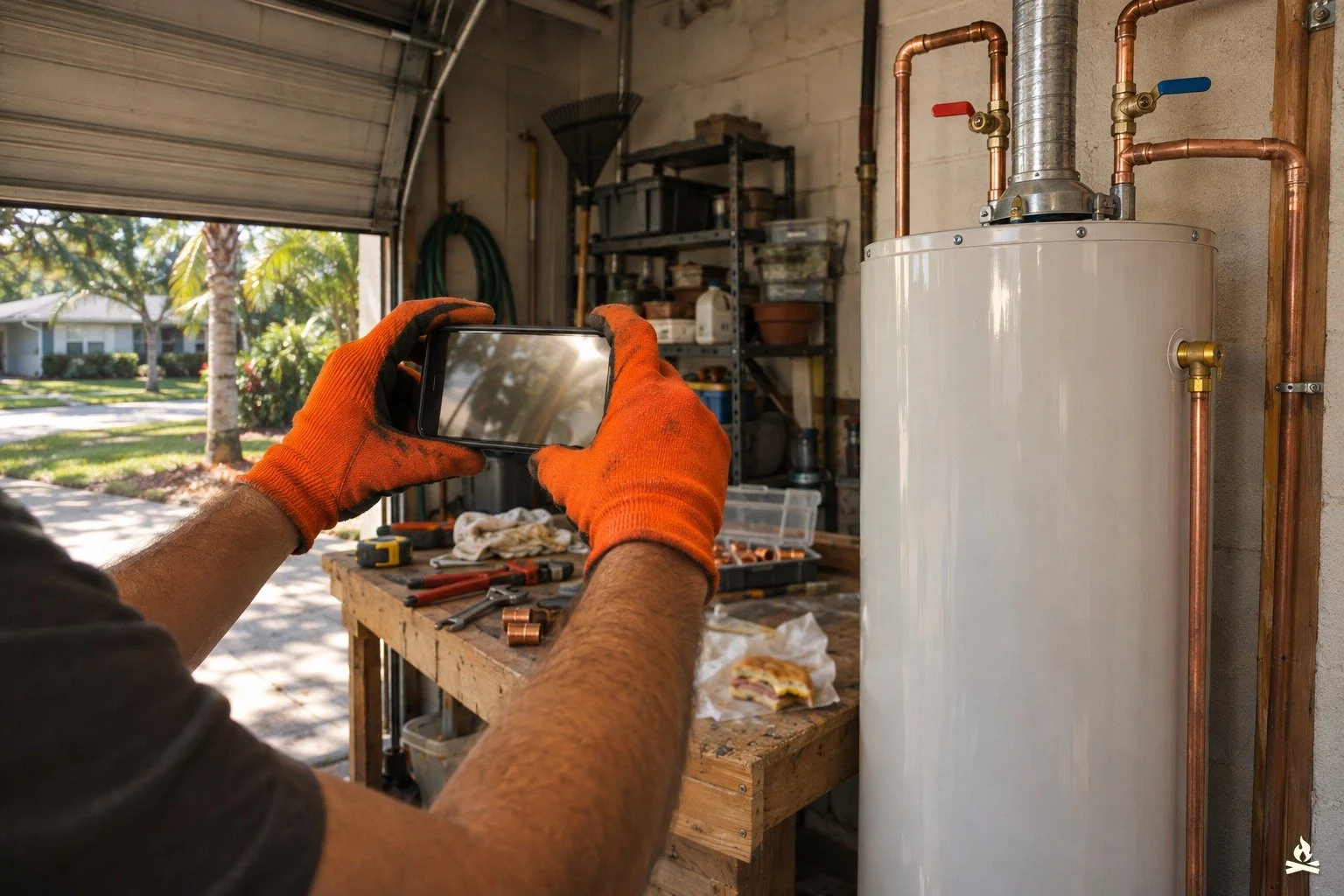
How often should a business ask for Google reviews and reply to them?
A business should ask for a Google review after every completed job and reply to new reviews at least weekly, ideally within one business day. Review recency now ranks as the 11th most influential local pack factor and a "sustained influx of reviews over time" ranks 14th, so a steady weekly drip beats an annual blitz.‖
The blitz is the most common mistake Tocobaga sees. An owner reads that reviews matter, emails the whole customer list in January, collects 60 reviews in three weeks and goes quiet. By May the profile looks exactly as stale as it did before the blitz to the 74 percent of shoppers who only care about the last three months.** Compare a PE-backed HVAC platform with 12 locations that builds the request into the technician's closeout on every call. At just five reviews per location per month, every location always shows 15 fresh reviews in the trailing 90 days, and the platform collects 720 a year without running a single campaign.
Replies are the second half of the chore, and expectations are climbing fast. BrightLocal found that 19 percent of consumers now expect a reply the same day they post, more than triple the 6 percent of a year earlier, and 89 percent expect a reply at some point.** A reply is also public copy. Every future shopper reads it, and so, increasingly, does Ask Maps. A reply that greets the customer by first name, mentions the specific job and neighborhood in a natural sentence and signs off with a real person's name does more work than "Thanks for the kind words!" pasted 300 times.
Two guardrails keep the chore from becoming a liability. First, Google's help center states that soliciting reviews through incentives or review stations violates its policies, so the ask has to be a plain request with a direct link, never a discount for five stars.§ Second, Google has added an option for people to report owner responses that may violate its content policies, which means a snarky reply to a one-star review is now something that can be flagged, not just an embarrassment.‖‖
Wax on is the ask. Wax off is the reply. Daniel used both hands on every car, and the profile needs both motions every week.
Do Google Business Profile posts help ranking?
Google Business Profile posts do not measurably help ranking, according to the most cited controlled test on the question. Sterling Sky published one post a week for nine weeks on three inactive profiles, tracked 441 keywords per location and concluded that posting had "no measurable impact on rankings in the local pack."¶¶
That finding annoys agencies that sell posting packages, and it should. Joy Hawkins, who ran the test, was direct about what posts are for: they "should be seen as a way to increase conversions and deliver a message to potential customers," and not "as a way to increase rankings for specific keywords on Google."¶¶ The test dates to 2021 and Sterling Sky still keeps it published. Nothing among the top 20 local pack factors in Whitespark's 2026 survey involves posts.‖
So posts move down the ROI ladder, but they stay on it, for three reasons. Posts are the only place on the profile where the business controls a timely message: a holiday schedule, an emergency line, a seasonal price. An offer post with a clear price and an end date gives a comparison shopper a reason to call this plumber instead of the one listed beside it. And a profile with a post from last week signals that someone is home, the same signal review recency sends.
The monthly cadence Tocobaga recommends is one or two posts, at least one built around a specific offer. A Brandon plumber's November post might say, in plain words, that the company is open the Friday after Thanksgiving with a flat diagnostic fee and a named emergency line. A Shopify brand doing $4 million a year with a Tampa pickup showroom might post its holiday pickup hours and its gift-return deadline. Neither post will move a ranking. Both will move a phone.
In Miyagi terms, posts are the paint on the house. Painting the house trained a block, but nobody in Reseda judged Miyagi's house by its muscle memory. They judged it by whether it looked cared for. Posts are how a profile looks cared for this week.
How many photos should a business add to its Google Business Profile each month?
Most local businesses should add eight to 12 original photos a month, roughly two or three a week, so the newest image on the profile is never more than a week or two old. Google's help center tells owners to add photos and videos regularly and ties regular uploads to customer engagement and search visibility, though Sterling Sky's case study found adding photos produced no measurable ranking change.§,***
Those two statements are not a contradiction. Sterling Sky added photos to listings in four industries, from dermatology to auto sales, and reported "no measurable impact to rankings" in every case.*** In a reply to a reader, Hawkins added that photos do raise profile views, while cautioning that views alone are a weak metric. Ranking is one job. Persuasion is the other, and photos are the persuasion layer. The shopper comparing three roofers on a phone screen at 9 PM picks the one that looks real.
What to shoot matters more than how many. Whitespark's Q3 2026 roundup relayed Cyrus Shepard's observation that photos with real people appear to outperform generic product shots for AI visibility.‖‖ It is an observation, not a controlled study, but it matches what shoppers do with their thumbs. Stock photos of smiling models in spotless hard hats teach the shopper and the AI nothing. A photo of the actual crew, beside the actual truck, in front of a recognizable Valrico cul-de-sac teaches both.
The system that works is boring on purpose. Every technician takes one before photo and one after photo on every job. A Tampa 3PL photographs the dock doors, the racking and the night shift once a month. A Clearwater law firm photographs the conference room, the parking lot and the two partners looking like people instead of headshots. A Pinellas manufacturer photographs the shop floor during a real run. The office manager uploads the best three every Friday.
Nobody remembers doing it after the second month. That is the point. Daniel did not remember choosing to block; his shoulders remembered for him.
How do holiday hours affect a Google Business Profile?
Holiday hours decide whether a business appears at all on the days demand spikes, because "business is open at time of search" is now the fifth most influential local pack factor.‖ Google recommends confirming hours for official holidays even when they match regular hours, so shoppers can see that the holiday schedule is accurate instead of guessing.†††
The calendar is not subtle this year. Thanksgiving falls on Thursday, November 26, 2026; Black Friday on November 27; Christmas on Friday, December 25; and New Year's Day on Friday, January 1, 2027. A business that has not set special hours for each of those days is betting that Google and the shopper will both guess correctly. Google's special hours tool covers changed hours or closures of up to six consecutive days; anything longer, such as a manufacturer's two-week year-end shutdown, calls for marking the location temporarily closed instead.†††
Hours do more than holiday duty. Whitespark's Miriam Ellis reported that rankings begin to degrade in the final hour a business is open each day.‡‡‡ Picture that Clearwater estate planning firm listing 9 to 5. By 4 PM its visibility is already sliding, and after 5 PM it competes at a disadvantage for the "estate planning attorney near me" search that a working adult runs after dinner. If the firm genuinely answers calls until 7 PM with staff, its listed hours should say so, because Google's guidelines ask for regular customer-facing hours of operation.§§§ If nobody is there after 5, listing longer hours is a lie the algorithm may eventually catch and the client will catch immediately.
This is paint-the-fence work: up, down, every board, every holiday. It takes ten minutes a month. Skipping it is how a business ends up showing as closed on Google during the busiest Saturday of the season while its trucks sit idle in the lot.

Should a business put keywords in its Google Business Profile name?
A business should only have keywords in its Google Business Profile name if those words are genuinely part of its real-world name, on its signage and paperwork. Keywords in the business title are the third most influential local pack factor, but Google's guidelines prohibit adding unnecessary words such as service or location descriptors and warn that violations "could result in the suspension" of the profile.‖,§§§
The data explains why the temptation is so strong. Whitespark's analysis of more than 1.4 million profiles across 17 industries found a strong correlation between keywords in business titles and two, three and even five times more top-three local pack rankings, and in 15 of 16 industries examined, names that began with the keyword earned more top-three rankings than names that ended with it.‖‖ "Plumbing by Andy" beats "Andy's Plumbing," in other words. Google's own example of a violation is just as clear: "Midas" is acceptable, and "Midas Auto Service Experts" is not.§§§
So the honest path splits in two. A new business, or one rebranding anyway, can choose a descriptive real name and put it on the trucks, the website, the state filing and the profile in a deliberate sequence. A PE-backed platform folding three acquired companies into one brand is in exactly that position, and the name decision deserves an hour of local search thinking before the vinyl goes on the vans. An established business with a non-descriptive name should leave the name alone and win on category, reviews and hours.
The dishonest path is stuffing "Best Tampa Injury Lawyer" onto a firm actually named Ramirez and Cole. It works until it doesn't, and when it doesn't, the profile goes dark.
There is an offensive play hidden in here. Removal of spam listings through spam fighting ranks 19th among 2026 local pack factors, so reporting competitors who stuff their names or invent fake locations is a legitimate quarterly chore.‖ Every fake listing removed above a business is a spot that business moves up without changing a thing on its own profile. Miyagi taught defense first. Sometimes the best block is simply getting the other guy disqualified for cheating.
Why do Google Business Profiles get suspended after edits?
Google Business Profiles get suspended after edits because Google's systems treat sudden changes to core fields, such as name, address, categories, hours and website, as possible signs of a hijacked or rule-breaking profile, and they often suspend first and review later. Google says it "may suspend or disable Business Profiles that don't follow our guidelines," and its help center notes that appeals can only be submitted once.‖‖‖
The single-appeal rule is the part owners miss. It turns a sloppy afternoon of edits into a one-shot hearing.
BrightLocal documented a wave of suspensions in 2022 and collected the edits practitioners saw triggering them. Google Diamond Product Expert Ben Fisher listed editing hours, the description, the name or the categories, editing the address and marking the business temporarily closed, and he flagged adding website parameters as a trigger, with about a third of those profiles suspended in his experience. Reinstatement waits ran roughly three to six weeks.¶¶¶ Joy Hawkins of Sterling Sky gave the advice that has become Tocobaga's standing rule: "only do one or 2 edits at a time," and "spread this work out over time."¶¶¶ She also noted that businesses in spam-heavy categories, such as locksmiths, drug rehab centers and personal injury attorneys, face more risk when they change many fields at once.
The one-change rule, applied:
Make one change to one core field, and only one.
Log the date, the old value and the new value in a shared sheet.
Wait seven days and confirm the profile is live and the change published.
Only then make the next change.
In karate terms, one clean block beats ten moves thrown at once. Miyagi taught one motion a day for four days, not four motions in one frantic afternoon. The profile deserves the same patience, especially in the weeks before a holiday rush, when a suspension costs the most.
How can a service-area business compete in the map pack without a visible address?
A service-area business competes by winning the factors it controls, because the one it cannot control is stacked against it. A visible address is the seventh most influential local pack factor, and Google's guidelines tell service-area businesses run from a home address to hide it, so plumbers, mobile mechanics and in-home care agencies start a step behind every storefront.‖,§§§
Whitespark's Miriam Ellis noted that hiding a service-area business's address has long been associated with ranking harm.‡‡‡ Google's guidelines also limit the service area to roughly two hours of driving from the base, prohibit virtual offices that are not staffed during business hours and let hybrid businesses, such as a repair shop that also makes house calls, show the storefront and a service area at the same time.§§§ That last rule matters more than most owners realize. A Brandon plumber with a staffed shop and a parts counter is a hybrid, not a pure service-area business, and may be hiding an address it is allowed to show.
For true service-area businesses, the playbook is categories, completeness, reviews and services. Whitespark's study of 1.8 million profiles found that a specific primary category correlated with roughly 36 percent higher presence in the top 10, well-chosen additional categories correlated with rankings 6 to 17 positions better than a lone primary category, and moving from the bottom to the top of its completeness index correlated with an average improvement of about 19 positions.‖‖ A plumber listed only as "Plumber" is leaving positions on the table. A plumber whose additional categories and services list mirror the water heater, drain and repiping jobs it actually runs is not.
Reviews carry the geography a hidden address cannot. A review describing a repiped kitchen in Valrico or a slab leak in Riverview tells shoppers and Ask Maps where the company really works. Nobody should script those words; scripted reviews read as fake to shoppers and invite scrutiny. But an owner can ask customers to describe the job in their own words, and real descriptions tend to include the neighborhood.
Think of the service-area business as Daniel at the tournament: smaller, outmatched on paper, missing the advantage everyone else brought. He did not win by growing. He won on fundamentals drilled until they were automatic.
How can a business track the calls its Google Business Profile produces?
A business tracks Google Business Profile calls by pairing the profile's own performance report with a UTM tag on the website link, call tracking and a lead source field in the CRM, then reconciling all of them monthly. Google defines the calls metric as "the number of times a customer clicked on the call button," which counts taps, not connected, qualified conversations.****
That gap is where most reporting goes wrong. A profile can report 150 calls in a month that the front desk remembers as 90, because people tap and hang up, tap by accident or call back later from a desk phone. The performance report also covers website clicks, direction requests and bookings, and its searches metric, the terms people used to find the business, updates at the start of each month.**** Those numbers are a starting point, not a verdict.
The setup Tocobaga uses:
A UTM tag on the profile's website link, so analytics separates profile visitors from ordinary organic visitors.
A call tracking number on the website, with the main business number still matching the profile and every directory, because HTML name, address and phone matching the profile ranks 15th among local pack factors.‖
A lead source field in the CRM, filled in on every booked job, with "Google Maps" and "AI assistant" as separate options.
A monthly 20-minute reconciliation: profile calls, tracked calls, booked jobs, revenue.
The UTM tag carries a warning that loops back to suspensions. Adding parameters to the website link was one of the edits practitioners saw trigger suspensions in BrightLocal's 2022 reporting.¶¶¶ Add it once, as its own isolated change, with nothing else edited that week. Tocobaga's earlier piece on proving marketing ROI, The Map Is Not the Pump, explains why the reconciliation matters more than any dashboard: a tap on a call button is not revenue until someone books the job and the invoice clears.

What is one position in the Google map pack worth to a local business?
For a typical local service business, one position in the map pack is worth tens of thousands of dollars a year, because clicks fall steeply after the first spot. In BrightLocal's controlled click test, in which 5,500 people viewed service-business search results, the first local pack listing drew 17.3 percent of clicks, the second 12.0 percent and the third just 2.9 percent when no Local Services Ads appeared.††††
That test dates to 2018, and results pages have changed since, so the exact spread is directional. The shape is what matters, and the shape is a cliff. Here is the arithmetic for a hypothetical six-truck plumbing company in Brandon, the Hillsborough County suburb east of Tampa, currently sitting second for its core searches.
Profile call clicks per month, from the performance report: 150.
Share that are real service inquiries, per call tracking: 80 percent, or 120 calls.
Booking rate at dispatch: 55 percent, or 66 jobs.
Average ticket, using Angi's 2026 national average plumbing repair cost: $341.‡‡‡‡
Monthly revenue attributable to the profile: 66 jobs times $341, or $22,506, about $270,000 a year.
Now move the company from second to first. Using the BrightLocal spread, 17.3 divided by 12.0 is a 44 percent lift. On 150 call clicks, that is 66 more. At 80 percent real, that is 53 more inquiries. At a 55 percent booking rate, that is 29 more jobs. At $341, that is $9,889 more per month and $118,668 more per year. Cut it in half to account for the age of the test and the fact that position shifts block by block across a service area, and the move is still worth about $59,000 a year.
Now run it the other way. Falling from second to third, 2.9 divided by 12.0, keeps only 24 percent of the clicks. The company would lose about 114 call clicks a month, which is 91 real inquiries, 50 jobs and $17,050 in monthly revenue, or $204,600 a year. The climb is nice. The fall is brutal.
Against those numbers, put the cost of the chores. Four hours a month of an office manager's time at a loaded $50 an hour is $200 a month, or $2,400 a year. Even the halved upside covers that about 25 times. And Angi puts a typical repair anywhere from $182 to $501, with water heater replacements running $800 to $2,000, so $341 is the conservative case, not the generous one.‡‡‡‡
One more line belongs in the model: suspension. If an edit spree takes the profile dark for the three to six weeks practitioners reported in 2022, the company loses roughly a month of profile revenue, about $22,500, plus whatever position it fails to win back.¶¶¶ That is the price of skipping the one-change rule. Miyagi would call it a lesson. The company's accountant will call it something less philosophical.
What is the strongest case for ignoring Google Business Profile maintenance?
The strongest case for ignoring Google Business Profile maintenance is that the biggest ranking factors are mostly fixed and the most visible chores have weak ranking evidence. Proximity of the address to the searcher is the second most influential local pack factor, and no amount of photo uploading moves a building.‖ Sterling Sky's tests found no measurable ranking effect from posts or from photos.¶¶,***
The argument keeps going, and it deserves a fair hearing. Every edit carries some suspension risk, so the safest profile, the skeptic says, is the one nobody touches.¶¶¶ Ask Maps and AI answers are new, opaque and changing by the month, so optimizing for them is chasing a moving target. And plenty of owners already have more work than crews. A roofing company booked six weeks out does not need one extra call, and paying anyone to generate it is waste.
Each point has truth in it. Here is where the argument breaks. The factors that moved most between 2023 and 2026, review recency and open at time of search, are precisely the ones that require recurring work, and neither was a top-tier factor three years ago.‖,¶ An untouched profile is not a safe profile, either. Google gives owners four days to accept or reject a suggested edit, and if nobody responds, it may publish the change when other public information supports it.§§§§ A profile nobody watches is a profile anybody can edit. And opacity cuts the other way on Ask Maps: when nobody outside Google knows the formula, accurate fields and descriptive reviews are the only safe bet, because those are what Google says the system reads.§§
The capacity argument is the one Tocobaga concedes outright. A business at capacity should run the minimum version of the checklist: review replies, hours and the weekly edit check, nothing else. That is maintenance, not marketing, and it protects the business for the month the backlog runs dry. Miyagi's lesson was never "wax forever." It was "do not skip the motions that keep the block alive."
Who should own the Google Business Profile checklist inside a company?
One named person should own the Google Business Profile checklist, with a fixed weekly slot on the calendar and a monthly report to whoever signs the checks. Shared ownership is how profiles die: when everyone can edit, nobody checks, and suggested edits publish while the team assumes someone else read the email.
For a single-location business, that person is usually the office manager or the owner, with technicians feeding photos and review requests from the field. For a PE-backed platform with a dozen locations, ownership has to be centralized, because twelve office managers making twelve sets of edits means twelve suspension risks and twelve versions of the brand. The platform owns categories, names, descriptions and the edit log; each location owns photos, review requests and local replies. A management consultancy or lobbying firm with one office and a referral-driven practice sits at the light end of the scale. Monthly is enough there, as long as somebody actually does it.
When the checklist is the right job for an outside partner, Tocobaga runs it on terms most owners wish every agency used. The client owns the profile and every login, photo and asset. Fees are flat and never a percentage of ad spend. Contracts do not auto-renew. Tocobaga's name never goes on a client's website. And Tocobaga is not for everyone: when a business does not need outside help, because the office manager has it handled or the crews are booked through spring, Tocobaga says so and points to a better use of the money. Tocobaga has advised more than 1,000 small and mid-sized businesses and executed more than 600 integrated campaigns, and an intro call can start with the profile's performance report instead of a pitch. That fit call is one phone call to (813) 534-1261, or a note to hello@solvinghow.com through SolvingHow.com.
Back to Reseda one last time. The scene everyone remembers from The Karate Kid is the ending: Daniel, hurt, standing on one leg in the crane stance he once watched Miyagi practice on a beach, then landing the kick that wins the Under 18 All-Valley Karate Championships. It is a great scene. It is also misleading, because the crane is the part that looked like karate. The tournament was actually won in the driveway, on the fence, on the sanded floor, in the hundreds of blocks Daniel threw before he knew he was throwing them.
Local search works the same way. Owners want the crane kick: the viral review, the perfect keyword, the hack somebody swore by on a podcast. The profiles that win in 2026 got there through review replies on a Tuesday, holiday hours set before Thanksgiving, three photos every Friday and one careful edit at a time. None of it looks like marketing. All of it is training.
Wax on. Wax off. By the time a competitor throws the punch, the block should already live in the shoulders.
How often should a business post on Google Business Profile?
One or two posts a month is enough for most local businesses, with at least one built around a specific offer, seasonal schedule or emergency line. Sterling Sky's controlled test found that weekly posting produced no measurable ranking lift in the local pack, so posts work as a conversion tool rather than a ranking lever. Their value is timely information a shopper can act on, such as holiday hours, a flat diagnostic fee or a limited-time service price.
Does Google Business Profile still have a Q&A section?
No. Google shut down the Business Profile Q&A API on November 3, 2025, and in December 2025 confirmed that the public questions and answers section was being replaced by AI-generated answers drawn from the business's information and its reviews. Owners can no longer seed and answer their own questions on the profile, so common questions now belong in the profile description, the services list and a clear FAQ page on the business website.
How long does it take to get a suspended Google Business Profile reinstated?
Google publishes no timeline. Its help center says it reviews appeals and emails a decision, and that an appeal can only be submitted once, so the first appeal needs to be complete and accurate. During a 2022 wave of suspensions documented by BrightLocal, practitioners reported reinstatement waits of roughly three to six weeks. For a local service business, that can mean more than a month without map pack calls.
Do photos on a Google Business Profile help it rank higher?
Controlled evidence says not directly. Sterling Sky added photos to profiles in four industries and found no measurable ranking change. Photos still matter because shoppers use them to decide which business looks real, and Google's help center recommends adding photos and videos regularly to support engagement. Original photos of real staff, real jobs and the real location outperform stock imagery for persuasion and give AI tools more accurate material to describe.
How long does a business have to reject a suggested edit on Google Business Profile?
Google gives the business four days to accept or reject a suggested edit from a user. If nobody responds, Google may publish the change when other publicly available information supports it, and some edits needed for policy compliance can be applied without prior review. That short window is why checking the profile for Google updates belongs on a weekly checklist, with email notifications routed to someone who actually reads them.
How recent do Google reviews need to be to matter?
Recent enough to fall inside the last three months. BrightLocal's 2026 Local Consumer Review Survey found that 74 percent of consumers only care about reviews written in that window, and Whitespark's 2026 ranking factors survey places review recency 11th among local pack factors, up from 93rd in 2023. A steady flow of a few reviews every week keeps a profile looking active far better than a single annual review campaign.
What counts as a call in Google Business Profile performance reports?
Google counts a call each time someone clicks the call button on the Business Profile. That is a tap, not a connected or qualified conversation, so the number usually runs higher than what the front desk logs. Pairing the performance report with a call tracking line, a UTM-tagged website link and a lead source field in the CRM gives a business a reconciled monthly view of calls, booked jobs and revenue.
Should a service-area business show its address on Google?
Only if customers are served at that address during business hours. Google's guidelines tell service-area businesses run from a home or unstaffed location to hide the address and keep the service area within roughly two hours of driving. Hybrid businesses, such as a repair shop that also makes house calls, can show the storefront and a service area together, which helps because a visible address ranks seventh among 2026 local pack factors.
Sources
- *
- Varner, Natasha. "Papa-San: Pat Morita's Daughter Remembers." Densho, July 15, 2010. Morita was escorted from a hospital by an FBI agent to join his parents at the Gila River incarceration camp in Arizona. https://densho.org/catalyst/papa-san-pat-moritas-daughter-remembers/
- †
- Box Office Mojo. "The Karate Kid (1984)." IMDbPro, accessed October 26, 2026. Domestic release June 22, 1984, and a domestic gross of $91,077,276. https://www.boxofficemojo.com/title/tt0087538/
- ‡
- Yeend, Adam J. "Ralph Macchio Waxes on and Waxes Off About 40 Years of 'The Karate Kid' (Exclusive)." A.frame, Academy of Motion Picture Arts and Sciences, June 27, 2024. Pat Morita's nomination for Best Actor in a Supporting Role at the 57th Oscars. https://newsletter.oscars.org/features/ralph-macchio-karate-kid-40th-anniversary-interview
- §
- Google. "Complete your Business Profile on Google." Google Business Profile Help, accessed October 26, 2026. Customers are 2.7 times more likely to consider a business reputable, 70 percent more likely to visit and 50 percent more likely to consider purchasing when they find a complete profile; owners should add photos and videos regularly; soliciting reviews through incentives or review stations violates policy. https://support.google.com/business/answer/10515606?hl=en
- ‖
- Shaw, Darren. "The 2026 Local Search Ranking Factors." Whitespark, November 6, 2025. 47 experts scored 187 factors; local pack ranks include primary category 1st, proximity 2nd, keywords in business title 3rd, physical address in city 4th, open at time of search 5th, high ratings 6th, visible address 7th, additional categories 8th, review quantity 9th, review recency 11th, sustained review influx 14th, HTML NAP matching 15th, completeness 16th, spam removal 19th and predefined services 22nd. https://whitespark.ca/local-search-ranking-factors/
- ¶
- Noble, Sophie. "Whitespark's Local Ranking Factors: 2023 vs 2026." GMBapi, December 8, 2025. Recency of reviews moved from 93rd in 2023 to 11th in 2026, and business open at time of search entered the local pack list at 5th. https://gmbapi.com/news/local-ranking-factors-comparison-2026-2023/
- **
- Murphy, Rosie. "Local Consumer Review Survey 2026." BrightLocal, February 11, 2026. Survey of 1,002 U.S. adults: 74 percent only care about reviews written in the last three months, 89 percent expect businesses to respond, and 19 percent expect a same-day response, up from 6 percent the prior year. https://www.brightlocal.com/research/local-consumer-review-survey/
- ††
- Murphy, Rosie. "Goodbye Google Q&A: It's Time to Ask Maps." BrightLocal, updated April 2026. The Q&A API was retired November 3, 2025; in December 2025 Google confirmed Q&A was changing to instant answers based on business answers and reviews; Ask Maps detailed in March 2026. https://www.brightlocal.com/learn/google-q-and-a/
- ‡‡
- Google. "Changes to Google Business Profile chat and call history." Google Business Profile Help, accessed October 26, 2026. Chat and call history features ended July 31, 2024, and customers with active chats were notified July 15, 2024. https://support.google.com/business/answer/14919056?hl=en
- §§
- Daniel, Miriam. "How we're reimagining Maps with Gemini." Google, March 12, 2026. Introduces Ask Maps as a new conversational experience that answers complex, real-world questions, drawing on more than 300 million places and reviews from more than 500 million contributors, personalized by searched and saved places, rolling out in the U.S. and India on Android and iOS. https://blog.google/products-and-platforms/products/maps/ask-maps-immersive-navigation/
- ‖‖
- Ellis, Miriam. "22 Local SEO Developments You Need To Know About From Q3 2026." Whitespark, October 8, 2026. The 1.8 million profile study (specific primary category about 36 percent higher top-10 presence, additional categories 6 to 17 positions better, completeness worth about 19 positions); keyword-first names won more top-three rankings in 15 of 16 industries across 1.4 million profiles; saved places and agentic tasks; Claudia Tomina on listings as data an agent acts on; reporting owner responses; Cyrus Shepard on photos with real people. https://whitespark.ca/blog/22-local-seo-developments-you-need-to-know-about-from-q3-2026/
- ¶¶
- Hawkins, Joy. "Do Google Posts Impact Ranking?" Sterling Sky, July 26, 2021. One post a week for nine weeks on three profiles with 441 keywords tracked per location; posts had no measurable impact on local pack rankings and should be treated as a conversion tool. https://www.sterlingsky.ca/do-google-posts-impact-ranking/
- ***
- Hawkins, Joy. "Does Adding Photos in Google My Business Increase Ranking? [Case Study]." Sterling Sky, October 4, 2021. Photos added to listings in four industries produced no measurable ranking impact; in reader replies, the author noted photos raise profile views. https://www.sterlingsky.ca/photos-ranking-google-my-business/
- †††
- Google. "How to set Special hours." Google Business Profile Help, accessed October 26, 2026. Special hours cover changes or closures of up to six consecutive days, and owners should confirm hours for official holidays even when they match regular hours. https://support.google.com/business/answer/6303076?hl=en
- ‡‡‡
- Ellis, Miriam. "7 Local Search Ranking Factors That May Challenge Your Current Thinking." Whitespark, December 4, 2025. Rankings begin to degrade in the final hour a business is open each day; a visible address is the 7th most influential factor, and hiding a service-area address has long been linked to ranking harm. https://whitespark.ca/blog/7-local-search-ranking-factors-that-may-challenge-your-current-thinking/
- §§§
- Google. "Guidelines for representing your business on Google." Google Business Profile Help, accessed October 26, 2026. Business names may not include unnecessary keywords or location information ("Midas," not "Midas Auto Service Experts") and violations could result in suspension; service-area businesses run from home should hide the address; service areas should stay within about two hours of driving; virtual offices must be staffed; hybrids may show a storefront and service area; profiles should list regular customer-facing hours. https://support.google.com/business/answer/3038177?hl=en
- ‖‖‖
- Google. "Fix suspended or disabled profiles." Google Business Profile Help, accessed October 26, 2026. Google may suspend or disable profiles that do not follow its guidelines, and appeals can only be submitted once. https://support.google.com/business/answer/4569145?hl=en
- ¶¶¶
- Bernarde, Jenny. "Google Business Profile Suspensions Bug Fix Confirmed, but Reinstatement Chaos Continues." BrightLocal, October 25, 2022. Ben Fisher's list of edits that triggered suspensions, including adding website parameters (about a third suspended); reinstatement waits of roughly three to six weeks; Joy Hawkins's advice to make one or two edits at a time and spread work out, with higher risk in spam-heavy categories. https://www.brightlocal.com/learn/google-business-profile-suspension/
- ****
- Google. "Understand your Business Profile performance & insights." Google Business Profile Help, accessed October 26, 2026. Calls are counted as clicks on the call button; metrics include website clicks, directions and bookings; the searches metric updates at the start of each month. https://support.google.com/business/answer/9918094?hl=en
- ††††
- Murphy, Rosie. "Local Services Ads Click Study." BrightLocal, October 19, 2018. 5,500 testers viewed service-business results; without Local Services Ads, local pack positions one, two and three drew 17.3, 12.0 and 2.9 percent of clicks. https://www.brightlocal.com/research/local-services-ads-click-study/
- ‡‡‡‡
- Mickelson, Stephanie. "How Much Does Plumbing Repair Cost? [2026 Data]." Angi, updated October 14, 2026. National average plumbing repair cost of $341, typical range of $182 to $501, and water heater replacement at $800 to $2,000. https://www.angi.com/articles/plumber-cost.htm
- §§§§
- Google. "Understand Google updates on your Business Profile." Google Business Profile Help, accessed October 26, 2026. Owners have four days to accept or reject a suggested edit, after which Google may publish it when other public information supports it. https://support.google.com/business/answer/3480441?hl=en