
Law Smith
Founder & President, Tocobaga
Law Smith is the Founder and President of Tocobaga, a Tampa-based ROI-focused marketing agency and SMB advisory. He has strategically advised 1,000+ small and medium businesses, executed 600+ integrated marketing campaigns, and written 30+ business plans across industries ranging from professional services to e-commerce to B2B technology. Tocobaga is a Google Partner and Squarespace Gold Partner headquartered in Ybor City.
On Monday, January 5, 1914, Henry Ford and his vice president, James Couzens, announced a number that sounded like a typo.* The minimum daily pay for a qualifying worker at the Ford Motor Company would jump from about $2.34 to $5, and the workday would shrink from nine hours to eight.†
The next morning, roughly 10,000 job seekers stood outside the Ford employment office in Highland Park, Michigan, some of them since 3 a.m.‡ Over the following days the crowd swelled to as many as 15,000, even after notices went up saying hiring had stopped.§ On a Monday morning that month, in nine-degree weather, the crowd surged toward the plant, pinned the police and guards, and met a fire hose.§ Soaked men, a Michigan January, and all of it for a shot at five dollars a day.*
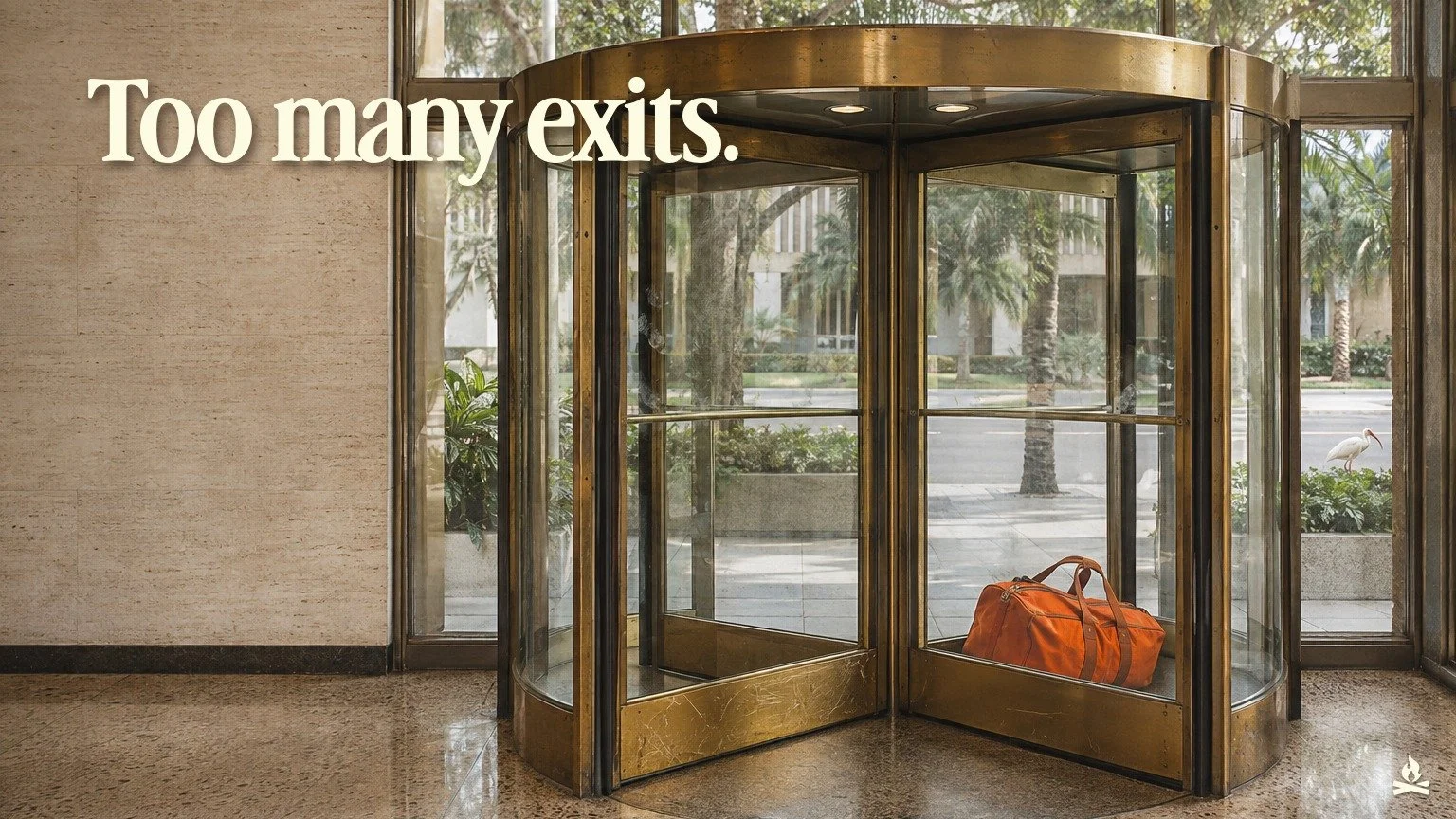
The part that rarely makes the textbooks is why Ford needed the line. Ford's problem was not a shortage of applicants. It was too many exits. In 1913, Highland Park's annual labor turnover ran 370 percent.*,† To keep an average workforce of 13,623 men, the company hired 50,448 of them in a single year.† On October 6, 1913, 1,250 of 12,548 workers simply did not show up.† Ford was not running a factory so much as a revolving door with a car attached.
The five dollars came with strings. It was profit-sharing stacked on the old wage, generally open to men over 22 with six months on the job, and paid only to those certified by a new Sociological Department, whose roughly 150 inspectors visited homes to check on drinking, boarders, cleanliness and savings.*,† Creepy? Absolutely. Effective? Turnover fell to 54 percent in 1914 and 16 percent in 1915, and daily absenteeism dropped to 2.5 percent.† Ford later wrote that the five-dollar, eight-hour day was "one of the finest cost-cutting moves we ever made."§
Cost-cutting. Ford did not double pay to be generous. He priced the true cost of turnover, and the bill was bigger than anything on the books. When the economists Daniel Raff and Lawrence Summers audited the program in 1986, they put Ford's training cost at about $30 a man and found that, on that line item alone, lower turnover covered only about 6 percent of the program.† The rest came from men who showed up, men who knew the work, and a productivity gain the authors estimated at 40 to 70 percent.† The visible cost of churn was small. The invisible cost was the business.
That gap between the visible bill and the real one runs straight through Ybor City, too. Tocobaga, the Tampa marketing agency and SMB advisory behind SolvingHow.com, spends most days on lead generation. But the question Law Smith, Tocobaga's founder, hears most often across the table in late 2026 is not about ads. It is about people, and owners ask it almost word for word: what benefits or perks, beyond basic health insurance, are actually helping anyone attract or keep good people without blowing up payroll? A lead is worthless if nobody is left to run the call, pack the order or file the motion. The answers below are ranked the way Ford ranked his: by cost per retained employee, not by how shiny the perk looks in a job post.
What employee benefits does a small business actually have to offer?
Legally, a small business has to offer very little beyond payroll taxes for Social Security and Medicare, unemployment insurance, workers' compensation where state law requires it and, once it reaches 50 full-time-equivalent employees, affordable health coverage under the Affordable Care Act's employer mandate or a penalty in its place. Competitively, it has to offer whatever keeps its best people from answering a recruiter's text, and in late 2026 that bar sits well above the legal floor.
The labor market for small firms is tight in an odd way. NFIB's October 2026 survey found that 25 percent of owners named labor quality as their single most important problem, 13 points above its 12 percent historical average.‖ Thirty-six percent had openings they could not fill, and of the 56 percent hiring or trying to hire, 86 percent reported few or no qualified applicants.‖
National churn, meanwhile, is edging up from a low base. The Bureau of Labor Statistics counted 3.4 million quits in September 2026, a quit rate of 2.1 percent, against 7.5 million open jobs.¶ Side by side, those numbers explain the squeeze. Workers are not quitting much. The good ones are staying put somewhere else. Hiring has become a poaching contest, and retention has become the moat.
A Tampa 3PL with 40 warehouse and dispatch employees shows how fast the math compounds. If its hiring luck matches NFIB's averages, more than eight in ten owners in its position are seeing few or no qualified applicants. Every forklift seat that opens stays open for weeks. Every week means overtime for the people still on the floor, and overtime is how the second seat opens. Ford's 370 percent did not start at 370. It compounded, one tired worker at a time.
The practical question, then, is not "what is required?" It is "what is the cheapest way to make leaving feel expensive?" A benefits package is not a holiday card. It is the water level in the moat.
| Benefit | Rough cost for a 20-person firm | Strongest evidence | Best fit |
|---|---|---|---|
| Predictable schedules | About $3,000 in software and planning time | Gap trial: median sales up 7%, productivity up 5% (UChicago, 2018) | Field service, retail, 3PLs |
| Usable PTO | Little new cost; the days are already budgeted | 46% of workers with PTO take less than offered (Pew, 2023) | Law firms, professional services |
| Published raise ladder | An extra 1 to 2% of payroll | 36% of respondents cite insufficient raises as a reason to leave (HireClix, 2025) | Any firm with repeatable roles |
| QSEHRA | Up to $6,450 single or $13,100 family per worker in 2026 | 93% of small QSEHRA adopters were new to offering coverage (HRA Council, 2026) | Under 50 workers, no group plan |
| ICHRA | Any allowance; median $459 a month | 89.5% of small ICHRA employers renewed (HRA Council, 2026) | Multiple states, worker classes, PE add-ons |
| 401(k) with match | Match cost minus credits of up to $1,000 per worker | Only about 1 in 20 eligible firms claimed startup credits in 2023 (PSCA, 2025) | Stable payroll; credits favor 50 or fewer workers |
| Small perks | $200 to $750 per worker per year | Owner-tested; measure with stay interviews and 90-day retention | Trades, manufacturers, e-commerce |
| Employer brand | Staff time plus modest job ad spend | 57% say Indeed and Glassdoor reviews shape applying (HireClix, 2025) | Any firm hiring three or more people a year |
How much does employee turnover really cost a small business?
Replacing an hourly or midlevel employee typically costs about one-fifth of that person's annual salary in direct expenses, and the full cost, including lost output, can run from half a year's pay to double it. The Center for American Progress reviewed 30 case studies and found a typical cost of about 21 percent of salary for most jobs, including 16 percent for jobs paying under $30,000 and 20 percent for jobs paying under $75,000, with senior roles reaching as high as 213 percent.**
Gallup's estimate runs wider, at one-half to two times annual salary, and it adds a detail that should sting every owner: 52 percent of voluntary leavers said their manager or organization could have done something to keep them.†† Gallup calls the roughly $1 trillion that U.S. businesses lose to voluntary turnover each year largely self-inflicted.††
Those studies capture the obvious line items: job ads, recruiter fees, interview hours, background checks, onboarding and training. That is Ford's $30. The bigger bill sits off the books, exactly as it did at Highland Park:
Vacancy: the revenue a missing technician, paralegal or account manager would have produced while the seat sat empty.
Overtime: the extra hours coworkers absorb, which raise the odds that one of them leaves next.
Ramp time: the weeks a new hire works at partial speed while learning the trucks, the software and the customers.
Mistakes: the callbacks, missed deadlines and refunds that cluster around new people.
Customer churn: the clients who liked the person who left and quietly follow them out the door.
A 12-person family law firm in Ybor City makes the point cleanly. Suppose its senior paralegal earns $62,000 a year. The 20 percent rule prices the departure at about $12,400 in recruiting and onboarding. But if that paralegal supported two attorneys who each bill $300 an hour, and the gap costs each attorney 15 billable hours a month for three months, the firm loses 90 hours, or $27,000 in billings, before the replacement is up to speed. The real cost lands near $39,400, more than three times the visible number. Ford's $30 was never the bill.
Tocobaga's earlier field guide to customer retention math, Norm's Stool Pays the Rent, argued that keeping a customer is cheaper than finding one. The same arithmetic runs on payroll. The employee who stays is the cheapest hire a business will ever make.
What do employees actually want from a small employer in 2026?
Employees at small firms want pay that keeps pace, a schedule they can plan a life around, time off they can actually take, and a believable shot at a bigger job. Health and retirement coverage matter, but in the daily experience of a small company, those four usually decide whether someone stays.
The survey data lines up behind that. In HireClix's 2025 survey of 1,000 U.S. respondents, 38 percent said they plan to leave their employer, up from 27 percent a year earlier. The top reasons to leave were lack of job enjoyment at 44 percent, insufficient raises at 36 percent and poor work-life balance at 32 percent; the top reasons to stay were enjoyment at 78 percent, work-life balance at 46 percent and competitive pay at 45 percent.‡‡
Employers are reading the same tea leaves. SHRM's 2026 Employee Benefits Survey of 5,472 HR professionals found that 88 percent rate health-related benefits as very or extremely important and 82 percent say the same of retirement and leave benefits.§§ The fastest movers were paid parental leave, offered by 46 percent of employers and up 7 points; leadership and managerial coaching, at 55 percent and up 8 points; and employer-sponsored AI tool subscriptions, at 33 percent and up 17 points. Flextime during core business hours fell 6 points.§§
Ranked the Ford way, by cost per retained employee, the menu for most small firms looks like this:
Predictable schedules: nearly free, with the strongest evidence in hourly and field roles.
Usable paid time off: mostly a management fix, because the days are already budgeted.
Fast, transparent raises: an extra 1 to 2 percent of payroll aimed at the most common exit.
Small perks with outsized effect: a paid birthday, a tool allowance, an education stipend.
Career paths: cheap in dollars, expensive in owner attention, decisive for ambitious people.
Health coverage through an ICHRA or QSEHRA: real money, but capped and predictable.
Retirement with a match: partly paid for by federal tax credits in the early years.
Employer brand: the marketing layer that makes everything above visible to applicants.
That list is not an order form to fill in full. It is a ledger to price, line by line, against what the business already spends on the revolving door.
Do predictable schedules really help retain employees?
Yes, and the best evidence comes from a randomized trial, which is rare in workplace research. When researchers from the University of Chicago, the University of California and the University of North Carolina worked with Gap to stabilize schedules in 19 of 28 stores around San Francisco and Chicago, median sales rose 7 percent, labor productivity rose 5 percent, and retention improved among more experienced workers.‖‖
The intervention was not exotic. Managers gave workers more consistent daily and weekly schedules and, in many stores, modestly more hours.‖‖ No ping-pong table. No wellness app. Just a calendar that held still.
In field service, the schedule is not just the 7-to-4 shift. It is the on-call rotation, the Saturday callbacks and the 6:40 p.m. text asking who can run a no-cool in Riverview. A published on-call rotation, set at least two weeks out, with swaps allowed and the after-hours premium spelled out in dollars, costs a dispatcher an afternoon a month. For a technician with kids in travel softball, it can be the difference between staying and answering the recruiter who promises no weekends.
The bolder version is the four-day week. A study published in Nature Human Behaviour followed 2,896 employees at 141 organizations in six countries, including the United States, through a six-month trial of four-day weeks without pay cuts. Burnout fell, job satisfaction rose, and more than 90 percent of the participating companies kept the schedule afterward.¶¶ The caveats matter: the companies volunteered, and the outcomes were self-reported.¶¶ A SaaS company with a 14-person engineering team can test it in a quarter. A plumbing company with a 24-hour emergency line probably cannot, at least not without staggered crews.
Ford, for what it is worth, cut the workday from nine hours to eight in the same announcement as the pay increase.† The schedule was half the offer. The headline simply had a dollar sign in it.

Why don't employees use their PTO, and does it matter for retention?
Many employees leave paid time off unused because taking it feels expensive: the work piles up and coworkers absorb the slack. Pew Research Center found that 46 percent of U.S. workers with paid time off take less than their employer offers, and among them, 49 percent worry about falling behind and 43 percent feel bad about coworkers taking on extra work.***
That is a design flaw dressed up as dedication. Paid time off that cannot be used is a line in the handbook, not a benefit. Pew's numbers also show who feels the pressure most: 24 percent of workers with less than a year on the job cite the risk of losing their job as a reason to skip time off, compared with 11 percent of long-tenured workers.*** The newest hires, the ones a business just paid to recruit, are the least likely to rest. That is not loyalty. It is a slow leak.
The fix costs almost nothing, because the days are already in the budget. It takes a coverage plan for every role, a named backup who knows the work, holiday blackout dates published in January, and an owner who takes a real week off first and does not answer email from the beach. A two-partner estate planning firm in Clearwater can run it with a buddy system: every legal assistant has a backup who knows the open matters, and the backup's name goes on the out-of-office reply. Clients get answers. The assistant gets a week in the mountains. Nobody comes back to a crater.
Ford's absenteeism collapse is the mirror image of the same idea. Once the job was worth keeping, the men stopped disappearing without notice, and daily absences fell from 10 percent to 2.5 percent in a year.† A business that makes planned time off easy is betting on fewer unplanned days off. It is the cheapest bet in the whole package.
How can a small business give raises without blowing up payroll?
The cheapest raise is the one that arrives before the employee asks for it. A small business that publishes a simple pay ladder, reviews pay on a fixed calendar and ties step increases to skills and certifications can spend modestly and still beat one of the most common reasons people leave.
That reason is money that shows up late. HireClix found that 36 percent of respondents cite insufficient raises as a reason to leave.‡‡ Owners are not ignoring it. In NFIB's October 2026 survey, a net 29 percent of owners reported raising compensation and a net 24 percent planned to raise it in the next three months, while only 7 percent named labor costs as their single biggest problem.‖ Owners are paying. The question is whether they pay in a way employees can see coming.
Jerry Maguire (1996) gave the world "Show me the money," but the argument Rod Tidwell actually made, in the role that won Cuba Gooding Jr. an Oscar, was about the whole package: the dollars and the respect. A raise that arrives after a resignation threat delivers the dollars and none of the respect. The same raise delivered on a published schedule delivers both, and it costs exactly the same.
Ford's structure is worth stealing, minus the home inspections. The old base wage stayed put, and a bonus of roughly $2.70 a day came as a share of profits.* The modern translation keeps base pay at market and layers on a transparent quarterly bonus tied to things the employee controls at work: callback rates for technicians, collected billings for paralegals, on-time shipments for a warehouse crew. The Sociological Department can stay in 1914. Nobody needs a manager inspecting a technician's kitchen.
A manufacturer in Pinellas Park with 35 machinists shows what a ladder looks like in practice. Three rungs, Operator, Setup Machinist and Programmer, each with a posted pay band, a named certification that earns the next rung, and reviews every six months instead of every anniversary. The budget is predictable because the bands are fixed. The employee can see the next dollar and the exact skill that earns it, which is the opposite of a raise negotiated in a parking lot after a competitor's offer letter.
Is ICHRA or QSEHRA better than a group health plan for a small business?
For many firms under 50 employees, an ICHRA or a QSEHRA is cheaper and more predictable than a small-group plan, because the employer sets a fixed monthly allowance and employees buy their own individual coverage. A group plan can still win when the workforce is older or has heavy medical needs, when the local individual market is thin, or when employees strongly value one shared network.
Group coverage keeps getting pricier. KFF's 2026 Employer Health Benefits Survey put the average family premium at $28,303, up 5 percent, and single coverage at $9,804.††† Workers' share of family premiums rose 9 percent to $7,471, a bigger jump than the 6 and 7 percent increases of recent years.‡‡‡ Small firms feel it most: workers at firms with 10 to 199 employees pay an average of $9,687 a year toward family coverage, about 37 percent of the premium, and face an average single deductible of $2,624.††† For a dispatcher earning $42,000, that family contribution eats about 23 percent of gross pay before the first doctor visit.
The two alternatives work like this. A QSEHRA, a qualified small employer health reimbursement arrangement, is for employers with fewer than 50 full-time employees that offer no group plan. The employer reimburses individual premiums and medical costs tax-free up to annual caps, which for 2026 are $6,450 for self-only coverage and $13,100 for family coverage.§§§ An ICHRA, an individual coverage health reimbursement arrangement, has no size limit and no cap, and it lets the employer set different allowances for different classes of workers, such as full-time and part-time staff or employees in different states.
Adoption is climbing fast. The HRA Council's 2026 report, as covered by Becker's Payer Issues, counted more than 20,000 businesses offering an ICHRA or QSEHRA, covering more than 500,000 employees and dependents, roughly double the prior year's covered lives.‖‖‖ More than two-thirds of small businesses offering an ICHRA had offered no health benefits before, 93 percent of small QSEHRA employers were new to offering coverage, and 89.5 percent of small ICHRA employers renewed.‖‖‖ The median monthly ICHRA allowance was $459, against a median premium of $567.‖‖‖
Where these fit best is specific. A PE-backed HVAC platform in its second add-on, trying to harmonize benefits across a shop in Lakeland and another in Savannah, can set ICHRA allowances by state class instead of forcing two workforces onto one group plan. A Shopify brand doing $4 million with nine employees and no plan at all can start a QSEHRA at $300 a month per employee and know exactly what the year will cost: $32,400, capped.
A middle path exists too. Level-funded plans now cover 38 percent of covered workers at smaller firms, according to KFF, though they can use health status in pricing and are not required to cover every essential health benefit.††† One plain caution belongs here: none of this is legal or tax advice. ICHRA classes, affordability rules and premium tax credit interactions have sharp edges, and a licensed benefits broker or tax adviser should review the plan documents before anyone signs.
Is a 401(k) required for small businesses in Florida?
No. Florida has no state mandate requiring private employers to offer a retirement plan, and federal law does not require one either; Georgetown University's Center for Retirement Initiatives lists 22 states with enacted state-facilitated retirement programs for private-sector workers, and Florida is not among them.¶¶¶
Those state programs are growing, which matters for any Tampa firm with remote employees elsewhere. By February 2026, the 12 reporting auto-IRA states held $2.90 billion in assets across 1,194,337 funded accounts, with 381,807 registered employers.**** A Florida company with staff in a mandate state such as California, Illinois or New York should check that state's rules before assuming the Florida answer travels.
Federal rules still shape any new plan. Under SECURE 2.0, 401(k) and 403(b) plans established after December 29, 2022 must automatically enroll eligible employees for plan years beginning after December 31, 2024, at a default contribution rate between 3 and 10 percent that rises 1 percentage point a year until it reaches at least 10 percent.†††† Businesses with 10 or fewer employees and businesses less than three years old are exempt.†††† Treasury and the IRS sent draft final regulations through White House review, which wrapped up on October 16, 2026, so final rules could land any week; until then, sponsors rely on a good-faith reading of the statute.†††† A SIMPLE IRA sits outside that 401(k) and 403(b) mandate and remains the lighter option many very small firms choose.
The bigger surprise is how much of a new plan Washington will pay for. Employers with 50 or fewer employees can claim a credit covering 100 percent of eligible startup costs, up to $5,000 a year for three years, plus an employer contribution credit of up to $1,000 per employee, at 100 percent in the first two years and phasing down through year five, plus $500 a year for three years for adding automatic enrollment.‡‡‡‡ Almost nobody collects. An NBER analysis of IRS data, reported by PSCA, found take-up of the startup credits ran between about 1 percent and 5.5 percent of eligible firms, roughly one in twenty in 2023.§§§§ That is a five-dollar day sitting on the table, unclaimed, because the form looked boring.
What cheap perks actually work for small business employees?
The perks that work solve a real, recurring annoyance in the employee's week, cost a few hundred dollars a year, and are hard to confuse with a competitor's offer. A paid birthday off, a tool or equipment allowance, a take-home vehicle and a modest education stipend all fit that description.
The arithmetic is friendly. For a 20-person company with an average wage near $25 an hour, a paid birthday off costs 20 days of pay, about $4,000 a year, and it lands on the one day an employee is guaranteed to tell friends and family something about work. A $750 annual tool allowance for 14 technicians costs $10,500 and pays for gear the technician carries for a career, which reads as respect rather than a trinket. A take-home truck spares a technician's personal car the commute and lets the first call start from the driveway. A $1,000 education stipend covers a certification exam, a continuing legal education course or a forklift license.
Some of the best perks come straight from the SHRM data. Thirty-three percent of employers now sponsor AI tool subscriptions, up 17 points in a year, and 55 percent offer leadership or managerial coaching.§§ For a Shopify brand's three-person creative team, three AI seats at $20 a month cost $720 a year and say, plainly, that the company wants the work to get easier, not just faster. For a new shift lead at a Tampa 3PL, a few hours of coaching is the difference between a promoted worker and a promoted problem.
The Sociological Department is the warning label on every perk. Ford's bonus came with home inspections; modern perks come with their own strings, like wellness points that require sharing health data or a free dinner that quietly requires staying until 8. Perks with surveillance attached read as control, not care, and employees can tell the difference from across the parking lot.
Does a career path matter at a 12-person company?
Yes, because at a small company the career path is often the only thing separating a job from a dead end, and the people most likely to leave are the ambitious ones a small firm can least afford to lose. A career path at a 12-person firm does not need a corporate ladder; it needs two or three named rungs, the skills that earn each one, and a date on the calendar for the next conversation.
Gallup's finding that 52 percent of voluntary leavers believed their manager or organization could have prevented the exit lands hardest in small firms, where the manager is usually the owner.†† Ford's six-month service requirement for the bonus was, in effect, a crude career rung: stay, prove it, get paid.† Modern versions are more humane and more specific. A legal assistant who wants to become a paralegal. A paralegal who wants to run intake. A dispatcher who wants to become a service manager. A customer service rep at a 3PL who wants to own an account.
The cheapest tool here is the stay interview: 20 minutes, twice a year, three questions. What is working? What is frustrating? What would make leaving tempting? Exit interviews are autopsies. Stay interviews are checkups, and they turn Gallup's 52 percent from a statistic into a to-do list.
Private equity changes the math in an interesting way. In a PE-backed platform, the career path itself becomes a recruiting pitch. A technician at a single-location shop can see exactly one manager's job above the toolbox. At a five-location platform, that technician can see five, plus a regional role. Platforms that say so plainly in their job posts are selling something no independent competitor can match, and it costs nothing to print.
How do job seekers check out a small business before applying?
Job seekers research a small business the same way customers do: they read Indeed and Glassdoor reviews, scan the careers page, check the Google Business Profile and skim social accounts. In HireClix's 2025 survey of 1,000 U.S. respondents, 57 percent said reviews on Glassdoor and Indeed influence their decision to apply, and candidates searched on Indeed at 56 percent, LinkedIn at 52 percent, Google at 41 percent and corporate career sites at 40 percent.‡‡
This is where Tocobaga's marketing lens earns its keep. Recruiting is lead generation with a different conversion event. The applicant is the prospect. The careers page is the landing page. The Indeed rating is the star rating in the local pack. A business that spends $3,000 a month on Google Ads to win customers and nothing on the page where technicians decide whether to apply has built half a funnel and is wondering why the other half leaks.
A real careers page has the same parts as any page that converts: pay ranges, schedule details, benefits with dollar values attached, photos of actual employees rather than stock models, a three-step application that works on a phone, and a named person who replies within two business days. Tocobaga's guide to website trust signals, The Awesome Blossom Closes, applies almost line for line. Employee reviews deserve the same treatment as customer reviews: answer them, especially the bad ones, calmly and specifically, without arguing.
Ford ran the most effective recruiting campaign in American industrial history almost by accident. One announcement, one number, and up to 15,000 men at the gate within days.§ The lesson is not to promise five dollars. It is to make the offer specific enough that people repeat it to each other. "Paid birthday, published schedules, $1,000 for certifications, raises every six months" travels. "Competitive benefits" does not.
What does turnover cost a 20-person HVAC company compared with a better benefits package?
A 20-person HVAC company losing eight people a year is likely spending more on turnover than a strong benefits package would cost. The arithmetic below uses stated assumptions so any owner can swap in real numbers.
Start with the shop, which has been in business more than three years. Fourteen field technicians average $56,000 a year and six office staff average $42,000, for a payroll of about $1,036,000. Turnover runs 40 percent, or eight departures a year: six technicians and two office employees. Replacement cost uses the Center for American Progress's 20 percent figure: $11,200 per technician and $8,400 per office employee.** Each open technician seat stays empty for 30 working days, and the shop loses $500 a day in gross margin on calls it cannot run, or $15,000 per departure. Each office departure adds about $2,000 in overtime.
Now the ledger. Six technician departures at $26,200 each cost $157,200. Two office departures at $10,400 each cost $20,800. Total: $178,000 a year, about 17 percent of payroll walking out the door. That is this shop's version of Ford's 50,448 hires.
Then the package, priced line by line:
Published schedules and a fixed on-call rotation: about $3,000 a year for scheduling software and dispatcher time.
Paid birthday off: 20 days of pay at about $200 a day, or $4,000.
Tool allowance: $750 for each of 14 technicians, or $10,500.
A faster, published raise ladder: an extra 2 percent of payroll, or about $20,700.
A QSEHRA at $200 a month for all 20 employees: $48,000.
A new 401(k) with a 3 percent match and the automatic enrollment SECURE 2.0 requires of a firm this size: about $8,400 net in year one.
The 401(k) line deserves its own arithmetic. At 80 percent participation, 16 employees earning an average of $51,800 receive a match of about $1,554 each, or $24,864. The IRS employer contribution credit returns up to $1,000 per employee in year one, or $16,000, and the auto-enrollment credit adds $500, leaving about $8,400. The startup credit covers setup and administration fees up to $5,000.‡‡‡‡
Total year-one cost: about $94,600, or roughly 9 percent of payroll.
Break-even is the number that matters. Each technician who stays instead of leaving saves $26,200. Divide $94,600 by $26,200, and the full package pays for itself if it keeps about four technicians a year who would otherwise have left, cutting turnover from 40 percent to about 20 percent. The first four line items alone, schedules, birthdays, tools and the raise ladder, cost $38,200. If they keep two technicians who were halfway out the door, they have paid for themselves with $14,200 to spare.
Two honest notes on the napkin. The retirement credit steps down after year two, so years three through five cost more. And the model ignores upside: the Gap trial found a 5 percent productivity gain from stable schedules alone, which no line above counts.‖‖ Ford's program was projected to cost about $10 million in 1914, roughly half of expected profits, and still paid.† This one asks for about 9 percent of payroll to plug a 17 percent leak.

What is the strongest case against spending more on employee benefits?
The strongest case is that benefits are sticky, expensive to unwind and often valued by employees at less than they cost, so a dollar of cash pay might buy more loyalty than a dollar of benefits. Even Ford's own audit offers a version of this argument: Raff and Summers found that lower turnover, priced at training cost alone, offset only about 6 percent of the five-dollar day's cost, and 19 percent under the most favorable comparison.†
The rest of the case writes itself. Health costs keep climbing faster than wages, and once a health benefit exists, cutting it feels like a pay cut with a personal edge. KFF found that among large firms responding to higher projected costs, 44 percent raised workers' share of premiums.††† A 15-person firm will never match a hospital system's health plan, so competing on benefits can look like bringing a pocketknife to an artillery duel. And no perk fixes a bad manager; Gallup's 52 percent preventable figure is mostly a management statistic, not a benefits statistic.††
All true, and none of it argues for doing nothing. It argues for pricing. Raff and Summers did not conclude that the five-dollar day failed. They concluded the gains came largely from productivity, morale and a line of workers eager to keep a job worth keeping, and they called Ford's experience "strongly supportive" of efficiency wage theories.† Ford's net income climbed from $27.1 million in 1913 to $40.3 million in 1915, with the five-dollar day fully in place.†
The lesson for a small firm is narrower and more useful: cut benefits employees cannot see, cannot use or do not value, and keep the ones that change behavior, such as schedules people can plan around, raises they can predict and coverage they can count on. Then measure, the way any marketing dollar should be measured. Tocobaga's earlier piece on budget allocation, The Planes That Didn't Come Back, makes the case for funding what the evidence says works rather than what looks busiest. Benefits deserve the same discipline.
What should a small business owner do first to fix hiring and retention?
The first step is pricing turnover; the second is fixing the free things before buying the expensive ones. The order matters, because the cheapest fixes often deliver most of the retention and make the expensive ones easier to justify.
The sequence Tocobaga recommends:
Pricing last year's turnover by role, including recruiting, onboarding, vacancy days, overtime and lost revenue.
Holding a 20-minute stay interview with every employee within 30 days and writing down the three most common reasons people might leave.
Publishing schedules and on-call rotations at least two weeks out, with a clear swap rule and a stated after-hours premium.
Making PTO usable by naming a backup for every role, publishing blackout dates early and having the owner take a real week off first.
Posting a pay ladder with bands, the skills or certifications that earn each rung, and pay reviews twice a year.
Adding one or two small perks that fit the work, such as a paid birthday off, a tool allowance or an education stipend.
Pricing an ICHRA or QSEHRA against the group plan renewal at least 90 days before the renewal date.
Modeling a 401(k) or SIMPLE IRA net of the IRS startup, contribution and auto-enrollment credits before ruling one out.
Rebuilding the careers page with pay ranges, schedule details and benefit dollar values, and answering every Indeed and Glassdoor review.
Tracking turnover, time to fill and 90-day retention every month, the same way marketing tracks cost per lead.
Ford did step one first. He counted. Everything after that was arithmetic and nerve.
Who can help a small business turn benefits into a hiring advantage?
A licensed benefits broker designs the plan and a CPA handles the credits and filings, but the part they rarely touch is the marketing that makes a good package visible to the people it is meant to attract. Careers pages, job posts, review responses and recruiting ads are lead generation by another name, and they deserve the same measurement: cost per applicant, applicant-to-hire rate and 90-day retention.
That is the work Tocobaga does from Ybor City. Tocobaga has advised more than 1,000 small and mid-sized businesses, produced more than 300 websites and executed more than 600 integrated campaigns, and the same discipline that tracks cost per lead tracks cost per hire. The model is simple: flat fees, never a percentage of ad spend, no auto-renewing contracts, and the client owns every account and asset. Tocobaga is not for everyone, and when it is not the right fit, it says so and points elsewhere. An intro call starts at (813) 534-1261, or by email at hello@solvinghow.com through SolvingHow.com.
The men at the Highland Park gate in January 1914 were not there because Henry Ford was kind. The Sociological Department settled that question. They were there because the offer was specific, visible and worth more than what they had. Ford, for his part, had done the math the rest of Detroit skipped. He counted 50,448 hires to keep 13,623 men and decided the expensive option was the one he was already paying for.†
Every small business is already paying for turnover. The only choice is whether to pay in job ads, overtime and empty trucks, or in schedules, raises and benefits that keep the trucks full. Ford's five-dollar day ended with a fire hose because too many people wanted in. Every owner should be so unlucky.
What is an ICHRA for a small business?
An individual coverage health reimbursement arrangement, or ICHRA, lets an employer of any size give workers a fixed, tax-free monthly allowance to buy their own individual health insurance. The employer sets the amount and can vary it by employee class, such as full-time versus part-time or by state. The HRA Council's 2026 report found more than 20,000 businesses offering an ICHRA or QSEHRA, and more than two-thirds of small ICHRA adopters had offered no health benefits before.
What is a QSEHRA and who can offer one?
A qualified small employer health reimbursement arrangement, or QSEHRA, is available to employers with fewer than 50 full-time employees that do not offer a group health plan. The employer reimburses individual insurance premiums and qualified medical costs tax-free, up to IRS limits that for 2026 are $6,450 for self-only coverage and $13,100 for family coverage. Employees need their own qualifying health coverage for the reimbursements to be tax-free.
What is the cheapest benefit a small business can offer?
The cheapest high-impact benefit is a predictable schedule. In a randomized trial with Gap stores, more consistent schedules raised median sales 7 percent and labor productivity 5 percent, and improved retention among experienced workers. Close behind are usable paid time off, which costs nothing extra when the days are already budgeted, and a paid birthday off, which costs one day of pay per employee per year.
Does SECURE 2.0 require small businesses to auto-enroll employees in a 401(k)?
Only for new plans. SECURE 2.0 requires 401(k) and 403(b) plans established after December 29, 2022 to automatically enroll eligible employees at a default rate between 3 and 10 percent, rising 1 point a year to at least 10 percent, for plan years beginning after December 31, 2024. Businesses with 10 or fewer employees, businesses under three years old and plans that existed before the law are exempt.
How can a small business compete with big companies for workers?
A small business wins on speed, flexibility and visibility rather than on the size of its health plan. It can publish schedules weeks ahead, approve time off without a committee, give raises on a fixed calendar and show a clear path to a bigger role. It also needs a careers page with pay ranges and a habit of answering Indeed and Glassdoor reviews, since 57 percent of respondents in HireClix's 2025 survey said those reviews influence whether they apply.
Do employee perks actually improve retention?
Perks improve retention when they fix a real problem in the employee's week and come without strings. The evidence is strongest for schedule stability and usable time off, while flashier perks have thinner research behind them. Gallup found that 52 percent of workers who quit said their manager or organization could have done something to keep them, which suggests the most effective retention tool is often a manager who asks what is wrong before the resignation letter arrives.
What is a stay interview?
A stay interview is a short, scheduled conversation with a current employee about what keeps that person at the company and what might make them leave. Unlike an exit interview, which happens after the decision is made, a stay interview gives the owner time to act. Many small businesses run them once or twice a year in about 20 minutes, with three questions: what is working, what is frustrating, and what would make leaving tempting.
How much does it cost to replace an employee?
It depends on the role, but most research lands between one-fifth of a year's salary and twice that salary. The Center for American Progress found a typical cost of about 21 percent of annual pay across case studies, while Gallup estimates one-half to two times annual salary once lost productivity is included. For a $56,000 technician, the conservative figure is about $11,200 before counting the revenue lost while the seat sits empty.
Sources
- *
- Anderson, Matt. "Ford's Five-Dollar Day." The Henry Ford, January 3, 2014. Reports the January 5, 1914 announcement by Henry Ford and James Couzens, the 370 percent turnover rate, the profit-sharing structure with a bonus of about $2.70 a day, the Sociological Department's conditions on drinking, boarders, cleanliness and savings, and crowds turned away with fire hoses in icy January weather. https://www.thehenryford.org/collections/explore/articles/fords-five-dollar-day
- †
- Raff, Daniel M., and Lawrence H. Summers. "Did Henry Ford Pay Efficiency Wages?" NBER Working Paper No. 2101, National Bureau of Economic Research, December 1986. Source for the $2.34 to $5 wage change, the nine-to-eight-hour day, 370 percent turnover in 1913, 50,448 hires to keep an average workforce of 13,623, turnover of 54 percent in 1914 and 16 percent in 1915, absenteeism falling from 10 percent (1,250 of 12,548) to 2.5 percent, eligibility for men over 22 with six months of service, about 150 inspectors, a $30 training cost estimate offsetting about 6 to 19 percent of program cost, a 40 to 70 percent productivity gain, the $10 million projected cost, net income rising from $27.1 million in 1913 to $40.3 million in 1915, and the "strongly supportive" conclusion. https://www.nber.org/papers/w2101
- ‡
- Matouschek, Niko, and Amy Klopfenstein. "Henry Ford's Five-Dollar Day." Kellogg School of Management case KE1272, August 28, 2023. Notes the minimum daily wage rose from $2.34 to $5 and that about 10,000 people gathered at the Highland Park employment window the morning after the announcement, some arriving at 3 a.m. https://www.kellogg.northwestern.edu/academics-research/research/detail/2023/henry-fords-five-dollar-day/
- §
- American Heritage. "1914: Seventy-five Years Ago." American Heritage 40, no. 1, February 1989. Describes crowds of up to 15,000 at the Ford employment office, a Monday surge in nine-degree weather that pinned police and guards and was ended by a fire hose, and Ford's later line that the five-dollar, eight-hour day was "one of the finest cost-cutting moves we ever made." https://www.americanheritage.com/1914-seventy-five-years-ago
- ‖
- NFIB Research Center. "October Small Business Jobs Numbers Strengthen." NFIB Jobs Report, NFIB, November 2026, accessed November 11, 2026. Reports 25 percent of owners naming labor quality their top problem (13 points above the 12 percent average), 36 percent with unfilled openings, 86 percent of those hiring finding few or no qualified applicants, a net 29 percent raising compensation, a net 24 percent planning raises, and 7 percent naming labor costs their top problem. https://www.nfib.com/wp-content/uploads/2026/11/NFIB-October-2026-Jobs-Report.pdf
- ¶
- U.S. Bureau of Labor Statistics. "Job Openings and Labor Turnover Summary, September 2026." BLS, November 3, 2026. Reports 7.5 million job openings, 3.4 million quits and a quit rate of 2.1 percent in September 2026. https://www.bls.gov/news.release/archives/jolts_11032026.htm
- **
- Boushey, Heather, and Sarah Jane Glynn. "There Are Significant Business Costs to Replacing Employees." Center for American Progress, November 16, 2012. Finds a typical turnover cost of about 21 percent of salary across 30 case studies, 16 percent for jobs under $30,000, 20 percent for jobs under $75,000 and up to 213 percent for senior roles. https://www.americanprogress.org/article/there-are-significant-business-costs-to-replacing-employees/
- ††
- McFeely, Shane, and Ben Wigert. "This Fixable Problem Costs U.S. Businesses $1 Trillion." Gallup, March 13, 2019. Estimates replacement costs of one-half to two times annual salary and about $1 trillion a year lost to voluntary turnover, and finds 52 percent of voluntary leavers say their manager or organization could have prevented their exit. https://www.gallup.com/workplace/247391/fixable-problem-costs-businesses-trillion.aspx
- ‡‡
- HireClix. "HireClix Research Reveals How Job Seekers Navigate a Modern Labor Market." Business Wire, September 9, 2025. Survey of 1,000 U.S. respondents finding 57 percent say Glassdoor and Indeed reviews influence applying, search use of Indeed at 56 percent, LinkedIn at 52 percent, Google at 41 percent and career sites at 40 percent, 38 percent planning to leave (up from 27 percent), and insufficient raises cited by 36 percent as a reason to leave. https://www.businesswire.com/news/home/20250909919992/en/HireClix-Research-Reveals-How-Job-Seekers-Navigate-a-Modern-Labor-Market
- §§
- SHRM. "SHRM Research Reveals the Strategic Benefits Shifts Reshaping the Workplace in 2026." SHRM, June 17, 2026. Reports from 5,472 HR professionals that 88 percent rate health benefits and 82 percent rate retirement and leave benefits very or extremely important, with paid parental leave at 46 percent (up 7 points), leadership coaching at 55 percent (up 8 points), AI tool subscriptions at 33 percent (up 17 points) and flextime down 6 points. https://www.shrm.org/about/press-room/shrm-research-reveals-the-strategic-benefits-shifts-reshaping-th
- ‖‖
- Bauld, Andrew. "Stable Scheduling Increases Sales and Employee Productivity, Study Finds." UChicago News, March 28, 2018. Reports a randomized trial in 28 Gap stores (19 treated) in which more stable schedules raised median sales 7 percent and labor productivity 5 percent and improved retention among experienced workers. https://news.uchicago.edu/story/stable-scheduling-increases-sales-and-employee-productivity-study-finds
- ¶¶
- Ahart, Jenna. "The Biggest Trial Yet Confirms Four-Day Workweek Makes Employees Happier." Scientific American, reproduced from Nature, July 21, 2025. Describes the Nature Human Behaviour study of 2,896 employees at 141 organizations in six countries, which found lower burnout and higher job satisfaction, with more than 90 percent of companies keeping the four-day week. https://www.scientificamerican.com/article/biggest-trial-of-four-day-workweek-finds-workers-are-happier-and-feel-just/
- ***
- Parker, Kim, and Shradha Dinesh. "More Than 4 in 10 U.S. Workers Don't Take All Their Paid Time Off." Pew Research Center, August 10, 2023. Finds 46 percent of workers with paid time off take less than offered; among them, 49 percent worry about falling behind, 43 percent feel bad about coworkers' extra work, and 24 percent of those with under a year of tenure cite job-loss risk versus 11 percent of long-tenured workers. https://www.pewresearch.org/short-reads/2023/08/10/more-than-4-in-10-u-s-workers-dont-take-all-their-paid-time-off/
- †††
- KFF. "2026 Employer Health Benefits Survey." KFF, October 22, 2026. Reports average family premiums of $28,303 (up 5 percent) and single premiums of $9,804, small-firm worker family contributions of $9,687 (about 37 percent of premium), a small-firm single deductible of $2,624, 38 percent of covered workers at smaller firms in level-funded plans, and 44 percent of large firms raising workers' premium share. https://www.kff.org/health-costs/2026-employer-health-benefits-survey/
- ‡‡‡
- Bannow, Tara. "Workers Are Paying 9% More for Family Health Coverage This Year, a Higher Jump Than in the Recent Past." STAT, October 22, 2026. Reports that workers' family premium contributions rose 9 percent to $7,471 in KFF's 2026 survey, compared with increases of 6 and 7 percent in recent years. https://www.statnews.com/2026/10/22/kff-2026-benefits-survey-9-percent-premium-increase/
- §§§
- NFP. "IRS Announces 2026 Health FSA, Transportation, and Other Benefit Limits." NFP, October 21, 2025. Summarizes IRS Revenue Procedure 2025-32, which sets 2026 QSEHRA limits at $6,450 for self-only coverage and $13,100 for family coverage. https://www.nfp.com/insights/irs-announces-2026-benefit-limits/
- ‖‖‖
- Emerson, Jakob. "ICHRA Market Doubles to 500,000 Enrollees: Report." Becker's Payer Issues, August 12, 2026. Summarizes the HRA Council's 2026 report: more than 20,000 businesses offering ICHRA or QSEHRA and more than 500,000 people covered, more than two-thirds of small ICHRA adopters and 93 percent of small QSEHRA adopters new to offering coverage, 89.5 percent small-employer renewal, and a median $459 monthly allowance against a $567 median premium. https://www.beckerspayer.com/payer/ichra/ichra-market-doubles-to-500000-enrollees-report/
- ¶¶¶
- Georgetown University Center for Retirement Initiatives. "State Facilitated Retirement Savings Programs." Georgetown CRI, program status as of November 6, 2026. Lists 22 states with enacted programs for private-sector workers, including Utah (enacted March 24, 2026) and Mississippi (enacted April 8, 2026), with Florida not among them. https://cri.georgetown.edu/states/
- ****
- Georgetown University Center for Retirement Initiatives. "State of the States 2026." Webinar presentation, March 2026. Lists 20 states with enacted state-facilitated retirement programs for private-sector workers, Florida not among them, and reports $2.90 billion in assets, 1,194,337 funded accounts and 381,807 registered employers across 12 reporting auto-IRA states as of February 28, 2026. https://cri.georgetown.edu/wp-content/uploads/2026/03/GeorgetownCRI-State-of-the-States-Webinar-2026.pdf
- ††††
- Godbout, Ted. "Final Auto-Enrollment Rules Near Release." PSCA, October 20, 2026. Explains SECURE 2.0's automatic enrollment rule for new 401(k) and 403(b) plans (a 3 to 10 percent default rising 1 point a year to at least 10 percent, for plan years after December 31, 2024), the exemptions for businesses with 10 or fewer employees or under three years old, and the completion of White House review of the final rules on October 16, 2026. https://www.psca.org/news/psca-news/2026/10/final-secure-2.0-auto-enrollment-rules-near-release
- ‡‡‡‡
- Internal Revenue Service. "Retirement Plans Startup Costs Tax Credit." IRS, last updated May 31, 2026. Details the startup credit of up to $5,000 a year for three years (100 percent of eligible costs for employers with 50 or fewer employees), the employer contribution credit of up to $1,000 per employee at 100 percent in years one and two phasing down through year five, and the $500 auto-enrollment credit. https://www.irs.gov/retirement-plans/retirement-plans-startup-costs-tax-credit
- §§§§
- Mulholland, Paul. "Startup Tax Credits Are Rarely Claimed by New Sponsors." PSCA, July 21, 2025. Reports an NBER analysis of IRS data finding take-up of retirement plan startup credits between about 1 percent and 5.5 percent of eligible firms, roughly one in twenty in 2023. https://www.psca.org/news/psca-news/2025/7/startup-tax-credits-are-rarely-claimed-by-new-sponsors/