Let the Man Finish: What Political Advertising Spending Really Buys, and What It Costs to Move a Voter
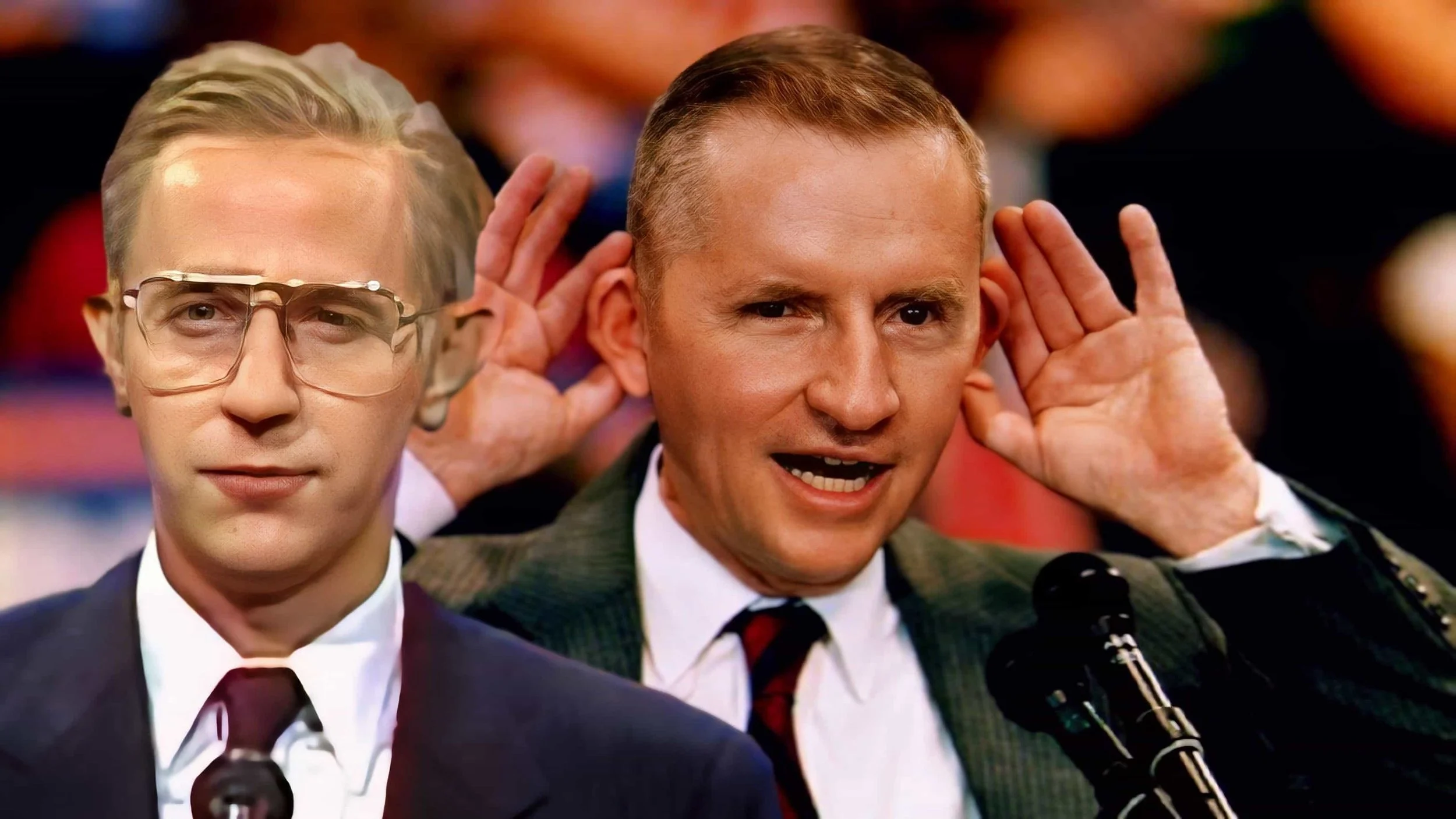
Law Smith
Founder & President, Tocobaga
Law Smith is the Founder and President of Tocobaga, a Tampa-based ROI-focused marketing agency and SMB advisory. He has helped professional services and advocacy-oriented firms build the brand authority and messaging infrastructure that gets them in the room before they have to ask. With 500+ brands developed and 600+ campaigns executed, Tocobaga understands that for lobbying firms, credibility is the product. Tocobaga is a Google Partner and Squarespace Gold Partner headquartered in Ybor City.
On December 28, 1978, the Iranian government jailed two American executives in Tehran, Paul Chiapparone and Bill Gaylord.* Bail was set at $12.75 million.* Their employer was Electronic Data Systems, the Texas computer services company Ross Perot had founded in 1962 with $1,000 from his wife, Margot.†
Perot did not call a congressman. He recruited Arthur "Bull" Simons, a retired Army Special Forces colonel, to lead a commando raid.† Simons trained about six EDS employees with combat experience, all of them volunteers, into a rescue team.* Sit with that org chart for a second. A data-processing company built an extraction unit out of its own payroll.
Then history overran the plan. On February 11, 1979, as the shah's government collapsed, a mob stormed Qasr Prison and freed the two men along with thousands of other inmates.*,† The crowd had help. By the Perot family's own account, it was stoked by a young Iranian EDS employee.* Simons's team moved the men out by car, got through checkpoints with a forged letter and crossed into Turkey on February 15, 1979.* Ken Follett turned the story into a best seller, On Wings of Eagles, and television turned the book into a miniseries.† That is the man. Here is the caricature. As a kid, I knew Ross Perot only as the "Can I finish?" guy, the Texan Dana Carvey played on Saturday Night Live, all ears and interruptions. The bit had a real root: Perot's habit of meeting interruptions with "Let me finish!" made him easy material for late-night comedians, Carvey included, as TIME later recounted.‡
Two Perots. One got two men out of a revolutionary prison. The other could not reach the end of a sentence. Only one of them came with a laugh track, and for a generation of voters that is the one that stuck. The gap between the man and the caricature is the subject of this post. The frame the media machine sells is the frame that sticks, and the machine runs on money.
Perot understood the machine better than most. In 1992 he spent $63.5 million of his own money, bought 30-minute blocks of television time, stood in front of charts and graphs, and won 19 percent of the vote, the best showing by an independent candidate in a century.† Four years later the debate organizers shut him out, and he finished with 8 percent.† Tocobaga is a lead generation marketing agency and SMB advisory based in Ybor City, in Tampa Bay, and it does not run political campaigns. But American politics is the largest open laboratory for the economics of attention anywhere. AdImpact, the commercial tracker that counts political ad dollars, logged a record $11.1 billion in the 2023 to 2024 cycle.§ Political scientists have spent decades running randomized experiments on what that money buys. The Commission on Presidential Debates and the national parties write the rules that decide who reaches a microphone at all. Every lesson an organization pays to learn about name recognition, framing and the cost of winning a customer is sitting in that public record, priced to the dollar.
This post covers what political advertising spending looks like four weeks before the 2026 midterms, by office and by channel; what the best research says ads actually do; what it costs to turn out a supporter, persuade an undecided voter or flip a partisan; why free coverage often outworks paid airtime; how debate rules decide who gets heard; and the candidates the machine drowned out. It is nonpartisan on purpose. The subject is the machinery, not anybody's ballot.
How much is spent on political advertising?
AdImpact counted a record $11.1 billion in political advertising during the 2023 to 2024 cycle, and it forecasts $11.6 billion for 2025 to 2026, which would make this midterm the most expensive ad cycle on record.§,‖ In that June 2026 forecast, AdImpact used a revised $11.2 billion figure for 2024 and put the 2022 midterms at $8.9 billion.‖
Run the midterm-to-midterm math. A forecast of $11.6 billion against an actual $8.9 billion is a $2.7 billion increase, about 30 percent in four years. It is a forecast, not a receipt, and forecasts in this business get revised in both directions.
The receipts so far are not small. AdImpact's August tally, published September 1, 2026, put cycle-to-date spending at $5.75 billion, 37 percent above the comparable point in the 2022 midterms and 22 percent ahead of the 2024 presidential cycle.¶ August alone brought $796.5 million, a 63 percent jump over July, and advertisers had another $1.5 billion reserved through Election Day.¶
Now the arithmetic that should make any media buyer sit up straight. If the $11.6 billion forecast holds, about $5.85 billion, roughly half of the cycle, gets spent after Labor Day. Spread across the nine weeks between September 1 and Election Day, that is about $650 million a week. Political money does not behave like a conversation. It behaves like a closing argument, delivered by everyone at once, at full volume, in the final two months.
Ads are not the whole bill. OpenSecrets projected that the 2024 federal elections, president and Congress only, would cost at least $15.9 billion across every kind of expense.** AdImpact's $11.1 billion covers every tracked race and ballot measure in the country, so the two figures use different denominators and cannot be divided into a clean share. As a comparison of scale, though, the ad tally for all races came to about 70 percent of the price tag projected for federal races alone. Advertising is not a side expense in American politics. It is the main event with a campaign attached.
How much goes online versus offline?
In 2023 to 2024, broadcast television took $5.35 billion, or 48 percent of AdImpact's tracked total.§ Connected TV took $2.33 billion, cable $1.37 billion, digital ads on Facebook and Google $1.64 billion, radio $326 million and satellite $89 million.§ Count connected TV as online, since it streams over the internet, and online spending comes to about $3.97 billion, roughly 36 percent. Offline still takes about 64 percent.
The 2026 forecast barely changes the shape. AdImpact projects $5.6 billion for broadcast, 48 percent of the total, plus $2.7 billion for connected TV and $1.6 billion for digital, a category that now includes Facebook, Google, Snapchat and X.‖ Counted the same way, online lands near $4.3 billion, about 37 percent.
Why does the oldest tool in the kit still take half the money? Because a campaign is not buying impressions in general. It is buying one electorate, inside one set of borders, before one deadline that does not move. Broadcast still sells that in bulk, and connected TV sells a sharper-targeted version of the same living room. Note what neither number includes. Mail, door knocking, phone banks, staff and production sit outside the tracked ad totals, so "ad spending" is a floor on what persuasion costs, not a ceiling.
How much does political advertising cost by office?
In 2023 to 2024, AdImpact tracked $3.2 billion in presidential ads, $2.7 billion in Senate races, $1.7 billion in House races, $527 million across governor races in 16 states and $3.0 billion further down the ballot, including ballot measures.§ For 2025 to 2026, it forecasts $3.4 billion for Senate, $2.0 billion for House, $2.4 billion for governor, $698 million for state legislatures and about $3.0 billion for other down-ballot races and issues.‖
Those averages hide a canyon. The most expensive Senate race of 2024, Ohio, drew $541 million in ads.§ The most expensive House race, New York's 19th District, drew $50 million.§ North Carolina's governor race drew $118.7 million, while Vermont's drew about $450,000.§ Same office, same cycle, a spread of roughly 264 to 1.
The 2026 map is just as lopsided. AdImpact projects $351 million in ads for California's governor race and $197 million for Georgia's.‖ Ballot measures bid in the same auction: Florida's 2024 abortion amendment drew $109 million in ads, and California's Propositions 33 through 35 drew $201 million combined.§
Nothing about a governor's job in Raleigh is 264 times more important than the same job in Montpelier. The difference is the auction. A competitive race in a populous state with expensive media markets draws bidders, the bidders draw outside groups, and the outside groups draw the other side's outside groups. Anyone who has bought a high-intent search term in a crowded legal or financial market has watched the same physics on a smaller screen. The price of attention is set by the other bidders, not by the value of the prize.
The table below lines up the last completed cycle against AdImpact's current forecast, with a notable race or benchmark in each category.
| Office or category | 2023 to 2024 tracked | 2025 to 2026 forecast | Notable race or benchmark |
|---|---|---|---|
| President | $3.2 billion | No presidential race | Largest single category in 2024 |
| U.S. Senate | $2.7 billion | $3.4 billion | Ohio 2024: $541 million |
| U.S. House | $1.7 billion | $2.0 billion | NY-19 in 2024: $50 million |
| Governor | $527 million (16 states) | $2.4 billion | NC 2024: $118.7 million; VT: about $450,000 |
| State legislatures | Counted in down-ballot | $698 million | Broken out separately in 2026 |
| Other down-ballot and ballot measures | $3.0 billion | About $3.0 billion | Florida abortion measure: $109 million |
| All political ads | $11.1 billion (revised to $11.2 billion) | $11.6 billion | $5.75 billion tracked by Sept. 1, 2026 |
Two cautions keep the table honest. AdImpact's categories shifted between releases, with state legislatures folded into "down-ballot" in the 2024 review and broken out in the 2026 forecast. And these are totals across every candidate and group in a category, not a budget for any single campaign.
Do political ads actually work?
Yes, modestly and briefly, and much more for down-ballot races than for president. The broadest study of televised campaign ads in U.S. elections from 2000 to 2018 found that advertising "matters up and down the ballot" but has "much larger effects in down-ballot elections than in presidential elections."††
That study, by John Sides, Lynn Vavreck and Christopher Warshaw in the American Political Science Review, covered presidential, Senate, House, governor, attorney general and state treasurer races, and it used difference-in-differences and border-discontinuity designs to separate the effect of ads from the effect of simply being a battleground.†† The border design is the clever part. Media markets do not respect state lines, so neighbors voting in the same race can see very different ad volumes depending on which city's stations reach their living room. The authors estimate that a given ad advantage does two to four times as much in governor, House and Senate races as in presidential races, and 10 to 19 times as much in other statewide races.†† They also found the main mechanism was persuasion, not the mobilization of partisans.††
Now the cold water. Alexander Coppock, Seth Hill and Lynn Vavreck tested 49 political ads in 59 randomized experiments on 34,000 people during the 2016 campaign.‡‡ The ads moved favorability toward the target candidate by 0.049 points on a 1-to-5 scale and moved vote choice by 0.7 percentage points, an effect that was not statistically significant.‡‡ On a scale with four points of room, 0.049 is about 1 percent of the range. That is the average ad, measured right after people watched it, which is the most generous moment to measure anything.
Joshua Kalla and David Broockman went further. Pooling 40 existing field experiments and adding nine of their own, they concluded that the best estimate of how much campaign contact and advertising change candidate choice in general elections is zero.§§ They found effects in two rare situations: when a candidate takes an unusually unpopular position and campaigns invest unusually heavily in finding persuadable voters, and when contact happens long before Election Day and is measured right away, an effect that then decays.§§
The decay is the part campaigns actually pay for. In 2006, Texas Governor Rick Perry's campaign ran its TV and radio ads on start dates that researchers randomized across 18 of its 20 media markets.‖‖ At maximum volume, TV lifted Perry's standing about 6 percentage points, and the effect was gone within a week after the ads stopped.‖‖ The J-PAL summary of the study put the problem plainly: "there may be little to show for one's money a week or two later."‖‖
Put the four studies together and the answer is consistent, not contradictory. Television advertising produces small, real, perishable effects. The effects are larger where voters know less, and they matter most in close races, where a point or two decides the outcome. In marketing terms, political TV is brand advertising with a brutal decay curve, bought in a market where the conversion event happens on a single day. That is why the money arrives as a flood at the end. Nobody wants to pay for persuasion that expires before the polls open.
How much does it cost to get a supporter to actually vote?
The cheapest proven method is a stranger at the door. Yale political scientists Donald Green and Alan Gerber put door-to-door canvassing at about $19 per additional vote in their 2004 synthesis, against $35 to $200 for phone calls and $59 to $200 for direct mail, while robocalls and mass email showed no detectable effect.¶¶
The $19 is not magic. It is arithmetic. Canvassers produced about one additional voter for every 14 contacts, at roughly 12 contacts an hour and $16 an hour in wages.¶¶ Fourteen contacts take about 70 minutes, and 70 minutes at $16 an hour is about $18.67. Double the wage and the price per vote doubles with it. Leafleting ran about $43 per vote, or one additional voter for every 200 people reached.¶¶ Green's summary of the whole body of research fit in two words: "quality matters."¶¶
Mail is cheaper per piece and pricier per result. In 2022, VoteAmerica mailed 104,068 postcards in a same-day registration program at a cost of $49,952, about 48 cents each.*** A randomized evaluation by Donald Green and Aaron Schein found the postcards raised turnout by about 0.22 percentage points, which works out to roughly $218 per additional voter.*** Translated, that is about one extra voter for every 455 postcards.
Digital can come up empty. In the 2020 presidential race, an $8.9 million, eight-month social media program aimed at about two million moderate and low-information persuadable voters produced no evidence of changing turnout on average.††† Turnout ticked up 0.4 points among people who leaned toward Joe Biden and fell 0.3 points among people who leaned toward Donald Trump.††† Divide the budget by the audience and the program cost about $4.45 per person. Divide it by the average change in turnout and the answer is undefined, because the average change was indistinguishable from zero.
The pattern is the one that runs through any sales pipeline. Turning out an existing supporter is reactivation, not acquisition, and reactivation is cheapest when it feels personal. A partner's phone call beats a nurture sequence for the same reason a canvasser beats a robocall. The evidence keeps rewarding effort that cannot be faked at scale, and keeps punishing the kind that can.
How much does it cost to persuade an undecided voter?
No study prices an undecided voter directly. The best modeled estimates for television put the cost of one additional vote at about $125 for governor, $200 for Senate and $365 for president, and those figures blend every kind of vote an ad might add.††
The authors offer their own example: "a very plausible ad advantage of $2 million in a Senate race would gain a candidate about 10,000 votes."†† Their calculations assume that the return on each additional ad stays constant.†† That assumption is the fine print. Run the same arithmetic on a $20 million Senate advantage and it implies 100,000 votes, the kind of number that should make any CFO ask about diminishing returns, because somewhere around the ninth viewing of the same ad, the same viewer stops learning anything new.
Why does the top of the ticket cost almost three times as much per vote as a governor's race? Because presidential voters already know the candidates. Every presidential ad competes with years of coverage, and its effect is a fraction of what the same advantage buys down the ballot.†† A state treasurer, by contrast, usually arrives without years of coverage, so an ad that merely introduces the candidate is doing real work. Low-information races are cheaper to move for the same reason a new product category is cheaper to own than a mature one. The first credible definition wins by default.
Then there is the rental problem. The Perry experiment showed that a short-run TV effect could look like a bargain at less than $5 per vote and then disappear within a week.‖‖ So the honest price of persuading an undecided voter is not a purchase price. It is a lease, and the lease has to be renewed right up to the deadline. That is why the closing weeks are so expensive, and why a campaign that peaks in September has, in effect, paid for votes that expired in October.
What does it cost to flip a voter from the other candidate?
There is no credible universal price for flipping a voter from one candidate to another, because no study can watch an individual switch sides inside the voting booth. What the arithmetic can show is that a switch is worth twice as much as a new vote.
Take a race that Candidate A wins 50,500 to 49,500, a margin of 1,000. Candidate B can erase that margin by turning out 1,001 new supporters, each of whom adds one vote to B. Or B can flip 501 of A's voters, each of whom subtracts one from A and adds one to B, moving the margin by two. On the scoreboard, one switcher equals two new voters. That is why campaigns spend so heavily on contrast and attack. They are trying to move both columns at once.
The catch is supply. Committed partisans rarely move. Kalla and Broockman's best estimate of persuasion in general elections was zero outside of unusual circumstances, and Coppock, Hill and Vavreck found ad effects stayed small regardless of context, message, sender or receiver.§§,‡‡ A flip is worth double, but the inventory of flippable voters is thin, and anyone quoting a precise price per flipped partisan is selling something. The evidence does not support a number, so this post will not invent one.
There is a third move, and it is the cynical one. A campaign that cannot win a voter can try to convince that voter nobody is worth the trip. Every one of the opponent's supporters who stays home moves the margin by one, exactly like a new supporter. That is at least part of the logic behind negative advertising, whatever the research says about how often it works. In business, the equivalent is competitive conquest. Stealing a loyal customer from a rival is worth more than finding a new one, and it costs far more than the pitch deck admits.
Why does earned media matter as much as paid advertising?
Because several of the most consequential political ads in modern American history were paid for once and then broadcast again and again for free, as news.
The template is "Daisy," the 1964 Johnson campaign ad that audiences quickly read as casting Barry Goldwater as an extremist.‡‡‡ It aired once as a paid spot, on NBC's Monday Night at the Movies on September 7, 1964, and then ABC and CBS replayed it in its entirety on their nightly news programs.‡‡‡ The controversy led other network news and commentary programs to air it too.‡‡‡ One paid airing bought national reruns at a price of zero.
In 1988, the "Willie Horton" ad came not from George H.W. Bush's campaign but from an independent political action committee, and the Bush campaign officially disavowed it.‡‡‡ It was widely reported in the news media anyway.‡‡‡ In 2004, a relatively small PAC, Swift Boat Veterans for Truth, released an ad targeting John Kerry called "Any Questions?" that first aired on August 4, and it generated widespread and constant news coverage throughout that August.‡‡‡
See the pattern. A modest buy. A provocative claim. Then the press covers the ad as the story, and the coverage outruns the buy. That is what advertising with PR underneath it looks like in practice, and it is the logic behind attack spots and pay-to-play media placements. The paid spot is the spark. The free coverage is the fire.
It is also what happened at Qasr Prison. Bull Simons trained a team to break in, and the gate opened because a crowd decided to open it, with a push from someone on the payroll. Paid media is the commando raid: planned, precise, expensive and small. Earned media is the crowd. The operators who understand both buy the spark, aim it at a frame the press already wants to cover, and let the crowd do the heavy lifting.
Look at the party labels, or rather the absence of a pattern in them. "Daisy" was a Democratic campaign's ad against a Republican. The Horton and Swift Boat ads came from groups opposing Democrats. The technique has no party. It only has practitioners. In business, the same mechanics show up when a modest sponsored study becomes a trade-press story, the story becomes a talking point, and the talking point gets quoted back in a hearing room. The buy was small. The frame was not.
How can one moment end a political campaign?
One moment can end a campaign when it hands the press and the public a frame simple enough to repeat, and no ad budget can buy that frame back.
Gary Hart announced his presidential campaign on April 13, 1987.§§§ He told the press, "Follow me around, I don't care."§§§ Reporters from the Miami Herald took him up on it, watching his Washington townhouse from Friday night into Saturday, and the reporting that followed tied him to Donna Rice and to a trip to Bimini.§§§ His campaign ended at noon on Friday, May 8.§§§ Twenty-five days from launch to exit. The frame did the work no opponent's ad budget could have done.
On September 8, 2016, Libertarian nominee Gary Johnson, a former governor of New Mexico, appeared on MSNBC's Morning Joe and was asked what he would do about Aleppo, the Syrian city at the center of the refugee crisis.‖‖‖ His answer was "And what is Aleppo?"‖‖‖ Eight days later, the Commission on Presidential Debates announced that his polling average was 8.4 percent, a little more than half of the 15 percent required to make the first debate.¶¶¶ The evidence cannot say how much of that gap the gaffe caused, and correlation is not causation. What the moment did was give every booker, columnist and late-night writer a three-word summary of a former governor.
Both moments worked the same way. Neither introduced a complicated new fact. Each confirmed a story the audience could tell in one breath, and a story that can be told in one breath travels for free. The business version is the single deposition clip, the one viral review or the one quote in the trade press that becomes the first thing a prospect sees. It does not matter how much the firm spent on everything else. The cheapest frame in the room wins if it is the easiest to repeat.
How do debate rules decide who gets heard?
Debate thresholds decide who gets on stage, the stage drives coverage, and the coverage drives the polling and donations needed to clear the next threshold.
Perot is the cleanest case study. In 1992 he became only the second third-party candidate to earn a place on the presidential debate stage, and he used it to needle both rivals, admitting he lacked political experience before adding that he had no experience "running up a $4 trillion debt."‡ He took 19 percent that November.† In 1996 the organizers shut him out, and he took 8 percent.† Plenty changed between those two elections, so the exclusion cannot be credited with the whole drop. But one version of Perot got a national stage, and the other did not.
By 2016, the Commission on Presidential Debates required a 15 percent average in national polls.¶¶¶ Johnson's 8.4 percent and Green Party nominee Jill Stein's 3.2 percent left both of them off the stage, while Hillary Clinton stood at 43 percent and Donald Trump at 40.4 percent.¶¶¶
The parties run their own gates. For the first two Democratic primary debates of the 2020 cycle, the Democratic National Committee let candidates qualify in one of two ways: 1 percent support in three qualifying polls, or donations from at least 65,000 unique donors, including at least 200 donors in each of 20 states.****
Look at the loop those rules create. Polling requires name recognition. Name recognition requires coverage. Coverage follows the candidates on stage. The stage requires polling. The donor path is a side door, and it is not free. Sixty-five thousand donors is not a political problem. It is a list-building problem, and list-building is a media budget. The rules look neutral on paper. In practice they reward whoever arrived with name recognition already paid for.
Every shortlist in business works the same way. Procurement asks for three references from comparable engagements, and the firm without comparable engagements cannot win the work that would produce them. The incumbent does not have to be better. The incumbent only has to already be on the list.
Does the biggest spender always win?
No. Money buys reach and the first frame, not affection, and it matters most where voters know the least.
In the 2020 Democratic primary, former New York mayor Michael Bloomberg had spent more than half a billion dollars by Super Tuesday and won only American Samoa, good for four delegates.†††† That is at least $125 million per delegate. Joe Biden, short on cash before his South Carolina win, could not afford major advertising buys, a ground game or even polling in the Super Tuesday states, and he came out of Super Tuesday surging anyway.††††
Money also follows competitiveness, which is why a simple chart of spending against votes proves very little. Campaigns and outside groups pour cash into close races precisely because they are close, so raw comparisons mostly measure where the race was already tight. That is why the best research leans on media-market borders and randomized experiments instead of scatterplots.††
None of this means money is irrelevant. Perot's $63.5 million bought him a hearing and 19 percent of the vote, which no independent had managed in a century.† Money opens the door. It cannot make the crowd walk through it. For any company being outspent by a larger rival, the lesson is the same one Bloomberg paid half a billion dollars to learn. The bigger budget wins the auction for attention. It does not automatically win the decision.
Who did the machine drown out?
I think several of the candidates the machine flattened were possibly actually good, and readers across the spectrum will disagree with every name on this list. That is fine. The point is not an endorsement. The point is what each of them accomplished, and how little of it survived the frame.
Start with Perot's charts. The charts and graphs in those half-hour broadcasts were a self-funded attempt to make the national debt a prime-time subject, delivered by a man who had joked on the debate stage about having no experience "running up a $4 trillion debt."†,‡ Whatever a reader thinks of his politics, the instinct to explain a number with a pointer instead of a jingle deserved better than a punchline.
Ralph Nader first gained national attention with Unsafe at Any Speed, his 1965 book about the American auto industry, and he went on to found the consumer group Public Citizen.‡‡‡‡ He ran for president four times, in 1996, 2000, 2004 and 2008.‡‡‡‡ The frame most voters remember from those runs is one word, and it is not "safety."
Ron Paul, a Texas congressman and former obstetrician, made his third run for the presidency in the 2012 cycle.§§§§ During his previous bid, supporters raised more than $6 million on a single day pegged to the anniversary of the Boston Tea Party.§§§§ His signature idea, auditing the Federal Reserve, was easy to file under eccentric. Then, on July 25, 2012, the House passed H.R. 459, an audit-the-Fed bill, by a vote of 327 to 98.‖‖‖‖ That is 77 percent of the members voting.
Andrew Yang launched Venture for America in 2011, a New York organization that trains entrepreneurs through a two-year fellowship, after running Manhattan GMAT, a test-prep company that Kaplan acquired in 2009.¶¶¶¶ His central proposal was $1,000 a month for every American citizen ages 18 to 64.¶¶¶¶ Whatever a reader thinks of the policy, it was specific and debatable, which is more than most campaign slogans manage.
Spread those names across the map and no party escapes. Perot ran as an independent, Nader as a third-party candidate, Paul inside the Republican primaries and Yang inside the Democratic ones. The machine is not partisan. It is structural. It rewards the candidates who already have the frame, the coverage and the money, and it charges everyone else a premium for the microphone.
And here is the uncomfortable part. You probably cannot shake the bias even while reading this. Your brain has likely already filed Nader as a spoiler, Paul as a crank and Yang as the math guy, and that filing system was bought and paid for.
Nobody has to vote for any of them, then or now. But anyone who wants to understand how attention gets priced should notice the order of operations. The shorthand arrived first. The record arrived later, if it arrived at all.
Can he finish now?
Go back to February 1979. Bull Simons trained a team of volunteers for a raid, and in the end the prison opened because a crowd decided to open it, with a push from one young Iranian on the EDS payroll.* The team still had to drive two men across a country in revolution, through checkpoints, with a forged letter, to the Turkish border.* That is the whole lesson of political advertising in one escape. Paid media is the team's work: the training, the cars, the forged letter, the drive to the border. Necessary, planned and expensive. The frame is the crowd. Whoever gets the crowd moving decides which doors open.
Tocobaga is not a political campaign shop, and it does not want to be one. It is an ROI-focused lead generation agency and SMB advisory, and the reason this post exists is that the political market prints, in public, the lessons most organizations learn privately and expensively.
Lesson one: name recognition is bought before it is earned. Every organization in a crowded room, from a lobbying firm to a law firm to a trade group, is a down-ballot candidate to most of its market. The research says that is good news. Advertising does its heaviest lifting where the audience knows the least.††
Lesson two: frames stick, and they get set early. Hart's took 25 days. Perot's took one comedian. An organization that does not define itself in plain language will be defined by its loudest critic or its cheapest competitor.
Lesson three: message discipline compounds, and persuasion decays. The Perry experiment's lift was gone within a week.‖‖ A brand that shows up once a quarter is paying to be forgotten on a schedule. One clear message, repeated across channels, beats ten clever ones that each run for a week.
Lesson four: measure incrementality, not activity. The best political research uses control groups, randomized start dates and comparison markets, the same tools any serious marketer should demand before calling a campaign a success. A low cost per lead is a vanity metric if the leads would have arrived anyway.
Tocobaga's operating rules follow from those lessons. Flat fees, never a percentage of ad spend, because an agency paid on spend is paid to spend. No auto-renewing contracts. The client owns the website, the accounts and the data. And plain language on purpose, because a frame nobody can repeat is a frame nobody remembers. Across more than 600 integrated campaigns, the pattern has held: the budget opens the door, and the message decides who walks through it. Tocobaga is not for everyone, and when it is not the fit, it points people to other resources. For organizations trying to be heard in a room full of louder, richer voices, the starting point is an intro call at (813) 934-6605 or a visit to SolvingHow.com.
Perot spent the rest of his public life on the wrong side of that crowd. He bought the airtime, drew the charts and won almost a fifth of the vote, and the image that outlived the campaign was a comedian's voice insisting he be allowed to finish a sentence.
Maybe the fairest thing an audience can do, for Perot and for the long shots who followed him, is the one thing the machine never budgets for. I'd let the man finish.
How much is being spent on political advertising in 2026?
AdImpact forecasts a record $11.6 billion in political ad spending for the 2025 to 2026 cycle, up from $8.9 billion in the 2022 midterms. By September 1, 2026, it had already tracked $5.75 billion. The full-cycle number is a forecast, not a final count.
How much do political ads cost by office?
In the 2023 to 2024 cycle, AdImpact tracked about $3.2 billion in presidential ads, $2.7 billion in Senate races, $1.7 billion in House races and $527 million in governor races. Individual races vary enormously: Ohio's 2024 Senate race drew $541 million in ads, while Vermont's governor race drew about $450,000.
Do political ads actually change votes?
Yes, but modestly and briefly. A study in the American Political Science Review covering 2000 to 2018 found TV ads matter at every level, with much larger effects in down-ballot races than for president. Randomized experiments find small average persuasion effects, and one field test found TV effects faded within about a week.
What is the cost per vote for political TV ads?
Political scientists Sides, Vavreck and Warshaw estimated about $365 per additional vote for president, $200 for Senate and $125 for governor. Those are modeled historical estimates that assume constant returns to advertising, not price quotes for 2026.
How much does it cost to get a supporter to vote?
Green and Gerber's 2004 synthesis put door-to-door canvassing at about $19 per additional vote, with phone calls at $35 to $200 and direct mail at $59 to $200. A randomized evaluation of a 2022 VoteAmerica postcard program came to about $218 per additional voter.
How much does it cost to flip a voter from the other party?
No credible study offers a universal price, because individual vote switching cannot be observed directly. A switch is worth two votes on the margin, but committed partisans rarely move, and field experiments put average general-election persuasion near zero.
Does the candidate who spends the most money always win?
No. Michael Bloomberg spent more than half a billion dollars by Super Tuesday 2020 and won only American Samoa. Money also flows toward close races, so spending and winning move together without one simply causing the other.
How much political advertising is online versus on TV?
In 2023 to 2024, broadcast TV took about 48 percent of tracked political ad spending. Counting connected TV as online, internet-delivered ads took about 36 percent, and AdImpact's 2026 forecast puts that share near 37 percent.
Sources
- *
- Perot family. "Iran Hostage Rescue." RossPerot.com, official Perot family site, n.d. Arrest of Paul Chiapparone and Bill Gaylord on December 28, 1978; $12.75 million bail; Simons's team of about six EDS volunteers; Qasr Prison opened by a mob stoked by a young Iranian EDS employee on February 11, 1979; escape by car with a forged letter and crossing into Turkey on February 15, 1979. https://www.rossperot.com/life-story/iran-hostage-rescue
- †
- Koenig, David. "Texas Billionaire and Navy Veteran H. Ross Perot Dies at 89." Associated Press, via Military Times, July 9, 2019. EDS founded in 1962 with $1,000 from Margot Perot; Simons recruited to lead a raid; prison stormed as the shah's regime fell; Follett's book and the TV miniseries; $63.5 million of his own money in 1992 with 30-minute TV buys and charts; 19 percent in 1992; shut out of the 1996 debates and 8 percent. https://www.militarytimes.com/news/pentagon-congress/2019/07/09/texas-billionaire-and-navy-veteran-h-ross-perot-dies-at-89/
- ‡
- TIME. "Perot's Punchy Performance," in "Top 10 Memorable Debate Moments." TIME, September 26, 2008. Perot as only the second third-party candidate on the debate stage; his "$4 trillion debt" line; his "Let me finish!" interruptions as late-night material, including Dana Carvey on Saturday Night Live. https://content.time.com/time/specials/packages/article/0,28804,1844704_1844706_1844717,00.html
- §
- AdImpact. "Cycle in Review 2023-2024." AdImpact, December 20, 2024. Record $11.1 billion tracked; spending by office and by medium; Ohio Senate $541 million; NY-19 $50 million; North Carolina governor $118.7 million versus Vermont about $450,000; Florida abortion measure $109 million; California Propositions 33 to 35 $201 million. https://go.adimpact.com/hubfs/Reports/Political%202024/AdImpact_Cycle%20in%20Review_2023-2024.pdf
- ‖
- AdImpact. "AdImpact Reveals 2026 Election Cycle to Reach Record $11.6 Billion in Ad Spending." AdImpact, June 11, 2026. Forecast, not final spending: $11.6 billion for 2025 to 2026 versus $8.9 billion in 2022 and a revised $11.2 billion in 2024; projections by office and medium; California and Georgia governor projections. https://adimpact.com/blogs/adimpact-reveals-2026-election-cycle-to-reach-record-11.6-billion-in-ad-spending
- ¶
- Keys, Matthew. "AdImpact: August Brings $796.5 Million in Political Ad Spending to Stations." The Desk, September 1, 2026. AdImpact data: $796.5 million in August 2026, up 63 percent from July; $5.75 billion cycle to date, 37 percent above 2022 and 22 percent ahead of 2024 at comparable points; $1.5 billion reserved through Election Day. https://thedesk.net/2026/09/adimpact-august-2026-political-ad-spending/
- **
- CNN. "Spending in Presidential and Congressional Races Projected to Hit Nearly $16 Billion and Smash Records, New Analysis Shows." CNN, October 8, 2024. OpenSecrets projection that the 2024 federal elections would cost at least $15.9 billion. https://lite.cnn.com/2024/10/08/politics/2024-election-most-expensive
- ††
- Sides, John, Lynn Vavreck, and Christopher Warshaw. "The Effect of Television Advertising in United States Elections." American Political Science Review 116, no. 2 (2022): 702 to 718. Elections from 2000 to 2018; difference-in-differences and border designs; much larger down-ballot effects; persuasion as the mechanism; estimated cost per additional vote of about $365 for president, $200 for Senate and $125 for governor, assuming constant marginal returns. https://www.cambridge.org/core/journals/american-political-science-review/article/effect-of-television-advertising-in-united-states-elections/29ED18D9FB4B7AA52F6404ECF15F4114
- ‡‡
- Coppock, Alexander, Seth J. Hill, and Lynn Vavreck. "The Small Effects of Political Advertising Are Small Regardless of Context, Message, Sender, or Receiver: Evidence from 59 Real-Time Randomized Experiments." Science Advances 6, no. 36 (2020). 49 ads tested on 34,000 people in 2016; favorability moved 0.049 points on a 1-to-5 scale; vote choice moved 0.7 points, not statistically significant. https://escholarship.org/content/qt5rs420rb/qt5rs420rb.pdf
- §§
- Kalla, Joshua L., and David E. Broockman. "The Minimal Persuasive Effects of Campaign Contact in General Elections: Evidence from 49 Field Experiments." American Political Science Review, 2018 (published online September 28, 2017). Meta-analysis of 40 field experiments plus nine original experiments; best estimate of general-election persuasion is zero, with two rare exceptions. https://www.cambridge.org/core/journals/american-political-science-review/article/minimal-persuasive-effects-of-campaign-contact-in-general-elections-evidence-from-49-field-experiments/753665A313C4AB433DBF7110299B7433
- ‖‖
- Abdul Latif Jameel Poverty Action Lab (J-PAL). "The Persuasive Effects of Televised Campaign Ads." Evaluation summary of Gerber, Alan S., James G. Gimpel, Donald P. Green, and Daron R. Shaw, American Political Science Review, 2011. Randomized ad start dates in 18 of 20 Texas media markets in the 2006 Perry campaign; about a 6-point peak TV effect that faded within a week. https://www.povertyactionlab.org/evaluation/persuasive-effects-televised-campaign-ads
- ¶¶
- Greene, Stephen G. "Cost of Door-to-Door Canvassing Is $19 per Vote, Research Finds." The Chronicle of Philanthropy, July 22, 2004. Summary of Donald P. Green and Alan S. Gerber's Get Out the Vote!: canvassing about $19 per additional vote, leafleting about $43, phone calls $35 to $200, direct mail $59 to $200, robocalls and mass email with no detectable effect. https://www.philanthropy.com/news/cost-of-door-to-door-canvassing-is-19-per-vote-research-finds/
- ***
- VoteAmerica Research Center, with analysis by Donald P. Green and Aaron Schein. "VoteAmerica's 2022 Same Day Registration Postcard Evaluation." VoteAmerica, November 30, 2023. 104,068 postcards at a cost of $49,952; about a 0.22-point turnout increase; about $218 per additional voter. https://research.voteamerica.org/2022-sdr-postcard-program-analysis/
- †††
- Aggarwal, Minali, et al. "A 2 Million-Person, Campaign-Wide Field Experiment Shows How Digital Advertising Affects Voter Turnout." Nature Human Behaviour, 2023, summarized by the Yale Institution for Social and Policy Studies. An $8.9 million, eight-month social media program reaching about two million persuadable voters in 2020; no average turnout effect. https://isps.yale.edu/node/25448
- ‡‡‡
- Museum of the Moving Image. "The Living Room Candidate: Presidential Campaign Commercials." Archive entries for "Peace, Little Girl (Daisy)" (1964), "Willie Horton" (1988) and "Any Questions?" (2004). Daisy's single paid airing and its replays on ABC and CBS news; the Horton ad's independent PAC sponsor and news coverage; the Swift Boat ad's August 2004 coverage. http://www.livingroomcandidate.org/commercials/1964/peace-little-girl-daisy
- §§§
- McGee, Jim, Tom Fiedler, and James Savage. "The Gary Hart Story: How It Happened." The Miami Herald, May 10, 1987, archived by Philip Meyer at the University of North Carolina. Hart's April 13 announcement, his "Follow me around" remark, the townhouse stakeout, the Bimini trip and the campaign's end at noon on Friday, May 8. http://www.unc.edu/~pmeyer/Hart/hartarticle.html
- ‖‖‖
- Beckwith, Ryan Teague. "Read the Interview Where Gary Johnson Asked What Aleppo Is." TIME, September 8, 2016. Transcript of Johnson's "And what is Aleppo?" on MSNBC's Morning Joe. https://time.com/4483779/gary-johnson-aleppo-transcript/
- ¶¶¶
- Berenson, Tessa. "Johnson, Stein Fail to Qualify for First Debate." TIME, September 16, 2016. Commission on Presidential Debates polling averages: Clinton 43 percent, Trump 40.4 percent, Johnson 8.4 percent and Stein 3.2 percent, against a 15 percent requirement. https://time.com/4497564/gary-johnson-jill-stein-fail-qualify-first-debate/
- ****
- Democratic National Committee. "DNC Announces Details for the First Two Presidential Primary Debates." Democrats.org, February 14, 2019. Qualification by 1 percent in three polls or by 65,000 unique donors with at least 200 donors in each of 20 states. https://democrats.org/news/dnc-announces-details-for-the-first-two-presidential-primary-debates/
- ††††
- Ball, Molly. "Biden's Super Tuesday Surge." TIME, March 4, 2020. Bloomberg spent more than half a billion dollars and won only American Samoa, good for four delegates; Biden could not afford major ad buys, a ground game or polling before South Carolina. https://time.com/5795288/joe-biden-bernie-sanders-super-tuesday/
- ‡‡‡‡
- Britannica Editors. "Ralph Nader." Encyclopaedia Britannica, last updated August 19, 2026. Unsafe at Any Speed (1965); founder of Public Citizen; presidential runs in 1996, 2000, 2004 and 2008. https://www.britannica.com/biography/Ralph-Nader
- §§§§
- Cook, Dave. "Ron Paul Says He's All In for the Presidency, Won't Run Again for Congress." The Christian Science Monitor, July 12, 2011. Paul as a former obstetrician making his third presidential run; supporters raised more than $6 million on the Boston Tea Party anniversary during his previous bid. https://www.csmonitor.com/USA/Politics/The-Vote/2011/0712/Ron-Paul-says-he-s-all-in-for-the-presidency-won-t-run-again-for-Congress
- ‖‖‖‖
- Office of the Clerk, U.S. House of Representatives. "Final Vote Results for Roll Call 513" on H.R. 459. July 25, 2012. The House passed H.R. 459, the audit-the-Fed bill, 327 to 98. http://clerk.house.gov/evs/2012/roll513.xml
- ¶¶¶¶
- CNBC Make It. "Andrew Yang to Give Away Cash to Show Benefit of Universal Basic Income." CNBC, April 20, 2018. Venture for America launched in 2011 to train entrepreneurs; Yang's earlier role running Manhattan GMAT, acquired by Kaplan in 2009; proposal of $1,000 a month for citizens ages 18 to 64. https://www.cnbc.com/2018/04/20/andrew-yang-to-give-away-cash-show-benefit-of-universal-basic-income.html