
Same Name on the Truck: Private Equity Buying Small Businesses, From the Plumber to the NFL

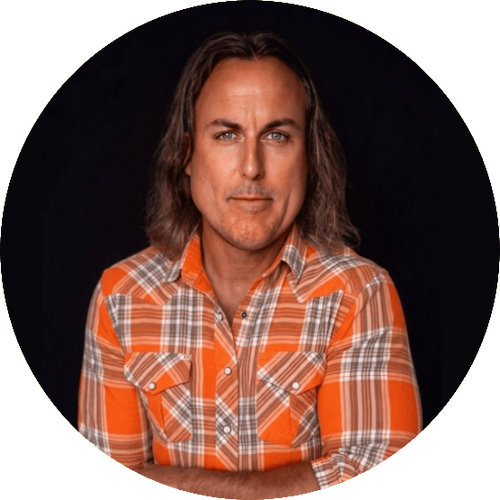
Law Smith
Founder & President, Tocobaga
Law Smith is the Founder and President of Tocobaga, a Tampa-based ROI-focused marketing agency and SMB advisory. He has served as a fractional CMO for PE-backed portfolio companies across home services, professional services, and B2B industries, helping operators scale lead generation and reduce customer acquisition costs at the platform level. With 30+ business plans written and 600+ integrated marketing campaigns executed, Tocobaga brings the reporting discipline and growth infrastructure PE firms expect from their portfolio operators. Tocobaga is a Google Partner and Squarespace Gold Partner headquartered in Ybor City.
In 1937, a North Carolina trucker named Malcom McLean drove a load of cotton bales to the docks in Hoboken, New Jersey, and then did what everybody on a 1937 dock did. He waited. He sat in his cab most of the day watching stevedores load cargo onto a ship one crate at a time. "It struck me that I was looking at a lot of wasted time and money," he said later.* He had started in 1934 with a secondhand truck that cost $120, bought with money he saved pumping gas. By the early 1950s he ran 1,776 trucks and 37 terminals along the Eastern Seaboard, the largest trucking fleet in the South and the fifth-largest in the country.* Yes, 1,776 trucks. History occasionally writes its own punch lines.
In 1955 he made the move that should have ended his career. He sold his 75 percent stake in McLean Trucking for $6 million and bought the Pan-Atlantic Steamship Company for $7 million.* Marc Levinson, author of The Box, the standard history of the shipping container, reports that McLean put up only $10,000 of his own cash to take control of one of the country's largest shipping lines and financed the rest with borrowed money, a structure that later earned its own name: the leveraged buyout.† On April 26, 1956, a converted tanker called the Ideal-X left Port Newark for Houston with 58 containers on board.† Loading loose cargo then cost about $5.83 a ton. Loading the Ideal-X cost 15.8 cents a ton.† A 97 percent cut, roughly 37 times cheaper, from a man who got tired of waiting.
In 1969, R.J. Reynolds bought McLean's container company.* The tobacco giant later merged with Nabisco, and in 1989 Kohlberg Kravis Roberts bought RJR Nabisco for $31 billion including assumed debt, which Morgan Stanley researchers call the largest buyout in history after adjusting for inflation.‡ The borrowed-money technique a trucker used to buy a shipping line, scaled up by Wall Street, eventually swallowed the company that had bought his.
A year later came the romantic comedy version. In Pretty Woman (1990), Richard Gere plays Edward Lewis, a corporate raider Roger Ebert summed up in one sentence: "He buys companies, takes them apart and sells the pieces for more than he paid for the whole."§ His target is a struggling family shipbuilding company run by James Morse. By the final act, Edward decides to help Morse save the company instead of selling it for parts. He chooses to build ships.
Hold those two men side by side. McLean borrowed money to build a standardized system that made an entire economy cheaper. Edward Lewis borrowed money to take things apart, right up until he decided not to. Private equity is both characters, and its formula of a standardized box plus borrowed money is now being applied to plumbers, veterinarians, dermatologists, oil-change bays, preschools and youth sports leagues. Tocobaga, the Tampa Bay lead generation agency and SMB advisory behind SolvingHow.com, sees it from both sides of the table: independent owners who compete against roll-ups, and PE-backed platform companies that bring in a fractional CMO to keep the local brands they bought from fading into wallpaper. In Tampa Bay, as in most American metros, the HVAC truck in a driveway can carry the same family name it carried in 1985 and still answer to an investment fund headquartered somewhere else entirely.
This post covers what private equity actually is, how it grew from one trucker's loan into an industry that owns roughly 13,500 American companies, which local categories it has bought into, what the strongest research says happens to prices and quality afterward, whether private equity is changing sports, the accurate answer to whether Wendy's is owned by private equity, and what owners, sellers and operators should do about all of it.‡
What is private equity, in plain English?
Private equity is pooled investor money, managed by a private equity firm, that buys stakes in private companies, usually controlling stakes, works to make them more valuable and then sells them. The SEC's investor education site, Investor.gov, describes the typical strategy as taking "a controlling interest in an operating company or business" and actively directing it, with an investment time horizon that is typically 10 or more years for the fund.‖
That definition is accurate and almost useless at a dinner party. The word doing the heavy lifting in most deals is "buyout." In a leveraged buyout, the fund puts in a slice of equity and borrows the rest, and the loan sits on the purchased company's balance sheet, not the fund's. Steven Kaplan and Per Stromberg, in one of the most widely cited academic overviews of the industry, found that buyouts are typically financed with 60 to 90 percent debt.¶
Here is what that looks like on Main Street, using round, illustrative numbers rather than any real deal. A fund buys a $20 million car wash chain with $6 million of its own money and $14 million of borrowed money. Five years later it sells the chain for $30 million, after paying the loan down to $8 million. The fund's $6 million is now worth $22 million, more than 3.6 times the original check, on a business whose total value rose 50 percent. Debt multiplies the upside. It multiplies the downside too, and the downside lands on the car wash, its employees and its customers, not on the fund's other holdings.
Then there are the fees. Morgan Stanley's Counterpoint Global researchers describe a management fee "commonly 1.5 to 2.0 percent" of a fund's committed capital plus an incentive fee "most often 20 percent of profits."‡ Investor.gov adds a detail many sellers never read: portfolio companies may also pay the private equity firm for management and monitoring.‖ The industry shorthand is "two and twenty." The less catchy version is that the company being improved can also be the company being invoiced.
Two cousins get mistaken for private equity all the time. Some private funds make minority investments in young, fast-growing companies and startups, which is the venture capital end of the family.‖ Activist investors, meanwhile, buy shares of public companies and lobby management from the outside. A buyout fund buys the company. That distinction will matter later, when the subject turns to a triple cheeseburger.
How did private equity get so big?
Private equity grew in waves until, by the end of 2025, buyout funds owned roughly 13,500 U.S. companies, nearly four for every company listed on a U.S. stock exchange.‡ The listed count, about 3,500, is less than half of what it was in 1997.‡
The modern industry has a birthday. Jerome Kohlberg, Henry Kravis and George Roberts left Bear Stearns and started Kohlberg Kravis Roberts & Co. in May 1976.‡ Kaplan and Stromberg describe a first wave of buyouts that peaked with RJR Nabisco at the end of the 1980s and a second boom in 2006 and 2007.¶ In their data, annual commitments to U.S. private equity funds rose from $0.2 billion in 1980 to more than $200 billion in 2007.¶ That is a thousandfold increase in 27 years, in nominal dollars. McLean needed about two decades to turn one used truck into 1,776. The buyout industry multiplied faster, with other people's money.
Morgan Stanley's team estimates U.S. buyout funds held $2.9 trillion in assets as of September 30, 2025, including $0.8 trillion of "dry powder."‡ Dry powder is money investors have committed and the funds have not spent yet. Eight hundred billion dollars, sitting in the chamber, looking for something to buy. Bain and Company's 2026 outlook shows where that money went last year. Global buyout deal value rose 44 percent in 2025 to $904 billion, while the number of deals fell 6 percent to 3,018.** More money, fewer announced deals. Bigger checks.
Prices climbed with the money. The median buyout in 2000 paid 6.6 times the target's EBITDA, the industry's preferred measure of annual operating earnings. By 2025 the median was 11.5 times.‡ Same dollar of earnings, 74 percent more expensive. When large companies get that pricey, a rational buyer goes looking for earnings that cost less, and the roll-up thesis is that those earnings live inside smaller, owner-run companies that no investment bank has ever auctioned. That is how a financial strategy built for conglomerates ended up in the plumbing aisle. Edward Lewis would recognize every tool in the kit. He would not recognize the targets.
Why does private equity want to buy the plumber down the street?
Private equity buys plumbing, HVAC, veterinary and similar local businesses because they combine three things buyout math loves: fragmented ownership, steady demand that does not much care about the economy, and a valuation gap that, in the industry's own playbook, lets a buyer purchase small companies at lower multiples and sell a combined platform at a higher one. Add owners who want to retire and have no one in the family who wants the trucks, and the supply of willing sellers takes care of itself.
Fragmentation means no single company dominates. Most local service markets are a patchwork of independent shops, each with a few trucks, a loyal customer list and an owner who does the books on Sunday night. For a buyer, a fragmented market is a buffet: there is always another acquisition down the road.
Steady demand is the second ingredient. A water heater fails on its own schedule, not the Federal Reserve's. A dog with a swallowed sock needs a vet tonight. Many of these businesses also sell recurring revenue in the form of maintenance agreements, memberships and wash clubs, and recurring revenue is the closest thing in finance to a guaranteed sequel.
The third ingredient is the one that makes the whole thing work, and it is called multiple arbitrage. Here it is in round, illustrative numbers, not drawn from any specific deal:
Ten independent HVAC companies each earn $1 million a year in EBITDA. A buyer acquires each at 5 times earnings, paying $50 million for $10 million of combined annual earnings.
The buyer centralizes dispatch, purchasing, financing offers, software and reporting. Assume, for the sake of argument, that earnings do not improve at all.
A larger buyer, paying a platform-sized multiple of 10 times earnings, values the combined company at $100 million.
Nothing about a single furnace repair changed, and the value of the enterprise doubled. If $30 million of the original $50 million was borrowed and is still owed, the equity grew from $20 million to $70 million, or 3.5 times.
That is McLean's box applied to a back office. Standardize the container, and any crane in any port can lift it. Standardize the call center, the price book and the monthly financial package, and any larger buyer can price the company in an afternoon. The standardization creates real value. It also creates value on paper whether or not the customer's experience improves, and that distinction is the whole argument.
None of this is sinister by default. A platform can give technicians better training, real benefits and a career ladder that a six-truck shop cannot. It can answer the phone at 2 a.m., stock parts in bulk, offer financing and keep a retiring owner's employees working instead of watching the business close. The question is never whether consolidation can help. The question is who captures the gain: the customer, the workers, the selling owner or only the cap table.
Which local industries has private equity bought into?
Not literally every category, but most categories with fragmented ownership and steady, local, recurring demand, including home services, veterinary clinics, physician practices, anesthesia groups, auto service, childcare and tutoring franchises, fitness studios, fast food and professional sports teams. The honest headline is "most of the categories that look like a good small business," not "every mom-and-pop," because no public data set can prove the word every.
Home services are the clearest example. Alpine Investors lists Apex Service Partners in its portfolio as a platform in HVAC, plumbing and electrical services, alongside sister platforms in yard and grounds work, home restoration and residential home improvement.†† Apex describes its own goal as building "long-term, leading local brands across the country."‡‡ Read that phrase twice. The strategy is not to put one national logo on every van. It is to own the local names customers already trust.
Franchise systems are the second route in. Roark Capital's portfolio page lists Driven Brands, the parent of Meineke, Take 5 Oil Change, Maaco and CARSTAR; Primrose Schools for preschool; Mathnasium for math tutoring; Massage Envy; Purpose Brands, which includes Anytime Fitness and Orangetheory Fitness; ServiceMaster Brands, which includes Merry Maids and Two Men and a Truck; and Youth Enrichment Brands, which includes School of Rock, i9 Sports, US Sports Camps and SafeSplash swim schools.§§ A family could plausibly spend an entire Saturday inside one sponsor's portfolio: oil change in the morning, swim lessons at noon, math tutoring after lunch, a massage at four, and dinner at a Roark restaurant brand. One important caveat: owning a franchisor is not the same as owning every franchised location. The local Meineke or Primrose may be owned by a franchisee who lives ten minutes away.
Veterinary care drew federal attention early. In June 2022, the Federal Trade Commission required JAB Consumer Partners, as a condition of its $1.1 billion acquisition of SAGE Veterinary Partners, to sell six clinics in the Austin and San Francisco Bay Area markets and to get FTC approval for 10 years before buying specialty or emergency clinics within 25 miles of its own clinics in California or Texas.‖‖ The FTC's competition director at the time put it bluntly: "Private equity firms increasingly engage in roll up strategies that allow them to accrue market power."‖‖
Physician practices show what scale looks like when someone counts. A 2024 study in Health Affairs by Ola Abdelhadi, Brent Fulton, Laura Alexander and Richard Scheffler found that private equity-acquired physician practice sites in ten specialties grew from 816 sites in 119 metropolitan areas in 2012 to 5,779 sites in 307 metropolitan areas in 2021.¶¶ That is about 7.1 times as many sites, an average of roughly 550 new acquired sites per year. By 2021, a single private equity firm held more than 30 percent of the market in at least one specialty in 108 metropolitan areas, and more than 50 percent in 50 of them.¶¶ National averages can look modest while a specific city's dermatology or gastroenterology market belongs mostly to one owner.
The table below lists verified examples by category, along with what the evidence actually shows, which is usually more specific and less cinematic than the headlines.
| Category | Example PE-backed platforms or sponsors | What the evidence shows |
|---|---|---|
| HVAC, plumbing, electrical | Apex Service Partners (Alpine Investors) | Platform built to own local brands; no reliable national ownership share |
| Auto service, preschool, tutoring | Driven Brands, Primrose Schools, Mathnasium (Roark) | Sponsor owns the franchisors; many local units are franchisee-owned |
| Veterinary specialty and emergency | JAB Consumer Partners (SAGE deal, 2022) | FTC ordered six clinic sales and 10 years of prior approval |
| Physician practices, ten specialties | Many sponsors | Sites rose from 816 to 5,779, 2012 to 2021; one firm above 30% share in 108 metros |
| Dermatology, GI, eye care | 578 acquired practices studied | Charges per claim up 20.2%; allowed amounts up 11.0% |
| Hospitals | 51 acquired hospitals studied | Hospital-acquired conditions up 25.4%; no differential 30-day mortality change |
| Nursing homes | Facilities in Medicare patient data | 11% relative mortality increase in the study's design |
| Anesthesia in Texas | U.S. Anesthesia Partners | FTC alleged a decade-long roll-up raised prices; preliminary settlement in April 2026 |
| Fast food | Inspire Brands (Arby's, Sonic, Dunkin') and Subway (Roark) | Franchisor-level ownership; no documented recipe changes found |
| Casual dining | Red Lobster (Golden Gate Capital, 2014) | $1.5 billion sale-leaseback; 2024 bankruptcy came four years after the sponsor's exit |
| Pro sports | Arctos, Ares, Sixth Street, a Blackstone-led group (NFL) | NFL allows approved funds up to 10% since 2024; other leagues up to 30% |
| Consumer products | Buyouts across many brands | Sales up 50% versus controls; prices up about 1% on existing items |
What happens to a business after private equity buys it?
It depends heavily on the type of deal: in a Census Bureau-based study of roughly 9,800 U.S. buyouts, employment rose 13 percent at targets that had been privately held and fell 13 percent at targets that had been publicly listed, while labor productivity rose about 8 percent on average relative to comparable firms.*** For the typical family business sale, which is a private-to-private deal, the research points toward growth, not a pink-slip parade.
The study, by Steven Davis, John Haltiwanger, Kyle Handley, Josh Lerner, Ben Lipsius and Javier Miranda, covered buyouts from 1980 to 2013.*** Employment fell 16 percent in buyouts of corporate divisions and rose 10 percent in secondary buyouts, where one fund sells to another. Compensation per worker at target firms fell 1.7 percent. Buyouts completed during easy credit conditions produced smaller productivity gains than those completed when credit was tight.*** That last finding deserves a frame on the wall of every investment committee: cheap money tends to buy worse deals.
Failure is real but not typical. Kaplan and Stromberg found that about 6 percent of buyouts in their data ended in bankruptcy or reorganization, which works out to roughly 1.2 percent per year assuming an average holding period of six years.¶ Out of every 100 buyouts, about six ended up in a courtroom or a restructuring. That is not the apocalypse critics describe. It is also not zero, and every one of those six had a payroll.
The clock is getting longer, too. Bain reports that holding periods at exit are hovering around seven years, up from an average of five to six years between 2010 and 2021.** A fund that bought a plumbing platform in 2019 may still be looking for the exit in 2026, with its own investors asking when the money comes back. That pressure does not stay in the boardroom. It travels down the org chart until it reaches a dispatcher and a price book.
The cautionary tale every restaurant operator knows is Red Lobster. Darden Restaurants sold the chain to Golden Gate Capital in 2014 for $2.1 billion, a purchase funded in part by a $1.5 billion sale-leaseback of the chain's real estate.††† In plain English, Red Lobster sold buildings it owned and started paying rent to sit in them. Thai Union, a seafood supplier, bought a stake in 2016, and in 2020 a group that included Thai Union bought out Golden Gate's remaining stake.††† When Red Lobster filed for bankruptcy in May 2024 with 551 U.S. locations, it had lost $76 million in fiscal 2023, partly because of an endless shrimp promotion, and its chief executive cited "a bloated and underperforming restaurant footprint."†††
Fairness requires the full timeline. Golden Gate had been fully out for four years when the chain filed, and the endless shrimp decision was not its call. But the rent bill created by the 2014 deal was still there, every month, for most of the chain's restaurants. That is the Edward Lewis move in its purest form: separate the pieces, sell the valuable one, and leave the operating business paying rent on the floor it stands on.
For a local service business, the changes after a sale are usually quieter. A customer may notice a new phone tree, a membership pitch at the end of a service call, a financing offer on the invoice or a price list that suddenly looks like everyone else's. Some of those changes are improvements. Some are the sound of a spreadsheet clearing its throat.
Is private equity bad for consumers?
The evidence says it depends on the sector: in health care, peer-reviewed studies link private equity acquisitions to higher prices and some worse outcomes, while in packaged consumer products a major study found buyouts grew sales mainly through new products and expansion, with price increases of roughly 1 percent.‡‡‡,§§§ Sector, debt load and the specific sponsor matter more than the label.
Start with physician practices. A 2022 study in JAMA Health Forum by Yashaswini Singh, Zirui Song, Daniel Polsky, Joseph Bruch and Jane Zhu compared 578 dermatology, gastroenterology and ophthalmology practices acquired by private equity from 2016 to 2020 with 2,874 matched control practices.‡‡‡ After acquisition, the average amount charged per claim rose $71, or 20.2 percent, and the allowed amount, meaning the price insurers actually agreed to pay, rose $23, or 11.0 percent. The number of unique patients rose 25.8 percent, driven by a 37.9 percent increase in visits by new patients.‡‡‡ Back out the math and the average charge per claim moved from roughly $350 to roughly $420. The patients kept coming. The prices came with them.
Hospitals show a quality signal, not just a price signal. A December 2023 study in JAMA by Sneha Kannan, Joseph Bruch and Zirui Song compared 51 hospitals acquired by private equity with 259 matched hospitals using Medicare claims.‖‖‖ Medicare patients at the acquired hospitals experienced a 25.4 percent increase in hospital-acquired conditions, equal to 4.6 additional conditions per 10,000 hospitalizations, including a 27.3 percent increase in falls and a 37.7 percent increase in central line-associated bloodstream infections, even though the hospitals placed fewer central lines.‖‖‖ A 25 percent jump sounds catastrophic. In absolute terms, a hospital with 20,000 Medicare stays a year would see about nine more hospital-acquired conditions. Small rate. Real people. The same study found in-hospital mortality fell slightly and found no differential change in mortality 30 days after discharge, which the authors suggest may reflect a shift in which patients the hospitals admitted.‖‖‖
Nursing homes produced the starkest finding. Atul Gupta, Sabrina Howell, Constantine Yannelis and Abhinav Gupta, using patient-level Medicare data, estimated that private equity ownership increased mortality for the patients identified by their research design by 11 percent, a relative increase rather than 11 percentage points, and linked it to declines in nurse staffing, patient well-being and compliance with care standards.¶¶¶ Their own summary is notably careful: private equity has "nuanced effects, with adverse outcomes for a subset of patients."¶¶¶
Then there is the anesthesia case. The FTC alleged that U.S. Anesthesia Partners spent about a decade buying nearly every large anesthesia practice in Texas to build a single dominant provider, a strategy the complaint said cost Texans "tens of millions of dollars more each year" for anesthesia services.**** On April 23, 2026, the FTC announced a preliminary settlement with USAP, authorized by a 2-0 Commission vote, with its terms kept confidential while the company carries them out.**** Those are allegations and a settlement in progress, not a court verdict that every roll-up is illegal. They are also proof that regulators now read a string of small acquisitions as one big one.
Now the counterweight. Cesare Fracassi, Alessandro Previtero and Albert Sheen studied price and sales data for a wide range of consumer products and found that, after a buyout, target firms increased sales 50 percent more than matched control firms.§§§ Price increases of roughly 1 percent on existing products did not drive that growth. New product launches and geographic expansion did, and competitors lost shelf space.§§§ Combine that with the 8 percent productivity gain in the Census-based buyout research, and the McLean version of private equity is not a fairy tale.***
So the scoreboard does not read "private equity bad" or "private equity good." It reads more like this: debt plus a captive customer is dangerous, and debt plus a competitive shelf can be productive. A patient under anesthesia cannot comparison shop. A nursing home resident cannot easily switch facilities. A cereal shopper switches every week. Where customers cannot judge quality or walk away, the pressure to squeeze meets fewer natural brakes. One more caution cuts the other way: health care findings should not be pasted onto plumbing. Different payment systems, different stakes, different customers.
Is private equity changing sports?
Yes, at the ownership level: in August 2024 NFL owners voted for the first time to open their teams to institutional investment, allowing league-approved private equity firms to buy up to 10 percent of a franchise, while other major American leagues already allowed private equity holdings of as much as 30 percent.††††
The approved buyers were Arctos Partners, Ares Management, Sixth Street and a consortium of Blackstone, Carlyle, CVC, Dynasty Equity and Ludis, a firm founded by Hall of Fame running back Curtis Martin. Each investment must be at least 3 percent of a team and must be held for at least six years.†††† The reason is arithmetic. The Denver Broncos sold for $4.65 billion and the Washington Commanders for $6.05 billion.†††† A 10 percent stake in a $6.05 billion team costs about $605 million, for a minority seat with no say over the draft. Very few individuals want to write that check. Plenty of funds do.
The sharpest skeptic in the press box is Pablo Torre, whose podcast Pablo Torre Finds Out won the 2026 Pulitzer Prize for audio reporting. In a June 2026 conversation with David Remnick on The New Yorker Radio Hour, Torre argued that investigative sports reporting becomes even more necessary as private equity invests massive sums in teams.‡‡‡‡ As a fan, I can feel the change before I can prove it, and the gap between feeling and proof is exactly where reporters like Torre earn their keep.
The money is not only in luxury suites. Roark's Youth Enrichment Brands includes i9 Sports, US Sports Camps, U.S. Baseball Academy and SafeSplash.§§ Private equity is in the owner's box on Sunday and on the rec-league sideline on Saturday morning. Whether that improves the experience for a nine-year-old shortstop is a question this review found no rigorous published answer to.
Is Wendy's owned by private equity?
No. As of October 2026, Wendy's is a publicly traded company, and its best-known investor, Nelson Peltz's Trian Fund Management, owns about 16 percent; Trian explored a take-private bid in August 2026 and then, according to Reuters sources, had no plans to make a bid at that time.§§§§
I have a long-running, guilty-pleasure relationship with the triple cheeseburger at Wendy's, so I checked whether a buyout fund had gotten to it first. The answer is more interesting than yes. Trian has had a nearly two-decade relationship with Wendy's; Trian co-founder Peter May has sat on the board for 18 years, and Bradley Peltz, a son of Nelson Peltz, joined the nine-person board in 2025.§§§§ Trian considered taking Wendy's private in 2022 and backed away in 2023. Reports of a new consortium bid in August 2026, with BlueFive Capital and the Wendy's franchisee Flynn Group, sent the stock up 14.7 percent on August 12. Two weeks later, Reuters reported Trian had no plans to bid at this time, citing concerns about Wendy's performance, valuation and strategic direction, and the stock fell more than 14 percent after hours.§§§§
Here is the twist. Wendy's new chief executive, Bob Wright, who took over in May 2026 as the chain's fourth leader in three years, acknowledged that the chain had sacrificed quality to cut costs. Wendy's lost its No. 2 position among the big burger chains, and its shares trade about 60 percent below where they were five years ago.§§§§ A publicly traded burger chain, with no buyout fund in charge, let quality slip to save money. Cost-cutting does not need a private equity logo. Quarterly earnings calls have spreadsheets too.
The contrast list is long, and it lives mostly in one portfolio. Roark Capital's Inspire Brands owns Arby's, Baskin-Robbins, Buffalo Wild Wings, Dunkin', Jimmy John's and Sonic. Roark completed its acquisition of Subway on April 30, 2024, and its portfolio also lists GoTo Foods (Auntie Anne's, Cinnabon, Jamba, McAlister's Deli, Moe's Southwest Grill and Schlotzsky's), CKE Restaurants (Carl's Jr. and Hardee's), Culver's and Dave's Hot Chicken.§§ Red Lobster's sale-leaseback history sits on the casual-dining side of the ledger.††† Two cautions belong next to that list. Most of those restaurants are operated by franchisees, not by the sponsor. And nothing in the public record reviewed for this post documents recipe or portion changes tied to these ownership changes. The internet is full of people certain the fries shrank after the buyout. Certainty is not a citation.
Are local competitors secretly owned by the same private equity firm?
Sometimes, and it can be hard to tell from the curb. Some roll-up platforms are explicitly built to keep local brands,‡‡ and federal antitrust officials have said many serial acquisitions fall below merger-filing thresholds, which means regulators often never see them.‖‖‖‖
Law Smith, Tocobaga's founder, describes the endgame he worries about as the faceless YouTube channel model of ownership. Anyone who has fallen down a YouTube hole knows the genre: a stock-footage intro, a synthetic narrator, no visible human, and somewhere in the description a promise that a channel like this one can make six figures a month on autopilot. The brand stays. The face disappears. The income claims are impossible to audit from the outside. Now apply that to a metro area's home services market: three trucks, three logos, three websites, three sets of reviews, and potentially one owner, one call center and one price book. Economists have a name for a market dominated by a few sellers. Consumers do not, because they cannot see it. "Three yard signs, one cash box" is close enough.
Washington noticed. On May 23, 2024, the Justice Department and the FTC opened a public inquiry into serial acquisitions and roll-up strategies across the economy, naming sectors including construction, aftermarket and repair, and professional services.‖‖‖‖ FTC Chair Lina Khan said at the time that "firms can use serial acquisitions to roll up markets, consolidate power and undermine fair competition."‖‖‖‖ An inquiry is not a rule. The USAP case, filed in 2023 and still producing a settlement in 2026, suggests the underlying concern outlasts any single administration.****
For a consumer, a few questions cut through the fog. Who owns this company today, and has it been sold in the last five years? Is this brand one of several under a parent company? Are the three quotes on the kitchen counter from businesses that share a parent, a call center or a financing partner? Who holds the maintenance plan or the warranty if the company is sold again? In Florida, the state's Sunbiz business registry lists the officers and managers behind a company name, which is a five-minute check. Ownership alone does not decide whether a provider is competent or fairly priced. It does decide whether three quotes are really three opinions.
What should owners, sellers and operators do about private equity roll-ups?
Independent owners should compete on visible local proof, sellers should diligence what happens to their people and brand after closing, and PE-backed operators should treat local reputation as the asset they actually bought.
For the independent owner, the roll-up's advantages are scale: round-the-clock dispatch, financing offers, purchasing power and a bigger advertising budget. The independent's advantage is a face, and a face only works if customers can see it. Put the owner's name and photo on the website. Name the technicians in review responses. Answer the phone with a local voice. Publish honest price ranges. "Locally owned" means something only when it is true and tied to a benefit a customer can verify, such as the same technician every visit, the owner's cell number on the invoice or a warranty honored by the person who sold it.
For the seller, the price is the easy part of the conversation. The harder questions decide what the next five years look like. How many of the platform's earlier acquisitions still operate under their original names? How many of those founders and general managers are still there three years later? What happens to the Google Business Profile, the phone numbers, the website domain and the reviews? Who sets prices after closing? How much debt sits on the platform, and what happens to the earnout if a new call center misses the targets the earnout depends on? Call owners who sold to the same buyer three or more years ago. They will say things no investment banker will.
For the PE-backed operator, the uncomfortable fact is that the local reputation is the asset that was bought. The reviews, the Google Business Profile, the phone number printed on ten thousand refrigerator magnets, the technician customers request by name, the Little League sponsorship banner: accounting may not book those as assets, but the purchase price did. Do not merge a dozen local profiles into one national listing in month one. Do not swap local numbers for a national call center number before measuring what it does to answer rates and booked jobs. Keep the founder visible through the transition. Report cost per lead, customer acquisition cost and lifetime value by brand and by location, not as one blended platform number that hides the weak market. Watch review ratings and review volume weekly after any operational change. The health care research is the warning label: when cost discipline reaches the customer, it shows up in outcomes. The Wendy's admission is the drive-thru version of the same lesson.
So is private equity good or bad for the American consumer?
I don't know if it's good or bad yet, but as a consumer I lean toward "probably bad" in the places where customers cannot easily judge quality or walk away.
The case for concern is specific. In health care, peer-reviewed studies tie private equity ownership to higher charges at physician practices, more hospital-acquired conditions at hospitals and higher mortality for a subset of nursing home patients.‡‡‡,‖‖‖,¶¶¶ Regulators have alleged that a roll-up raised anesthesia prices across Texas.**** Restaurant history includes a sale-leaseback that left a seafood chain paying rent on buildings it used to own.†††
The case for patience is also specific. Across roughly 9,800 buyouts, productivity rose about 8 percent and employment grew at previously private targets.*** In consumer products, buyouts grew sales mostly by launching products and expanding, not by gouging.§§§ And only about 6 percent of buyouts in Kaplan and Stromberg's data ended in bankruptcy or reorganization.¶
What is missing is the evidence that would settle the question for the plumber, the HVAC company, the preschool and the oil-change bay. Health care has Medicare claims data and decades of academic attention. Home services have deal counts and anecdotes. The trajectory is what worries a consumer: toward fewer owners behind more familiar names, priced by people the customer will never meet. That is not proof of harm. It is a reason to keep asking who owns the truck.
The trucker, the raider and the plumber
McLean's box worked because it standardized the boring parts so the valuable part, the cargo, could move faster and cheaper. Edward Lewis spent most of Pretty Woman doing the opposite, valuing the pieces over the whole, until he decided to help Morse build instead of break. Tocobaga works as a fractional CMO for PE-backed platform companies and for independent owners, and the assignment changes depending on which side of the roll-up a business sits on. For platforms, the job is keeping local brand equity intact through the roll-up: reporting cost per lead, customer acquisition cost, close rate and lifetime value by brand and by location; governing Google Business Profiles and reviews across every acquired name; planning any rebrand in measured stages instead of one weekend of new vinyl; and building dashboards an operating partner can read in two minutes. For independents, it is the opposite assignment: make the local face impossible to miss.
The house rules are built for owners who think like buyers. Flat-fee pricing, never a percentage of ad spend. Contracts that never auto-renew. The company owns its website, ad accounts, profiles and data, which matters at exit because a buyer pays for assets a business actually controls. Tocobaga has advised more than 1,000 small and medium-sized businesses, and the team says no when it is not the right fit and points owners to other resources. For a no-pressure intro call about a roll-up, a sale or a local brand worth protecting, reach Tocobaga at (813) 934-6605 or through SolvingHow.com.
Every fund that buys the plumber down the street is choosing which movie it is in. The tools are identical: borrowed money, standardized processes and a bigger buyer waiting at the end. The difference is whether the box is built to carry the cargo or to empty it. McLean sat most of a day on a Hoboken pier and decided the waiting was the problem worth solving. Customers in 2026 are waiting too, on hold with a call center that answers under a family name the family no longer owns. The funds that solve that problem will build ships. The rest are just selling the pieces.
Why is private equity buying small businesses?
Private equity buys small service businesses because they offer fragmented ownership, steady local demand and a valuation gap. The roll-up playbook buys small companies at lower multiples, combines them into a platform with shared dispatch, purchasing and reporting, and sells the platform at a higher multiple. Owners nearing retirement without a family successor add a steady supply of sellers.
What is a private equity roll-up?
A roll-up is a strategy in which a private equity-backed platform company acquires many smaller competitors in the same or related industries and combines them. The acquired businesses often keep their local names while sharing ownership, back-office systems and pricing. Federal antitrust officials have noted that many of these individual acquisitions fall below merger-filing thresholds.
Is private equity bad for consumers?
The evidence depends on the sector. Peer-reviewed health care studies link private equity acquisitions to higher physician charges, more hospital-acquired conditions and higher mortality for a subset of nursing home patients. A major study of consumer products found buyouts grew sales mainly through new products, with price increases of about 1 percent.
Is Wendy's owned by private equity?
No. As of October 2026, Wendy's is a publicly traded company. Nelson Peltz's Trian Fund Management owns about 16 percent and explored a take-private bid in August 2026, but Reuters reported later that month that Trian had no plans to bid at that time.
Which fast food chains are owned by private equity?
Roark Capital's Inspire Brands owns Arby's, Baskin-Robbins, Buffalo Wild Wings, Dunkin', Jimmy John's and Sonic, and Roark completed its acquisition of Subway in April 2024. Roark's portfolio also lists Carl's Jr., Hardee's, Cinnabon, Auntie Anne's and Culver's. Most individual restaurants in these systems are operated by franchisees.
How can a consumer tell if a local business is owned by private equity?
Start with the company's About page, its press releases and the state business registry, which in Florida is Sunbiz. Look for a parent company or a "service partners" platform name, a shared call center and identical financing offers across supposedly competing brands. Asking directly who owns the company and whether it has been sold in the past five years is also reasonable.
Can private equity firms own NFL teams?
Yes, in limited amounts. In August 2024 NFL owners approved a rule allowing league-approved private equity firms to buy up to 10 percent of a team, with each investment at least 3 percent and held for at least six years. Other major American leagues already allowed private equity stakes of up to 30 percent.
Should a small business owner sell to private equity?
It depends on the owner's goals and the buyer's track record. Before selling, an owner should ask how many earlier acquisitions kept their names and leaders, who will control pricing and the Google Business Profile, how much debt the platform carries and how the earnout is measured. Speaking with owners who sold to the same buyer three or more years earlier is one of the most useful checks.
Sources
- *
- Mayo, Anthony J., and Nitin Nohria. "The Truck Driver Who Reinvented Shipping." Harvard Business School Working Knowledge, October 3, 2005 (excerpt from In Their Time: The Greatest Business Leaders of the Twentieth Century). McLean's 1937 Hoboken wait and quote, the $120 first truck in 1934, 1,776 trucks and the fifth-largest U.S. fleet, the $6 million and $7 million 1955 transactions, and the 1969 sale to R.J. Reynolds. https://www.library.hbs.edu/working-knowledge/the-truck-driver-who-reinvented-shipping
- †
- Levinson, Marc. The Box: How the Shipping Container Made the World Smaller and the World Economy Bigger. 2nd ed. Princeton University Press, 2016. McLean's $10,000 cash outlay in what later became known as a leveraged buyout; the April 26, 1956 Ideal-X sailing with 58 containers; loading costs of 15.8 cents versus $5.83 per ton. https://press.princeton.edu/books/paperback/9780691170817/the-box
- ‡
- Mauboussin, Michael J., and Dan Callahan. "Public to Private Equity in the United States: A Long-Term Look." Morgan Stanley Counterpoint Global Insights, September 1, 2026. KKR's May 1976 founding; RJR Nabisco at $31 billion including debt; about 13,500 buyout-owned U.S. firms versus about 3,500 listed companies at year-end 2025; $2.9 trillion in U.S. buyout assets; median buyout EV/EBITDA of 6.6 in 2000 and 11.5 in 2025; typical fee terms. https://www.morganstanley.com/content/dam/im/assets/publication/thought-leadership/consilient-observer/articles_publictoprivateequityintheusalongtermlook_us.pdf
- §
- Ebert, Roger. "Pretty Woman." RogerEbert.com, March 23, 1990. Description of Edward Lewis as a takeover artist who sells the pieces for more than he paid for the whole. https://www.rogerebert.com/reviews/pretty-woman-1990
- ‖
- U.S. Securities and Exchange Commission, Office of Investor Education and Advocacy. "Private Equity Funds." Investor.gov, accessed October 8, 2026. Controlling-interest strategy, 10-plus-year fund horizon, minority investments in startups, and fees paid by funds and portfolio companies. https://www.investor.gov/introduction-investing/investing-basics/investment-products/private-investment-funds/private-equity
- ¶
- Kaplan, Steven N., and Per Stromberg. "Leveraged Buyouts and Private Equity." Journal of Economic Perspectives 23, no. 1 (Winter 2009): 121 to 146. Buyouts financed with 60 to 90 percent debt; the first wave peaking with RJR Nabisco and the 2006 to 2007 boom; U.S. fund commitments from $0.2 billion in 1980 to over $200 billion in 2007; about 6 percent of deals ending in bankruptcy or reorganization, roughly 1.2 percent per year. https://www.hhs.se/contentassets/662e98040ed14d6c93b1119e5a9796a4/kaplanstrombergjep2009.pdf
- **
- Bain and Company. "Private Equity Outlook 2026: Gaining Traction." Global Private Equity Report 2026. Global buyout value of $904 billion in 2025 (up 44 percent), 3,018 deals (down 6 percent), and holding periods at exit near seven years versus five to six in 2010 to 2021. https://www.bain.com/insights/outlook-gaining-traction-global-private-equity-report-2026
- ††
- Alpine Investors. "Portfolio." Accessed October 8, 2026. Apex Service Partners listed as a current HVAC, plumbing and electrical platform, alongside platforms in lawn and grounds services, home restoration and residential home improvement. https://alpineinvestors.com/portfolio/
- ‡‡
- Apex Service Partners. Company website, accessed October 8, 2026. Describes itself as an HVAC, plumbing and electrical services group whose goal is to build "long-term, leading local brands across the country." https://www.apexservicepartners.com/
- §§
- Roark Capital. "Portfolio." Accessed October 8, 2026. Inspire Brands (Arby's, Baskin-Robbins, Buffalo Wild Wings, Dunkin', Jimmy John's, Sonic), Subway (acquisition completed April 30, 2024), Driven Brands, Primrose Schools, Mathnasium, Massage Envy, Purpose Brands, ServiceMaster Brands, Youth Enrichment Brands, GoTo Foods, CKE, Culver's and Dave's Hot Chicken. https://www.roarkcapital.com/portfolio
- ‖‖
- Federal Trade Commission. "FTC Acts to Protect Pet Owners from Private Equity Firm's Anticompetitive Acquisition of Veterinary Services Clinics." Press release, June 13, 2022. JAB's $1.1 billion SAGE acquisition, the six-clinic divestiture, 10-year prior approval within 25 miles in California and Texas, and Holly Vedova's roll-up quote. https://www.ftc.gov/news-events/news/press-releases/2022/06/ftc-acts-protect-pet-owners-private-equity-firms-anticompetitive-acquisition-veterinary-services
- ¶¶
- Abdelhadi, Ola, Brent D. Fulton, Laura Alexander, and Richard M. Scheffler. "Private Equity-Acquired Physician Practices and Market Penetration Increased Substantially, 2012-21." Health Affairs 43, no. 3 (March 2024): 354 to 362. Growth from 816 sites in 119 metro areas to 5,779 sites in 307 metro areas; single-firm shares above 30 percent in 108 metro areas and above 50 percent in 50. https://doi.org/10.1377/hlthaff.2023.00152
- ***
- Davis, Steven J., John Haltiwanger, Kyle Handley, Josh Lerner, Ben Lipsius, and Javier Miranda. "The Economic Effects of Private Equity Buyouts." NBER Digest, February 2020 (summarizing NBER Working Paper 26371). About 9,800 U.S. buyouts, 1980 to 2013; employment effects by deal type; 8 percent productivity gain; 1.7 percent decline in compensation per worker; weaker gains under easy credit. https://www.nber.org/digest/feb20/economic-effects-private-equity-buyouts
- †††
- "Red Lobster files for bankruptcy." CNBC, republished by NBC Chicago, May 20, 2024. Golden Gate's $2.1 billion 2014 purchase and $1.5 billion sale-leaseback; Thai Union's 2016 stake and the 2020 buyout of Golden Gate's remaining stake; 551 U.S. locations; $76 million fiscal 2023 loss; CEO quote. https://www.nbcchicago.com/news/business/money-report/red-lobster-files-for-bankruptcy-2/3441493/
- ‡‡‡
- Singh, Yashaswini, Zirui Song, Daniel Polsky, Joseph D. Bruch, and Jane M. Zhu. "Association of Private Equity Acquisition of Physician Practices With Changes in Health Care Spending and Utilization." JAMA Health Forum 3, no. 9 (September 2, 2022): e222886. 578 acquired practices versus 2,874 controls; charges per claim up $71 (20.2 percent); allowed amounts up $23 (11.0 percent); unique patients up 25.8 percent. https://jamanetwork.com/journals/jama-health-forum/fullarticle/2795946
- §§§
- Fracassi, Cesare, Alessandro Previtero, and Albert W. Sheen. "Barbarians at the Store? Private Equity, Products, and Consumers." Journal of Finance 77, no. 3 (2022): 1439 to 1488; NBER Working Paper 27435. Sales up 50 percent more than matched controls; roughly 1 percent price increases on existing products; growth from new products and geographic expansion. https://www.nber.org/papers/w27435
- ‖‖‖
- Kannan, Sneha, Joseph Dov Bruch, and Zirui Song. "Changes in Hospital Adverse Events and Patient Outcomes Associated With Private Equity Acquisition." JAMA 330, no. 24 (December 26, 2023): 2365 to 2375. 51 acquired versus 259 control hospitals; 25.4 percent increase in hospital-acquired conditions (4.6 per 10,000 hospitalizations); falls and bloodstream infections; mortality findings. https://jamanetwork.com/journals/jama/fullarticle/2813379
- ¶¶¶
- Gupta, Atul, Sabrina T. Howell, Constantine Yannelis, and Abhinav Gupta. "Owner Incentives and Performance in Healthcare: Private Equity Investment in Nursing Homes." Review of Financial Studies 37, no. 4 (2024): 1029 to 1077; NBER Working Paper 28474. Local average treatment effect on mortality of 11 percent; staffing and care-standard declines; "nuanced effects" quote. https://www.nber.org/papers/w28474
- ****
- Federal Trade Commission. "FTC Charts Path to Restore Competition in Texas Anesthesia Markets in USAP Litigation." Press release, April 23, 2026. Alleged decade-long consolidation of Texas anesthesia practices costing Texans "tens of millions of dollars more each year"; preliminary settlement by 2-0 vote with confidential terms. https://www.ftc.gov/news-events/news/press-releases/2026/04/ftc-charts-path-restore-competition-texas-anesthesia-markets-usap-litigation
- ††††
- Campbell, Dave. "NFL owners newly endorse private equity stakes of up to 10% in teams by league-approved firms." Associated Press, republished by Boston.com, August 28, 2024. The August 27, 2024 vote, approved firms, 3 percent minimum and six-year hold, the 30 percent caps in other leagues, and the Broncos and Commanders sale prices. https://www.boston.com/sports/business/2024/08/28/nfl-owners-newly-endorse-private-equity-stakes/
- ‡‡‡‡
- "The Sports Journalist Pablo Torre Has a Pulitzer, but Still Feels Like the 'Turd' in the Pool." The New Yorker Radio Hour, WNYC, June 16, 2026. Torre's 2026 Pulitzer Prize for audio reporting and his view that investigative sports reporting grows more necessary as private equity invests in teams. https://www.wnyc.org/browse/shows/episode/simplecast/688a8277-5c30-47b7-8703-a76df449692c
- §§§§
- Herbst-Bayliss, Svea. "Exclusive: Trian has no plans to make bid for Wendy's right now, sources say." Reuters, republished by Investing.com, August 26, 2026. Trian's roughly 16 percent stake and board ties, the August 2026 bid reports and pullback, stock moves, CEO Bob Wright's acknowledgment that quality was sacrificed to cut costs, and the lost No. 2 burger ranking. https://www.investing.com/news/stock-market-news/exclusivetrian-has-no-plans-to-make-bid-for-wendys-right-now-sources-say-4877997
- ‖‖‖‖
- U.S. Department of Justice, Office of Public Affairs. "Justice Department and Federal Trade Commission Seek Information on Serial Acquisitions, Roll-Up Strategies Across U.S. Economy." Press release, May 23, 2024. Joint public inquiry, deals falling below merger-filing thresholds, sectors named, and Lina Khan's quote. https://www.justice.gov/opa/pr/justice-department-and-federal-trade-commission-seek-information-serial-acquisitions-roll