

The Leads Aren't Weak: Why B2B Lead Generation Is Not Working for SaaS Companies and What Works Instead

Law Smith
Founder & President, Tocobaga
Law Smith is the Founder and President of Tocobaga, a Tampa-based ROI-focused marketing agency and SMB advisory. He has built demand generation programs for SaaS companies spanning content and SEO, paid acquisition, and email sequences, with reporting architected around MQL-to-close conversion rather than vanity metrics and growth frameworks scaled to match the stage of the raise. With 600+ campaigns executed and 1,000,000+ emails deployed, Tocobaga gives revenue teams the pipeline visibility they need to hit their numbers. Tocobaga is a Google Partner and Squarespace Gold Partner headquartered in Ybor City.
In 1884, a Dayton, Ohio, businessman named John H. Patterson acquired the patent for a clunky new machine that recorded every sale in a store, and he founded the National Cash Register Company to sell it.* Shopkeepers did not know they needed one. Patterson decided that finding out should not be left to chance.
In 1887, his top salesman, Joseph H. Crane, who was also his brother-in-law, had his sales talk taken down word for word. The result was a 16-page manual known inside the company as the Primer.*,† It broke every sale into four steps: approach, proposition, demonstration and close. It told salesmen never to ask for the order, but to "take for granted that he will buy."† Selling had been a craft of charm, luck and handshakes. Patterson turned it into a script a manager could copy, inspect and correct.
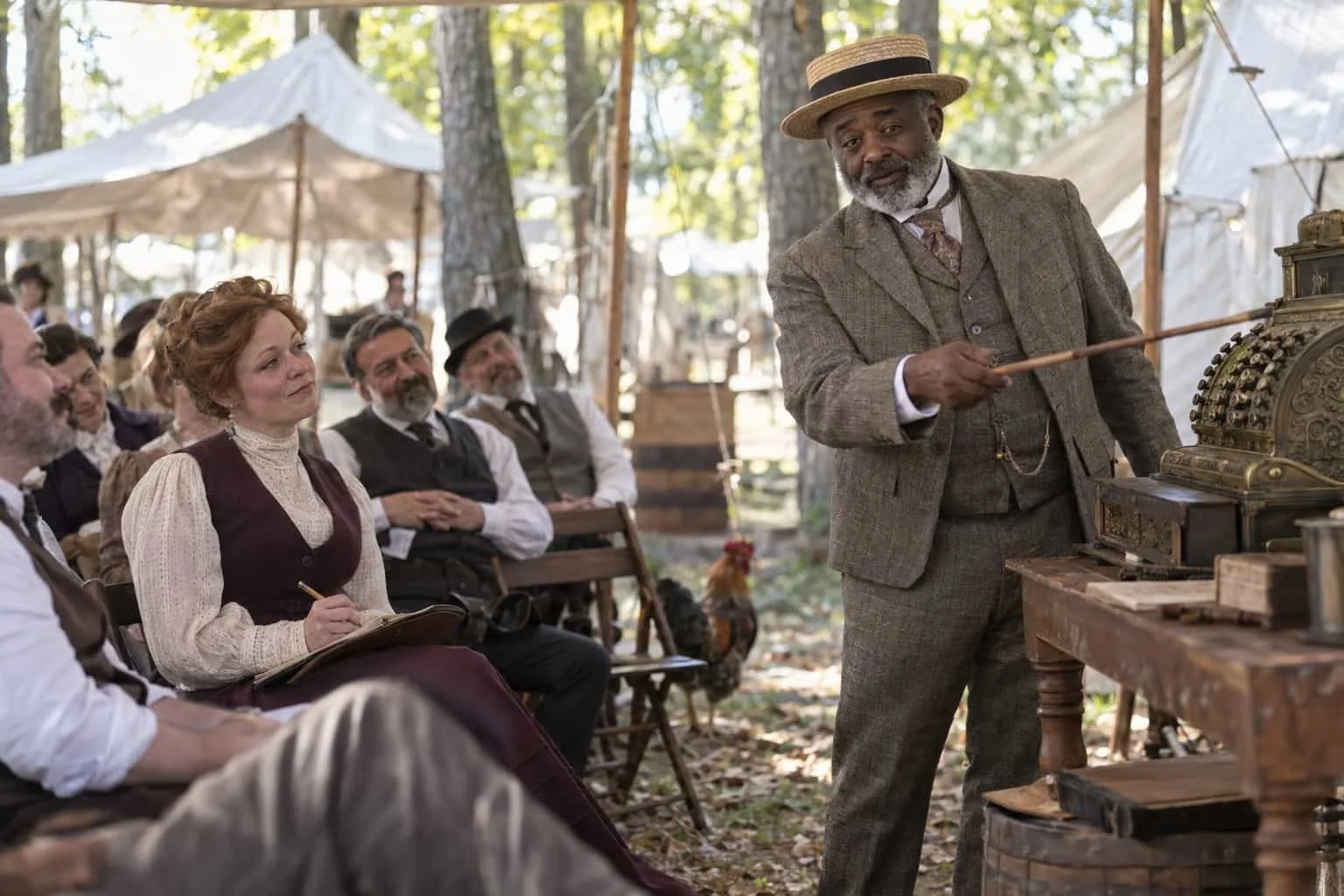
Then he built a machine around the script. Patterson drew detailed maps of sales territories and demanded that salesmen hit monthly quotas, which put the pace of selling under management's control.‡ NCR was one of the first businesses to give a salesman a guaranteed territory and pay him commission.* It held conventions and sales contests.† Its salesmen stayed in good hotels and dressed well, on purpose.* And Patterson built Sugar Camp, a first-of-its-kind summer sales training facility that began as a tent community.*
The father of modern sales training, in other words, ran a summer camp. Consider this a disclosure: Tocobaga, the Tampa Bay lead generation agency and SMB advisory behind SolvingHow.com, built its own brand around summer camp, and it spends its working hours on the descendants of Patterson's system, the pipelines, quotas and lead funnels of B2B companies.
Asked to name the most significant figure in the history of selling, Harvard Business School historian Walter Friedman answered, "Probably John H. Patterson at National Cash Register."‡ Friedman also describes a boss who believed in breaking men down, sometimes cruelly, before building them back up.‡ TIME later named Patterson to its list of the top 10 worst bosses.§
His most famous hire was a star salesman named Thomas J. Watson. In one famous story TIME relays, Patterson dismissed Watson "by leaving his desk on the lawn for Watson to discover upon his return to the office."§ In 1914, Watson left NCR with an antitrust conviction and a possible jail sentence hanging over him, a verdict an appeals court later overturned, and took over a small company called Computing-Tabulating-Recording.‖ He brought Patterson's best ideas with him: quotas, sales contests and sales meetings that "took on the air of revivals." In 1924 he renamed the company International Business Machines.‖
The man who turned selling into a system fired the man who would build IBM. Keep that sentence handy. Patterson's system, more or less intact, still runs the go-to-market plan of most B2B software companies, and it is still firing the wrong people.
A century after the Primer, David Mamet wrote its autopsy. Glengarry Glen Ross won the 1984 Pulitzer Prize for Drama.¶ It follows four Chicago real estate salesmen pushing what one study guide calls "apparently worthless land in Florida," a premise a Tampa Bay agency can only take personally.** The office runs on a contest: first prize a Cadillac, second prize a set of steak knives, and the losers get fired. The premium leads, the Glengarry leads, sit under the office manager's control. Shelley Levene, a once-great closer in his fifties, offers the manager $50 a lead plus a share of his commissions to get some.** The salesmen are not fighting over customers. They are fighting over index cards.
The 1992 film added a scene that does not appear in the stage play.†† Alec Baldwin plays Blake, a corporate man who arrives to announce the contest and berate the room. Jack Lemmon's Levene answers with the most honest four words in B2B sales: "The leads are weak."‡‡ Blake makes clear that the good leads are for closers. The most famous scene in the most famous movie about selling was a late addition, which makes it the perfect patron saint of the marketing qualified lead.
Every B2B software company has a version of that office. Marketing buys, scores and hands over leads. Sales says the leads are weak. Marketing says sales cannot close. The board asks why customer acquisition cost rose again. Everyone agrees the problem is the leads, and everyone covets a locked box of better ones. Call it the Glengarry lead fallacy: treating a broken model as a supply problem. Tocobaga helps SaaS companies, venture-backed founders and B2B firms whose lead reports look great until someone asks how many of those leads became revenue. That question, more than any lead source, is where the fix starts.
Why is B2B lead generation not working for SaaS companies?
B2B lead generation is failing many SaaS companies because it was built for a buyer who barely exists anymore: one person, ready to buy now, who wants to talk to a salesperson. Forrester's 2026 research puts 13 internal stakeholders and nine outside participants into the typical buying decision, Gartner finds 61 percent of B2B buyers prefer a rep-free buying experience, and Forrester estimates a lead-centric funnel turns fewer than 1 percent of inquiries into closed business.§§,‖‖,¶¶
Patterson's Primer rested on five assumptions, and in 1887 all five were reasonable. The buyer was one person, the merchant behind the counter. The merchant was available now, because the salesman was standing in the store. The merchant knew little about cash registers, so the demonstration was the research. A territory held a finite list of merchants, so working the list harder produced more sales. And the salesman controlled the conversation from approach to close.
Every one of those assumptions has flipped. The buyer is a committee. Most of the committee is not shopping this quarter. The research happens before the first call, increasingly inside an AI chatbot. The list is effectively infinite and mostly irrelevant. And the buyer controls the conversation; the seller gets invited in late, if at all.
Most SaaS lead generation runs on the Primer's assumptions anyway. A form fill becomes a lead. A lead earns points. Points become a marketing qualified lead, or MQL. The MQL goes to a sales development rep with a call quota. When it does not convert, the rep says the leads are weak, marketing says sales cannot close, and the chief financial officer asks why the cost of a new customer keeps climbing.
The old "lead fails" lists were right about the symptoms. Targeting the wrong audience. Trying to be everything to everyone. Selling features instead of outcomes. Failing to qualify. Ignoring partners. Neglecting existing customers. Not measuring. Automating badly or not at all. Each one is a version of Levene's complaint, and each one has a fix that does not involve buying a fresh box of index cards.
Who actually makes a B2B software buying decision?
A group, not a person. Forrester's State of Business Buying 2026, built on a survey of nearly 18,000 global business buyers, found that 13 internal stakeholders and nine external participants influence the typical decision, and that buying groups roughly double, from seven members to 14, when the purchase involves generative AI features.§§ Procurement professionals now serve as decision-makers in 53 percent of business buying cycles.§§
Do the arithmetic on a single lead. Thirteen insiders plus nine outsiders makes 22 people with a say. A form fill captures one of them, about 4.5 percent of the decision, and it is often whoever had time to download a PDF. An MQL score is a confident grade on 4.5 percent of the test.
Edelman and LinkedIn's 2025 B2B Thought Leadership Impact Report, drawn from nearly 2,000 professionals, gives the invisible members of that group a name: hidden buyers, the internal influencers who shape a decision without ever being visible to the vendor.*** The same report, citing Matt Dixon's research in The JOLT Effect, notes that more than 40 percent of B2B deals stall because of internal misalignment within buying groups.*** Translation: a vendor can win the champion and still lose to a controller it never met.
For SaaS companies selling into manufacturers, management consultancies or any firm with a real procurement function, this is not a marketing subtlety. A plant manager, an IT director, a controller and a procurement lead each want different proof. One wants uptime. One wants security documentation. One wants payback math. One wants three competing quotes. An MQL model hands sales one name and calls it a lead. A buying-group model asks who else is in the room and what each of them needs before saying yes.
Patterson's salesman sold to the merchant. The modern SaaS rep is selling to a committee that mostly will not take the call.
How far along are B2B buyers before they contact sales?
Most of the way. 6sense's 2025 B2B Buyer Experience Report, drawn from nearly 4,000 buyers across North America, EMEA and APAC, found that buyers make first contact with a vendor 61 percent of the way through their journey, earlier than the 69 percent measured the year before, and that the vendor buyers favor before that first contact wins the deal roughly 80 percent of the time.†††
Read those two numbers together. The point of first contact moved 8 points earlier, which is real progress for sellers. But about four of every five deals still go to the vendor that was already the favorite when the first call happened. In the same study, 81 percent of buyers said they spoke with the winning vendor first, and buyers, not sellers, initiated 79 percent of engagements.††† The buyer walks in with a favorite and usually leaves with it.
Shortlists form early, too. 6sense found buyers fill about four shortlist spots, 3.6 on average, on day one of the journey and evaluate 5.1 vendors in total.††† A SaaS company that is not on the day-one list is fighting for one or two leftover spots against vendors the buyer already trusts. Average cycle length fell from 11.3 months to 10.1 months, roughly 11 percent faster, which leaves less time to change anyone's mind.†††
Gartner's research explains why so little happens in the room with sellers. When B2B buyers consider a purchase, they spend only 17 percent of that time meeting with potential suppliers.‡‡‡ Of every 100 hours a buying group spends on a decision, 17 involve vendors at all. Split among three finalists, each one gets less than six hours to make its case. The other 83 hours belong to internal meetings, spreadsheets, peer conversations and, increasingly, chatbots.
The appetite for reps keeps shrinking. In 2020, Gartner reported that 33 percent of buyers wanted a seller-free sales experience.‡‡‡ In a survey of 632 buyers fielded in late 2024 and published in June 2025, Gartner found 61 percent prefer an overall rep-free buying experience.‖‖ That is nearly double in about five years.
Here is the nuance the "buyers are 70 percent done" crowd misses. Nick Toman, Brent Adamson and Cristina Gomez argued in Harvard Business Review that B2B customers are less informed than overwhelmed, facing "virtually infinite information" and "a swelling raft of stakeholders."§§§ Being most of the way through a journey is not the same as being confident. Gartner found that customers who receive helpful information that eases the purchase process are "three times as likely to buy the bigger, more expensive option, with less regret."‖‖‖ The pre-contact favorite is usually the vendor that made the decision easier before anyone booked a demo.
What is the 95:5 rule in B2B marketing?
The 95:5 rule holds that at any given moment roughly 95 percent of a company's potential B2B buyers are not in the market, and only about 5 percent are in a given quarter. Professor John Dawes, in research published by LinkedIn's B2B Institute, derives it from how rarely businesses switch providers: if a corporation changes its principal bank or law firm about once every five years, roughly 20 percent of buyers are in market in a year and about 5 percent in a quarter.¶¶¶
Dawes calls the figure a heuristic, not a precise rule.¶¶¶ The math still reorganizes a marketing budget. A SaaS company with 4,000 accounts in its addressable market has roughly 200 in market this quarter and 3,800 that are not. Over a year, about 800 will enter the market. A lead generation program built to harvest this quarter's 200 treats the other 3,800 as noise. They are not noise. They are next year's pipeline, forming opinions about vendors right now.
That is the hidden cost of the Glengarry lead fallacy. The Glengarry leads were the 5 percent: fresh, current, in market. Mamet's salesmen fought over that box and wrote off everything else as weak. A SaaS team that judges marketing only by this quarter's MQLs is running the same office.
Dawes argues that advertising works mainly by "building and refreshing memory links to the brand," not by triggering immediate purchases, and that a campaign "can't bring buyers to you who simply aren't in the market."¶¶¶ When a buyer finally enters the market, the brands that come to mind first make the shortlist. Dawes notes that many well-established brands get no higher than 20 to 30 percent of respondents linking them to a category entry point, the situation that triggers a purchase.¶¶¶ Memory is earned slowly, which is exactly why the companies that skip it keep buying leads.
Patterson understood this before anyone had a name for it. He sent six pieces of mail a week for three weeks to 5,000 potential customers, a campaign credited with helping invent modern direct mail.* That is 18 mailings per prospect and 90,000 pieces in total, aimed at merchants who had not asked for anything. Patterson did not wait for a raised hand. He built memory first and sent the salesman second.
Are MQLs dead?
As the primary measure of marketing success, mostly yes. Forrester now writes that the typical conversion rate from inquiry to closed-won in a lead-centric MQL process is less than 1 percent, and that the cross-functional process converting early interest into revenue "fails more than 99%" of the time; its recommended replacement is to manage buying groups and opportunities instead of individual leads.¶¶
Less than 1 percent means 1,000 inquiries produce fewer than 10 customers. Put an illustrative price on it. At $200 per lead, 1,000 leads cost $200,000 and produce fewer than 10 customers, more than $20,000 of lead cost per customer before anyone pays a sales salary, a demo engineer or an onboarding team. Levene offered $50 a lead. By modern standards, he was negotiating well.
The deeper problem is what MQL scoring rewards. A typical model awards points for activity: an e-book download, a webinar registration, three email opens, a pricing page visit. Activity is easy to count and easy to misread. A graduate student researching a thesis can outscore a chief financial officer with budget authority who visited the site once and then called a peer. The model measures curiosity and labels it intent.
Forrester's revenue-alignment research notes that over 80 percent of buying decisions are made by a buying group of more than three people, and that "signals of engagement from multiple people increases propensity."¶¶ Put plainly, three people from the same account reading the same comparison page is a stronger signal than one person downloading five e-books. The first pattern is a buying group forming. The second is a hobby.
Patterson's monthly quotas made selling measurable, and in the 1890s that was genius. The MQL made marketing measurable, and for a long stretch that was useful. The mistake is not measuring. It is measuring the wrong unit. An opportunity, meaning a real buying group with a real problem and a real timeline, is the unit that pays salaries.
Why do sales and marketing teams blame each other for bad leads?
Because they are usually paid to measure different things. Marketing is rewarded for lead volume and MQLs, sales is rewarded for closed revenue, and when the handoff between them leaks, each side sees the other's failure. Gartner's 2025 survey found 69 percent of B2B buyers report inconsistencies between the information on a sales organization's website and what its sellers tell them, which is what misalignment looks like from the buyer's side of the desk.‖‖
Glengarry Glen Ross is a study of that leak. The salesmen blame the leads. The office manager blames the salesmen. The owners, never seen, send Blake to blame everyone. Nobody asks whether the land is worth buying.
In SaaS, the same loop shows up in the weekly pipeline review. Marketing reports a record month of MQLs. Sales reports the lowest acceptance rate of the year. Both numbers are true, and neither one is revenue. The fix is not a better argument. It is a shared scoreboard with three numbers both teams own: how many qualified opportunities were created, how many closed, and what those customers were worth a year later.
That is why Tocobaga's reporting is built around MQL-to-close conversion and revenue, not clicks, impressions or form fills. MQL-to-close is the most honest ratio in the funnel because it exposes whether the word "qualified" means anything. If 1,000 MQLs become eight customers, the MQL definition is the problem, and more volume will only make the problem more expensive. Honest attribution follows the same rule: credit goes to whatever moved an opportunity forward, measured in pipeline and revenue, not to whichever channel touched the form last.
What is an ideal customer profile, and why does selling to everyone fail?
An ideal customer profile, or ICP, is a written definition of the companies a product serves best and can win profitably, and it only works if it also says who does not qualify. Selling to everyone fails because buyers shortlist only a handful of vendors: G2's 2025 Buyer Behavior Report found buyers prefer narrowing their options to just two or three, and 6sense found about 3.6 shortlist spots filled on day one.****,†††
A product positioned for everyone is on no one's short list. Generic positioning ("the all-in-one platform for modern teams") reads exactly like the four competitors in the same review-site category, so a buying group that needs a reason to include it finds none. Specific positioning ("quality-compliance software for mid-market medical device manufacturers") gives up most of the market on purpose and wins the part that matters.
Exclusions are where an ICP earns its keep. A useful SaaS ICP names the firmographics (industry, size, region), the technographics (the systems the product must work with), and the trigger events (a new regulation, a funding round, a merger, a new executive). Then it names the disqualifiers: companies too small to feel the pain, companies mid-migration to a competing platform, industries where the product lacks required certifications, and the customer profiles that historically churn inside a year. The last one matters most. An ICP built from the best-retained customers rather than the most recently closed ones fixes acquisition and retention at the same time.
The cost of skipping this is measurable. Gartner found 73 percent of B2B buyers actively avoid suppliers who send irrelevant outreach.‖‖ An ICP without exclusions guarantees irrelevance to most of a list, and roughly seven in ten of those recipients will remember the brand as one to avoid. Mamet's salesmen were selling Florida land to anyone who picked up the phone. That is not a targeting strategy. It is a plot.
Should SaaS companies sell features or outcomes?
Outcomes first, with features as proof. A B2B buying group buys a business result, such as less downtime, a faster financial close, fewer compliance findings or a shorter sales cycle, and features matter as evidence that the result is achievable. Gartner's analysts put it directly: "Instead of offering generic information that buyers can find elsewhere, sellers should offer unique guidance."‖‖
The Primer understood this in 1887. Its four steps put the proposition before the demonstration.† The merchant heard what the machine would do for the business before seeing which key did what. Many SaaS demos run the order backward: a 45-minute tour of the dashboard, then a hopeful question about budget.
Feature-led selling also breaks inside a buying group. A feature excites the person who will use it. An outcome is something the controller, the CIO and procurement can agree on, because it fits in a business case. With 13 internal stakeholders on the typical decision, a pitch that only lands with the end user wins one vote out of 13.§§
Trials make the point measurable. Forrester found more than 60 percent of business buyers purchase some form of trial, yet just over a third planned to convert to a paid version with the same provider.§§ Of every 100 trial buyers, roughly 35 plan to stay. The other 65 got the features and did not see the outcome. A trial built around a specific result, with a success plan and a named business metric, is a sales tool. A trial built around access is a free sample.
Does cold email still work for B2B SaaS?
Relevant, targeted outbound to a defined ICP still works; high-volume, spray-and-pray cold email mostly does not, and the inbox providers changed the rules to make sure of it. Starting in February 2024, Gmail began requiring bulk senders, defined as anyone sending close to 5,000 messages or more a day to Gmail accounts, to authenticate mail with SPF, DKIM and DMARC, offer one-click unsubscribe on marketing messages and keep spam rates from ever reaching 0.3 percent, and in November 2025 Gmail began ramping up enforcement against non-compliant traffic.††††
Do the math on 0.3 percent. That is three spam complaints per 1,000 messages. A 50,000-email sequence has room for fewer than 150 complaints before a domain is in trouble. For a generic message blasted to a broad list, 150 annoyed recipients out of 50,000 is not a worst case. It is a Tuesday.
Buyers punish what the filters miss. Gartner found 73 percent of B2B buyers actively avoid suppliers who send irrelevant outreach, and Gartner's Robert Blaisdell put the conclusion bluntly: "Bad prospecting actively damages relationships with potential customers."‖‖ Cold outreach used to be a numbers game where the downside was a wasted stamp. Now the downside is a brand that roughly seven in ten buyers actively avoid.
Generative AI made the volume problem worse before it made anything better. A wave of "AI SDR" startups promised to find prospects, write tailored messages and book meetings automatically. In March 2025, TechCrunch reported that one of them, 11x, backed by Benchmark and Andreessen Horowitz, had presented ZoomInfo and Airtable as customers; ZoomInfo told TechCrunch it had run only a one-month pilot, was not a customer and had not given permission to use its logo, and Airtable said the product was never used in production.‡‡‡‡ Current and former employees told TechCrunch that most early customers left through break clauses, typically at three months, and one said, "We were losing 70-80% of customers that came through the door." The company disputed that picture, said it reports contracted ARR that its investors understood, and put its current retention at 79 percent.‡‡‡‡ Whatever the final truth of one startup's numbers, the episode is a clean lead fail: automation that produced activity faster than it produced buyers.
The automation that works runs in the other direction. A 2024 Salesforce survey of 5,500 sales professionals in 27 countries found reps spend 70 percent of their time on non-selling tasks.§§§§ In a 40-hour week, that leaves about 12 hours for selling. The best use of AI in a SaaS sales team is to take back some of the other 28 hours from research, data entry and scheduling, then spend them in real conversations with real buying groups. Automate the busywork. Keep the relationship human.
How are AI chatbots changing B2B software research?
AI chatbots have become a primary research tool for software buyers, and in G2's 2025 Buyer Behavior Report they were the single most influential source in building vendor shortlists. Among 1,169 B2B decision-makers surveyed in April 2025, generative AI chatbots led all sources of shortlist influence at 17.1 percent, ahead of software review sites at 15.1 percent, and G2 found chatbots twice as influential as salespeople.****
The behavior change is broad. In the same survey, 79 percent of buyers said AI search has changed how they conduct research, and 29 percent said they start research with AI search more often than with Google.**** Forrester found 94 percent of business buyers use AI during the buying process.§§ 6sense, with a different sample and different questions, found that 94 percent of buyers use large language models, and that this has not changed their reliance on vendor content or third-party experts.††† Two research firms, two samples, one number.
That last clause is the opening. A buyer asks a chatbot, and the chatbot answers from what it can find: vendor documentation, comparison pages, review sites, analyst coverage and credible third-party writing. A SaaS company whose pricing hides behind "contact sales," whose integrations page is a wall of logos and whose differentiation is an adjective gives an AI assistant very little to recommend. Tocobaga covered G2's findings in more depth in a separate post on SolvingHow.com; the short version is that being findable now means being quotable.
In practice, that means answer-first pages for the questions a buying group actually asks, published pricing ranges or at least published pricing logic, honest comparison pages, integration documentation a machine can parse and a review-site presence with recent, specific reviews. It also means consistency. When 69 percent of buyers already notice gaps between a vendor's website and its sellers, a chatbot summarizing contradictory sources will notice too.‖‖

Why is customer retention worth more than new leads for SaaS?
Because churn quietly erases acquisition, and expansion revenue costs about half as much to win as new-logo revenue. Benchmarkit's 2025 B2B SaaS Performance Metrics Benchmarks put median net revenue retention at 101 percent and gross revenue retention at 88 percent, and found it costs a median $1.00 of sales and marketing to acquire $1.00 of expansion ARR versus $2.00 for $1.00 of new customer ARR.‖‖‖‖
Run the numbers on a $20 million ARR SaaS company with median retention. Gross retention of 88 percent means $2.4 million of ARR walks out the door every year. Replacing it with new customers at the median new CAC ratio costs about $4.8 million in sales and marketing before the company grows by a single dollar. That is the treadmill nobody puts on the board slide. A lead generation program can perform beautifully while the company stands still.
Expansion already does more of the work than most go-to-market plans admit. Benchmarkit found expansion ARR represents 40 percent of total new ARR, while median ARR growth has declined to 26 percent and CAC payback has lengthened 12.5 percent at the median since 2022.‖‖‖‖ For a rough sense of what the CAC ratios mean, assume an illustrative 75 percent gross margin. At $2.00 of spend per $1.00 of new ARR, payback takes about 32 months. At $1.00 per $1.00 of expansion ARR, it takes about 16. Same company, same product, half the payback period.
This is where venture capital firms and their founders should look hardest, because efficient growth is a retention problem as much as an acquisition problem. Frederick Reichheld of Bain and Company found that increasing customer retention rates by 5 percent increases profits by 25 to 95 percent, and Harvard Business Review notes that acquiring a new customer is anywhere from five to 25 times more expensive than retaining an existing one.¶¶¶¶ Those figures are broad, older and drawn from industries other than software. The direction has not changed.
Mamet's office has no customer success team, no renewal date and no expansion plan. Every month starts from zero, with a contest and a threat. Too many SaaS companies run their marketing calendar the same way, then wonder why the board keeps asking about CAC.
What is the strongest case for traditional lead generation?
The strongest case is that the 5 percent are real, they are buying this quarter, and someone has to catch them. Demand capture through search ads, review sites, demo requests and well-timed outbound still produces pipeline, and buyers still want salespeople, just later: G2 found nearly two out of three buyers now prefer engaging vendor salespeople only in the later stages of the buying journey.****
Skeptics of brand building also have a point about time. Memory pays out on the slow schedule the 95:5 math implies, in quarters and years rather than weeks. A venture-backed founder with 18 months of runway cannot wait three years for a brand to mature. A seed-stage company with no reputation needs some raised hands now. For that company, a tightly targeted demand capture program is not a fallacy. It is survival.
And Patterson's system worked. By 1914, 30 percent of NCR's sales came from overseas.* Quotas, territories, scripts and training built one of the most influential sales organizations in American history, and Watson carried the playbook to IBM. The MQL was designed to solve a real problem, too: keeping salespeople from wasting time on people who were not ready.
The case breaks at the word "only." Demand capture is necessary and insufficient. A company that spends every dollar on the 5 percent will win some of them, pay rising prices to compete for them and arrive as a stranger to the 95 percent who become next year's market. My take: early-stage SaaS companies should lean toward capture, shift budget toward memory building and expansion as the product finds its footing, and measure every stage on opportunities and revenue, not lead counts. The leads were never the whole problem. They were just the easiest thing to blame.
What should SaaS companies do instead of buying more leads?
They should build the system around buying groups, memory and revenue: define an ideal customer profile with real exclusions, stay memorable to the 95 percent who are not buying yet, be findable where buyers and AI assistants research, work through partners, grow existing customers, measure opportunities and revenue honestly, and use automation to free sellers for human conversations. The table below lines up the old MQL-era assumptions against what the data shows now and what to do instead.
| Old MQL-era assumption | What the data shows now | What to do instead |
|---|---|---|
| One lead equals one buyer | 13 internal stakeholders and 9 external participants influence the typical decision (Forrester, 2026) | Track buying groups and opportunities, and build proof for every role |
| Buyers want to talk to sales early | 61% prefer a rep-free buying experience (Gartner, 2025); first contact comes 61% of the way through the journey (6sense, 2025) | Publish the pricing logic, comparisons and proof buyers need to self-educate |
| More leads mean more revenue | Under 1% of inquiries in a lead-centric process become closed business (Forrester) | Report MQL-to-close conversion, pipeline and revenue, not form fills |
| Every prospect is a buyer right now | About 5% of B2B buyers are in market in a given quarter (Dawes, LinkedIn B2B Institute) | Build memory with the 95% and capture the 5% when they arrive |
| The first call is where deals are won | The pre-contact favorite wins about 80% of the time (6sense, 2025) | Earn a spot on the day-one shortlist through reputation, reviews and partners |
| Outbound is a numbers game | 73% of buyers avoid suppliers who send irrelevant outreach (Gartner); Gmail bulk senders must stay under a 0.3% spam rate | Send fewer, relevant messages to a defined ICP with real exclusions |
| Research starts on Google | GenAI chatbots are the top influence on software shortlists at 17.1% (G2, 2025) | Publish answer-first, consistent, machine-readable product facts |
| New logos drive growth | Median NRR is 101% and GRR 88%; expansion is 40% of new ARR at half the CAC (Benchmarkit, 2025) | Fund customer success and expansion like acquisition |
A practical checklist:
Write the ICP with exclusions. Name the firmographics, technographics and triggers, then name who does not qualify, starting with the profiles that churn inside a year.
Map the buying group. For each target account, list the roles that will sign, block or influence: user, economic buyer, IT or security, finance, procurement and outside advisers. Build proof for each role, not just the user.
Build memory with the 95 percent. Publish a consistent point of view, tied to the situations that trigger a purchase, on a schedule measured in quarters and years. A real opinion beats a calendar of keyword filler.
Be findable and quotable. Answer the questions buying groups ask in plain language, publish pricing logic, keep comparison and integration pages honest, and keep review-site profiles current, because chatbots and review sites now shape the shortlist.
Work through partners and ecosystems. Forrester counts nine outside participants in the typical decision.§§ Consultants, implementation partners, integration partners and resellers are often among the outsiders a buyer already trusts, which makes them a distribution channel. For SaaS companies selling to manufacturers and management consultancies, a trusted adviser can control the shortlist.
Fund expansion like acquisition. Give customer success a growth target, map the whitespace in every account, and review net and gross retention in the same meeting as pipeline.
Measure what pays. Report opportunities created, MQL-to-close conversion, pipeline to revenue, CAC payback by channel and retention by cohort. Retire any metric nobody would defend to a CFO.
Automate the 70 percent, not the relationship. Use AI for research, enrichment, scheduling and call notes so sellers spend more of the week with buyers, and keep outbound volume low enough to stay relevant.
Tocobaga builds go-to-market programs on those rules, as a fractional CMO or as a strategy partner, and reports on the numbers a board actually asks about: opportunities, MQL-to-close conversion, revenue and payback. The house rules are built for companies that think like investors. Flat-fee pricing, never a percentage of ad spend. Contracts that never auto-renew. The client owns the ad accounts, the CRM data, the website and the content, which matters in a fundraise or an exit, when a buyer pays for assets a company actually controls. Tocobaga has advised more than 1,000 small and medium-sized businesses, and it says so when it is not the right fit and points companies to other resources. For a no-pressure intro call about a SaaS pipeline that looks busy and closes thin, reach Tocobaga at (813) 534-1261 or through SolvingHow.com.
The primer, the desk on the lawn and the Glengarry leads
Patterson's genius was never the lead. It was the system around the lead: a territory, a script, training, a quota and a measurement. In 1887, every piece of it matched how a merchant actually bought.
Watson's genius was knowing what to change. He took the quotas, the contests and the revival-tent energy to Computing-Tabulating-Recording, and he urged his salesmen to dress in a style similar to the customers they called on.‖ It sounds like a fashion note. It was a strategy: build the sales system around the buyer, not around the seller's comfort.
Mamet's salesmen never got that far. They spent the whole story fighting over a locked box of Glengarry leads, sure that better names would save them. The box was never the problem. The office was.
SaaS companies are standing in that office now, with purchases shaped by 22 people, buyers who pick a favorite before the first call and a market that is 95 percent not buying this quarter. The winners will not be the companies with the best leads. They will be the ones that, like Watson, rebuild the system around the customer across the desk.
Why is B2B lead generation not working for SaaS companies?
Most SaaS lead generation still assumes one buyer who is ready now and wants to talk to sales. Current research shows the opposite: buying decisions involve about 13 internal stakeholders and nine outside participants, most buyers prefer a rep-free experience, and only about 5 percent of a market is buying in a given quarter. Lead-centric funnels convert fewer than 1 percent of inquiries into customers.
What is the 95:5 rule in B2B marketing?
The 95:5 rule says that at any moment about 95 percent of potential B2B buyers are not in the market and roughly 5 percent are in a given quarter. Professor John Dawes, writing for LinkedIn's B2B Institute, bases it on companies switching key providers about once every five years. The lesson is to build memory with the 95 percent so the brand is on the shortlist when they buy.
Are MQLs still a useful metric for SaaS companies?
MQLs can still serve as an early diagnostic, but they are a poor primary success metric. Forrester reports that lead-centric MQL processes typically convert fewer than 1 percent of inquiries into closed business and recommends managing buying groups and opportunities instead. The most useful MQL number is MQL-to-close conversion, because it shows whether "qualified" means anything.
How far into the buying journey do B2B buyers contact sales?
According to 6sense's 2025 B2B Buyer Experience Report, buyers make first contact about 61 percent of the way through their journey, down from 69 percent the year before. Buyers initiated 79 percent of engagements, and the vendor they favored before first contact won roughly 80 percent of the time. Most of the decision happens before a rep is involved.
What is a buying group in B2B sales?
A buying group is the set of people who influence or approve a business purchase, typically including end users, an economic buyer, IT or security, finance, procurement and outside advisers. Forrester's 2026 research found the typical decision involves 13 internal stakeholders and nine external participants. Selling to a buying group means building proof for each role, not just the person who filled out a form.
Does cold email still work for B2B SaaS lead generation?
Targeted, relevant outbound to a defined ideal customer profile can still work. High-volume cold email is far riskier: since February 2024, Gmail has required bulk senders to authenticate mail, offer one-click unsubscribe and keep spam rates below 0.3 percent. Gartner also found 73 percent of B2B buyers actively avoid suppliers who send irrelevant outreach, so poor targeting damages the brand.
How do AI chatbots affect B2B software buying?
G2's 2025 Buyer Behavior Report found generative AI chatbots were the top source influencing software shortlists, ahead of review sites and twice as influential as salespeople. Seventy-nine percent of surveyed buyers said AI search changed how they research. SaaS companies need clear, consistent, answer-first content, transparent pricing logic and strong review profiles so AI assistants can recommend them accurately.
What is a good net revenue retention rate for a SaaS company?
Benchmarkit's 2025 benchmarks put median net revenue retention at 101 percent and gross revenue retention at 88 percent, so a company above those medians is outperforming its peers. Retention matters for acquisition too: the same benchmarks show expansion ARR costs about $1.00 of sales and marketing per $1.00 won, versus about $2.00 for new customer ARR.
What should a SaaS ideal customer profile include?
A strong SaaS ideal customer profile names the industries, company sizes and regions served, the systems the product must work with, and the trigger events that create urgency, such as new regulations or funding rounds. Just as important, it lists exclusions, including companies too small to feel the problem and profiles that historically churn within a year. Building the profile from the best-retained customers improves both acquisition and retention.
Sources
- *
- "6 Things You Didn't Know About NCR's John Patterson." Dayton Daily News, accessed October 9, 2026. Patterson's acquisition of the cash register patent and founding of NCR in 1884, the 16-page manual drawn from Joseph H. Crane's 1887 sales talk, guaranteed territories and commission, salesmen staying in good hotels and dressing well, Sugar Camp as a first-of-its-kind summer sales training facility that began as a tent community, the direct mail campaign of six pieces a week for three weeks to 5,000 prospects, and 30 percent of NCR sales coming from overseas by 1914. https://daytondailynews.com/lifestyles/things-you-didn-know-about-ncr-john-patterson/K65i9ONHk46rKchxEUN2BN
- †
- Friedman, Walter A. "John H. Patterson and the Sales Strategy of the National Cash Register Company, 1884 to 1922." Harvard Business School Working Knowledge, November 1, 1999 (excerpt from Business History Review). Crane's 1887 Primer, its four steps of approach, proposition, demonstration and close, the instruction to "take for granted that he will buy," and NCR's conventions and sales contests. https://www.library.hbs.edu/working-knowledge/john-h-patterson-and-the-sales-strategy-of-the-national-cash-register-company-1884-to-1922
- ‡
- Linard, Laura. "Birth of the American Salesman." Harvard Business School Working Knowledge, April 19, 2004 (interview with Walter A. Friedman). Friedman naming Patterson the most significant figure in sales history, Patterson's territory maps and monthly quotas that put the pace of selling under management control, and his harsh management style. https://www.library.hbs.edu/working-knowledge/birth-of-the-american-salesman
- §
- Cruz, Gilbert. "John H. Patterson." In "Top 10 Worst Bosses." TIME, October 18, 2010. Patterson's place on TIME's worst-bosses list and the famous story of Watson's dismissal by leaving his desk on the lawn. https://content.time.com/time/specials/packages/article/0,28804,2025898_2025900_2025926,00.html
- ‖
- Knowledge at Wharton. "IBM and Its Legendary Founder: Flawed Genius." Knowledge at Wharton, July 2, 2003 (review of Kevin Maney, The Maverick and His Machine). Watson leaving NCR in 1914 under an antitrust conviction, taking over Computing-Tabulating-Recording, carrying Patterson's ideas into quotas, contests and revival-like sales meetings, urging salesmen to dress like their customers, and the 1924 renaming to International Business Machines. https://knowledge.wharton.upenn.edu/article/ibm-and-its-legendary-founder-flawed-genius/
- ¶
- The Pulitzer Prizes. "Glengarry Glen Ross, by David Mamet." 1984 Pulitzer Prize for Drama, accessed October 9, 2026. Glengarry Glen Ross as the 1984 Drama winner. https://www.pulitzer.org/winners/david-mamet
- **
- "Glengarry Glen Ross." Drama for Students. Gale, via Encyclopedia.com, accessed October 9, 2026. The Chicago real estate setting, salesmen pushing "apparently worthless land in Florida," the Cadillac and steak knives contest with firing for the losers, the office manager's control of the premium leads, and Levene's offer of $50 a lead plus a share of commissions. https://www.encyclopedia.com/arts/educational-magazines/glengarry-glen-ross
- ††
- Gross, Terry. "Remembering 'Glengarry Glen Ross' Director James Foley." NPR, Fresh Air, May 16, 2025, republished by WUSF. Alec Baldwin's Blake scene written for the 1992 film and absent from the stage play, and Blake's role announcing the sales contest. https://www.wusf.org/2025-05-16/remembering-glengarry-glen-ross-director-james-foley
- ‡‡
- Serrano, Shea. "Alec Baldwin's 'Glengarry Glen Ross' Monologue Is Perfect, but Is It Accurate?" The Ringer, August 26, 2016. Levene's line "The leads are weak" and the Glengarry leads described as the newest, most lucrative leads reserved for closers. https://www.theringer.com/2016/8/26/16046954/fact-checking-alec-baldwins-glengarry-glen-ross-monologue-661f3662ea61
- §§
- Forrester. "The State of Business Buying: Risk-Averse Buyers Demand Proof, Not Promises." Forrester blog, 2026, accessed October 9, 2026. Nearly 18,000 global buyers surveyed; 13 internal stakeholders and nine external participants per decision; buying groups of 14 versus seven for genAI purchases; procurement as decision-maker in 53 percent of cycles; 94 percent of buyers using AI; more than 60 percent buying trials and just over a third planning to convert. https://www.forrester.com/blogs/state-of-business-buying-2026
- ‖‖
- Gartner. "Gartner Sales Survey Finds 61% of B2B Buyers Prefer a Rep-Free Buying Experience." Press release, June 25, 2025. Survey of 632 buyers fielded August to September 2024; 61 percent preferring a rep-free experience, 73 percent avoiding suppliers who send irrelevant outreach, 69 percent reporting website and seller inconsistencies, and quotes from Robert Blaisdell and Alice Walmesley. https://www.gartner.com/en/newsroom/press-releases/2025-06-25-gartner-sales-survey-finds-61-percent-of-b2b-buyers-prefer-a-rep-free-buying-experience
- ¶¶
- Forrester. "The Revenue Process Alignment Series, Part 1: The End of MQLs." Forrester blog, accessed October 9, 2026. Inquiry-to-close-won conversion of less than 1 percent in lead-centric MQL processes, the process failing more than 99 percent of the time, over 80 percent of decisions made by buying groups of more than three people, multi-person engagement signals, and the shift to opportunities. https://www.forrester.com/blogs/the-revenue-process-alignment-series-part-1-the-end-of-mqls
- ***
- Edelman and LinkedIn. "2025 Edelman-LinkedIn B2B Thought Leadership Impact Report: Invisible Influence: Unlocking the Power of Hidden Buyers." Edelman, 2025. Nearly 2,000 professionals surveyed, hidden buyers as internal influencers within buying groups, and more than 40 percent of deals stalling from buying-group misalignment, citing Matt Dixon's The JOLT Effect. https://www.edelman.com/expertise/Business-Marketing/2025-b2b-thought-leadership-report
- †††
- 6sense. "The 2025 B2B Buyer Experience Report: How AI Is (and Isn't) Disrupting Buying Journeys." 6sense Research, 2025, accessed October 9, 2026. Nearly 4,000 buyer responses; first contact at 61 percent of the journey versus 69 percent; the pre-contact favorite winning roughly 80 percent of the time; 81 percent speaking with the winner first; 79 percent of engagements buyer-initiated; 3.6 day-one shortlist spots and 5.1 vendors evaluated; cycles of 10.1 versus 11.3 months; 94 percent using LLMs. https://6sense.com/science-of-b2b/buyer-experience-report-2025/
- ‡‡‡
- Gartner. "Gartner Says 80% of B2B Sales Interactions Between Suppliers and Buyers Will Occur in Digital Channels by 2025." Press release, September 15, 2020. Buyers spending only 17 percent of purchase time meeting with potential suppliers and 33 percent of buyers desiring a seller-free sales experience. https://www.gartner.com/en/newsroom/press-releases/2020-09-15-gartner-says-80--of-b2b-sales-interactions-between-su
- §§§
- Toman, Nick, Brent Adamson, and Cristina Gomez. "The New Sales Imperative." Harvard Business Review, March to April 2017. The argument that B2B customers are overwhelmed by "virtually infinite information" and "a swelling raft of stakeholders." https://hbr.org/2017/03/the-new-sales-imperative
- ‖‖‖
- Gartner. "Gartner Says B2B Brands Need to Rethink Their Content Marketing Strategy." Press release, October 10, 2018. Brent Adamson's finding that customers who receive helpful information that eases the purchase are three times as likely to buy the bigger, more expensive option with less regret. https://www.gartner.com/en/newsroom/press-releases/2018-10-10-gartner-says-b2b-brands-need-to-rethink-their-content-marketing-strategy
- ¶¶¶
- Dawes, John. "Advertising Effectiveness and the 95-5 Rule: Most B2B Buyers Are Not in the Market Right Now." The B2B Institute at LinkedIn, accessed October 9, 2026. About 5 percent of B2B buyers in market per quarter derived from five-year switching cycles, the figure as a heuristic, advertising building memory links, the limits of campaigns on out-of-market buyers, and 20 to 30 percent category entry point linkage for established brands. https://business.linkedin.com/content/dam/lem/business/en/advertise/resources/b2b-institute/advertising-effectiveness-and-the-95-5-rule.pdf
- ****
- G2. "AI Now Means Always Included: G2 2025 Buyer Behavior Report." G2, 2025. Survey of 1,169 B2B decision-makers in April 2025; genAI chatbots as the top shortlist influence at 17.1 percent versus 15.1 percent for review sites; chatbots twice as influential as salespeople; 79 percent saying AI search changed research; 29 percent starting with AI search more often than Google; preference for two or three vendors; and nearly two in three preferring sales engagement in later stages. https://learn.g2.com/hubfs/G2-2025-Buyer-Behavior-Report-AI-Always-Included.pdf
- ††††
- Google. "Email Sender Guidelines FAQ." Gmail Help, accessed October 9, 2026. Bulk sender definition near 5,000 messages a day, SPF, DKIM and DMARC requirements, one-click unsubscribe for marketing messages, the 0.3 percent spam rate threshold, February 2024 requirements and November 2025 enforcement ramp. https://support.google.com/a/answer/14229414
- ‡‡‡‡
- Davis, Dominic-Madori, and Marina Temkin. "a16z- and Benchmark-Backed 11x Has Been Claiming Customers It Doesn't Have." TechCrunch, March 24, 2025. The ZoomInfo and Airtable logo claims, ZoomInfo's one-month pilot, former employees' accounts of break clauses and customer losses, and 11x's responses including contracted ARR and 79 percent retention. https://techcrunch.com/2025/03/24/a16z-and-benchmark-backed-11x-has-been-claiming-customers-it-doesnt-have/
- §§§§
- Salesforce. "Salesforce Report: Sales Teams Using AI 1.3x More Likely to See Revenue Increase." Salesforce News, July 25, 2024. Survey of 5,500 sales professionals in 27 countries and reps spending 70 percent of their time on non-selling tasks. https://www.salesforce.com/news/stories/sales-ai-statistics-2024/
- ‖‖‖‖
- Benchmarkit. "2025 B2B SaaS Performance Metrics Benchmarks." Benchmarkit, 2025, accessed October 9, 2026. Median ARR growth of 26 percent, new CAC ratio of $2.00 versus expansion CAC ratio of $1.00, NRR of 101 percent, GRR of 88 percent, expansion at 40 percent of total new ARR, and CAC payback up 12.5 percent since 2022. https://www.benchmarkit.ai/2025benchmarks
- ¶¶¶¶
- Gallo, Amy. "The Value of Keeping the Right Customers." Harvard Business Review, October 29, 2014. Frederick Reichheld's Bain and Company finding that a 5 percent increase in retention raises profits 25 to 95 percent, and acquisition costing five to 25 times more than retention. https://hbr.org/2014/10/the-value-of-keeping-the-right-customers